
Crispy Roasted Potatoes
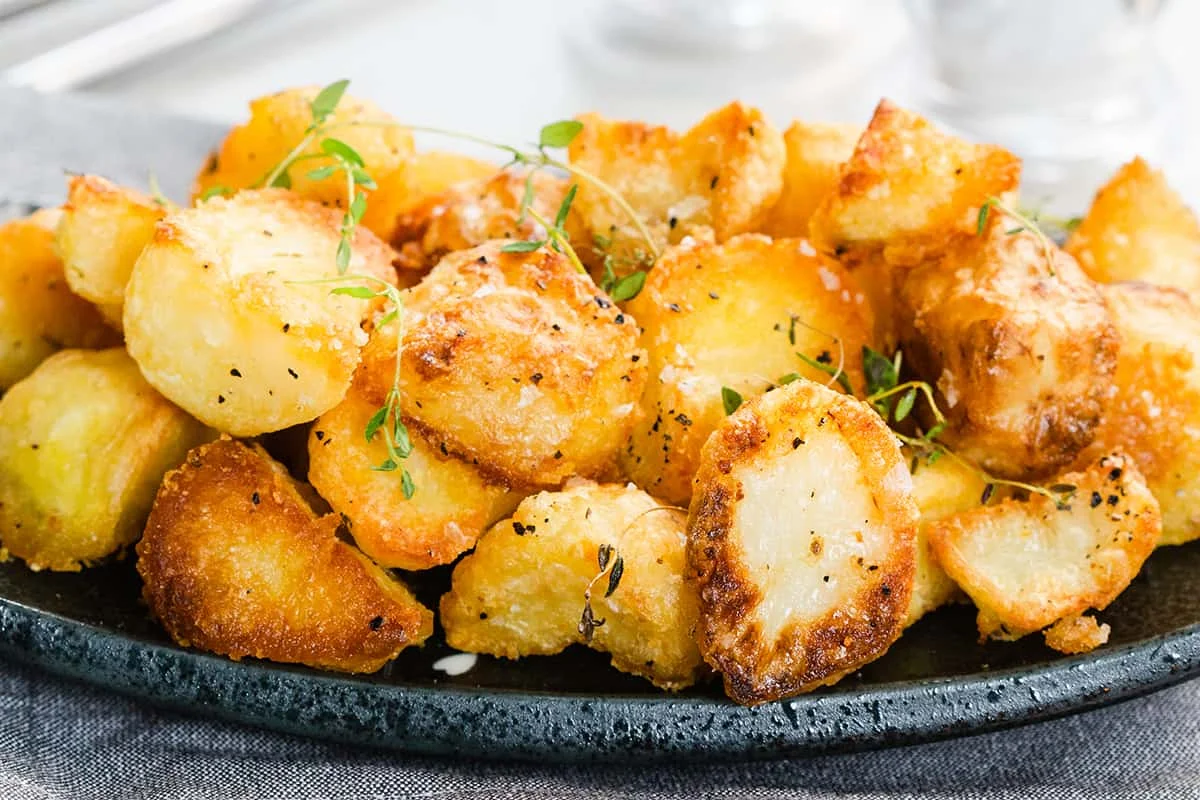
These roast potatoes are parboiled, roughed up and roasted in olive oil until golden with crisp edges and fluffy centres. They make a straightforward side dish for a Sunday roast or a weeknight meal.
Ingredients
- 907 g (2 lb)potatoes
- 60 ml (4 tablespoons)light olive oil
- to tastesalt and pepper
- to tastefresh thyme
Instructions
- 1
Preheat the oven
Heat the oven to 200°C (400°F).
- 2
Prepare the potatoes
Peel the potatoes and cut any larger ones so they are all a similar size, a little smaller than a ping-pong ball.
- 3
Parboil the potatoes
Rinse the potatoes in cold water to remove excess starch, then put them in a large pot. Cover them well with water, about 5 cm (2 inches) above the potatoes, salt the water and parboil for 10–15 minutes. Drain in a colander and leave them to dry.
- 4
Rough up the edges
When the potatoes are dry, gently shake the colander to roughen their surfaces.
- 5
Coat with oil
Put the potatoes in a large bowl and gently toss with the oil, salt and pepper. Spread them in a single layer on a baking sheet and add the fresh thyme.
- 6
Roast until golden
Roast in the hot oven for 40–45 minutes, until crisp and golden brown. Turn the potatoes halfway through for more even browning.
- 7
Drain and serve
Transfer the potatoes to a plate lined with paper towels to absorb excess oil, then serve.
What are roast potatoes?
Roast potatoes are a familiar British-style roast dinner side, though this recipe is labelled American. The method uses a short boil before roasting to help create a soft middle and a crisp outside.
Roughening the drained potatoes gives the oil more surface to coat, while fresh thyme adds a savoury, herby note.
Nutrition and macros by portion
The nutrition label shows one serving as written: 255 calories, 5g protein, 28g carbs, 14g fat.
| Portion | Adjustment | kcal | Protein | Carbs | Fat |
|---|---|---|---|---|---|
| Lighter | Use less olive oil | 179 kcal | 4g | 20g | 10g |
| This serving | As written | 255 kcal | 5g | 28g | 14g |
| Hungry | Serve a larger portion | 383 kcal | 8g | 42g | 21g |
The potatoes provide most of the carbohydrates, while the olive oil contributes most of the fat; the potatoes also supply some protein. Pair a serving with vegetables and a protein-rich main to make a more rounded plate.
Why parboil first?
Parboiling starts cooking the potatoes before they go into the oven. The recipe calls for 10–15 minutes; aim for potatoes that are beginning to soften but still hold their shape.
Drying them after draining matters: wet surfaces can interfere with browning in the oven.
Get the edges crisp
Rough surfaces: gently shake the colander once the potatoes are dry to create edges that can crisp up as they roast.
Single layer: leave space around the potatoes on the baking sheet so they roast rather than crowd together.
Watch the colour
The potatoes are ready when they are crisp and golden brown, which should take 40–45 minutes at 200°C. Turn them halfway through to encourage even browning.
Potato size affects how quickly they cook, so cut larger ones down to match the smaller pieces.
Choose the right potatoes
The recipe simply calls for potatoes, without specifying a variety. Choose potatoes that are suitable for roasting and cut them to a uniform size so they cook at a similar rate.
Peeling is part of this method; rinsing the peeled pieces then removes some of the surface starch.
What to serve them with
Serve these potatoes alongside roast meat, a nut roast or a main course with gravy. Their crisp texture also works well with roasted vegetables.
For a more balanced plate, add a generous portion of vegetables and a protein-rich main.
Recipe notes & tips
- Cut the potatoes to a similar size so they cook evenly.
- Let the drained potatoes dry before shaking them to roughen the edges.
- Use a large baking sheet and arrange the potatoes in one layer.
- Turn the potatoes halfway through roasting for more even colour.
- Add salt and pepper to the oil-coated potatoes to taste.
Variations
- Add garlic: scatter peeled garlic cloves over the tray before roasting.
- Try rosemary: use it in place of thyme for a different herbal flavour.
- Add paprika: toss a little with the oil, salt and pepper for a warm, savoury note.
- Use duck fat: replace the light olive oil for a richer roast-potato flavour.
- Finish with parsley: scatter chopped fresh parsley over the potatoes just before serving.
Common mistakes to avoid
- Uneven pieces: cut larger potatoes down so all the pieces are similar in size.
- Skipping the rinse: wash the peeled potatoes in cold water to remove excess starch.
- Roasting them wet: leave the drained potatoes to dry before roughening and oiling.
- Crowding the tray: arrange the potatoes in one layer so they can brown.
- Forgetting to turn: flip the potatoes halfway through to help them colour evenly.
How to store
Cool leftovers and refrigerate them in an airtight container for up to 3 days. Reheat in an oven at 200°C until hot and crisp again; they may be softer if reheated in a microwave.
Frequently asked questions
Can I prepare the potatoes ahead?
You can parboil and drain them ahead, then let them dry before roasting. For the crispiest result, roast them just before serving.
How small should I cut the potatoes?
Aim for pieces a little smaller than a ping-pong ball, as described in the method. Keep them as uniform in size as possible.
How do I know when they are cooked?
They should be crisp and golden brown after 40–45 minutes in the oven. Check that the centres are tender before serving.
Do I need to turn them during roasting?
Yes. Turn the potatoes halfway through the cooking time to help them brown evenly.
Can I use dried thyme instead of fresh?
Fresh thyme is specified in the recipe. Dried thyme can be used if needed, but add it sparingly to taste.
Cook it from the original
This recipe comes from errenskitchen.com. Their page has the author’s own photos, notes and tips — the best place to cook it from.
Open the recipe on errenskitchen.com