
French Crêpes Recipe
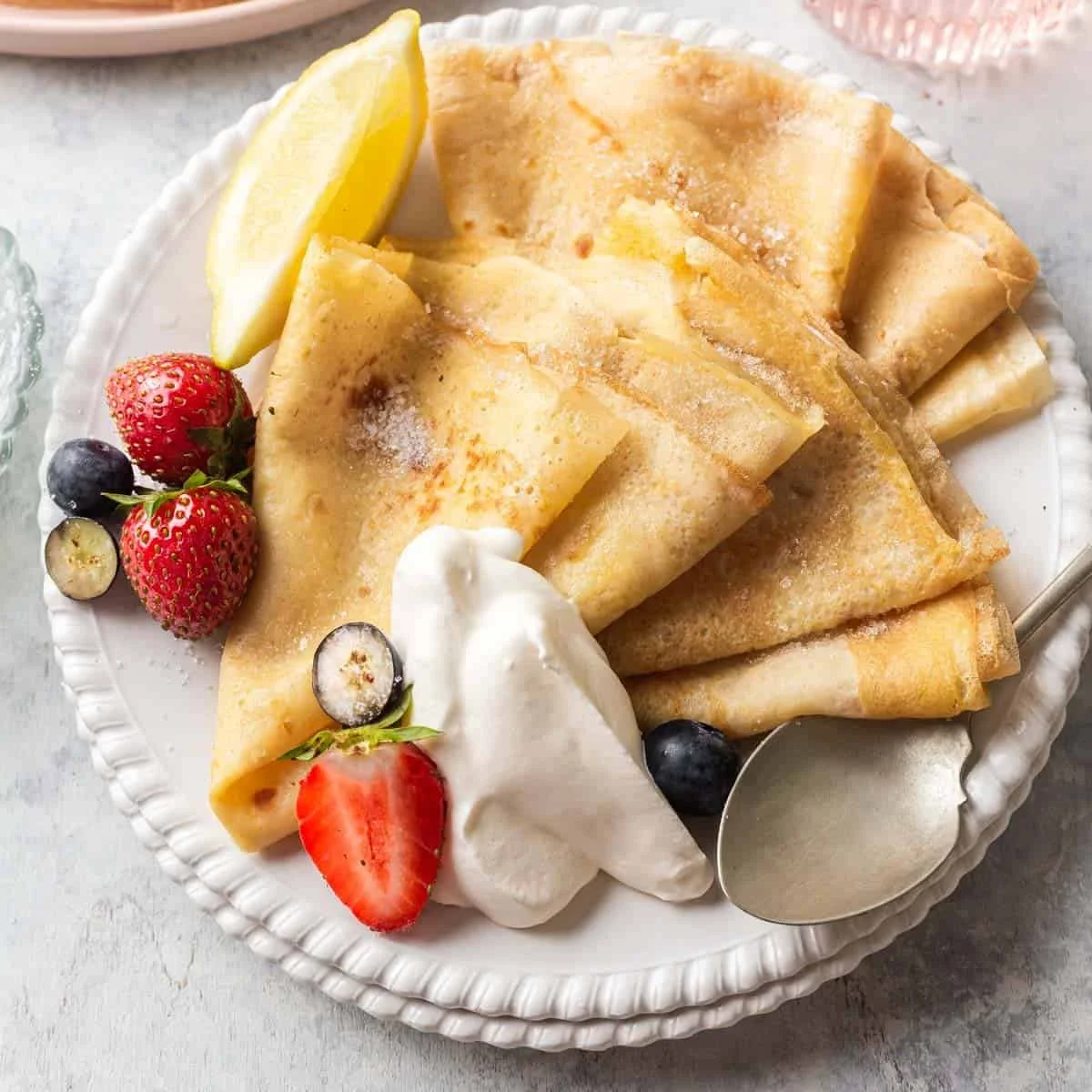
These thin French crêpes use a simple egg, milk and flour batter, cooked in a pan until delicate and golden. Make them for breakfast, lunch or dinner, then fill them with sweet or savoury toppings.
Ingredients
- 150 gplain flour
- 15 ggranulated sugar
- 1.25 ml (¼ tsp)salt
- 3 largeeggs, at room temperature
- 420 mlwhole milk
- 30 mlcold water
- 15 gunsalted butter, melted
Instructions
- 1
Whisk dry ingredients
For the hand-mixed batter, whisk the flour, sugar and salt together in a large bowl.
- 2
Mix wet ingredients
In a separate medium-sized bowl, whisk the eggs, milk, water and cooled melted butter together. If using flavourings such as vanilla extract, lemon or orange zest, or orange blossom water, add them now.
- 3
Combine the batter
Pour a quarter of the egg mixture into the dry ingredients and whisk until you have a thick, smooth paste. Whisk continuously as you slowly add the rest of the egg mixture, until smooth and lump-free; you can use a handheld electric beater if you prefer. Cover with cling film and refrigerate for at least 1 hour, or overnight if preparing ahead.
- 4
Blend the batter
For the blender method, put the flour, sugar and salt into the blender first, followed by the eggs, milk, water and melted butter. Blend for no more than 30 seconds, until smooth. Cover the blender jug with its lid or transfer the batter to a bowl and cover with cling film; refrigerate for at least 1 hour.
- 5
Heat the pan
Warm a crêpe pan or non-stick frying pan over medium heat on the hob for 1 minute. Lightly grease it with melted butter, wiping away any excess.
- 6
Cook the first side
Take the batter from the fridge and whisk it briefly. If it has thickened as the flour hydrates, add a little water to loosen it. Pour 60 ml (¼ cup) into the centre of the pan, then lift and tilt the pan so the batter spreads into an even layer. Add a couple of drops of batter to any gaps. Cook for 1–2 minutes, until the edges begin to dry and brown and the underside is set and golden.
- 7
Flip the crêpe
Run a rubber spatula around the edges to loosen the crêpe, then slide it underneath and flip. Cook for another 30–60 seconds, until golden, and slide it onto a plate. Cover with a clean tea towel to keep it warm.
- 8
Cook remaining batter
Lightly grease the pan again if needed and cook the rest of the batter in the same way. Stack the crêpes to keep them warm and soft, then serve warm or cool with fillings and toppings.
What are French crêpes?
Crêpes are thin pancakes associated with France, made from a pourable batter and cooked in a shallow pan. Unlike thicker pancakes, they spread across the pan in a fine layer and can be folded or rolled around a filling.
This version uses a straightforward mix of flour, eggs and milk, with a little butter for richness. Resting the batter gives the flour time to hydrate and makes it easier to swirl into an even crêpe.
Nutrition and macros by portion
The nutrition label shows one serving as written: 97 calories, 4g protein, 13g carbs, 3g fat.
| Portion | Adjustment | kcal | Protein | Carbs | Fat |
|---|---|---|---|---|---|
| Lighter | Use less butter | 68 kcal | 3g | 9g | 2g |
| This serving | As written | 97 kcal | 4g | 13g | 3g |
| Hungry | Add another crêpe | 146 kcal | 6g | 20g | 5g |
The flour and sugar provide most of the carbohydrates, while the eggs contribute protein and the whole milk, eggs and butter contribute fat. To round out a meal, serve a crêpe with fruit or vegetables alongside, choosing a filling that suits whether you want a sweet or savoury plate.
Choose a mixing method
By hand: whisking the wet ingredients into the dry ingredients gradually helps you form a smooth paste before thinning it with the remaining liquid.
In a blender: add the dry ingredients first, then the liquids, and blend for no more than 30 seconds. Either method should give you a smooth batter; the recipe includes both options, so you only need to use one.
Why rest the batter?
Resting: cover the batter and chill it for at least 1 hour, or overnight if making it ahead. The flour absorbs liquid during this time, so the batter may thicken; whisk it briefly and add a little water if needed before cooking.
Getting an even crêpe
Pan movement: pour the 60 ml portion into the centre, then lift and tilt the pan straight away so the batter flows over the base. Work quickly, since a thin layer sets faster than a thicker pancake.
Small gaps: add just a couple of drops of batter to patch any uncovered spots. Keep the layer as even as you can for consistent cooking.
Look for these doneness cues
First side: the edges should begin to dry and brown, while the underside is set and golden; this usually takes 1–2 minutes. Loosen the full edge with a rubber spatula before sliding it under the crêpe.
Second side: cook for another 30–60 seconds, until golden. Stack cooked crêpes under a clean tea towel to help keep them warm and soft.
Sweet or savoury fillings
Sweet: serve the crêpes with fruit, jam or another preferred sweet topping. Keep the filling modest so the delicate crêpe can be folded without tearing.
Savoury: pair them with a savoury filling for lunch or dinner. Add fillings after cooking rather than mixing them into the batter.
Recipe notes & tips
- Bring the eggs to room temperature before mixing, as specified in the ingredient list.
- Cool the melted butter before whisking it into the eggs and milk.
- Measure 60 ml of batter for each crêpe to keep portions consistent.
- Use medium heat and adjust it if the crêpes brown too quickly.
- Wipe away excess butter after greasing so the pan is lightly coated rather than slick.
- Stack cooked crêpes under a clean tea towel while you finish the batch.
Variations
- Vanilla: whisk vanilla extract into the wet ingredients before combining.
- Citrus: add lemon or orange zest to the wet ingredients for a fragrant batter.
- Orange blossom: stir orange blossom water into the wet ingredients before mixing.
- Sweet filling: fold the cooked crêpes around your choice of sweet topping.
- Savoury filling: fill the cooked crêpes with a savoury combination just before serving.
Common mistakes to avoid
- Adding all the liquid at once: whisk in a quarter first to make a smooth paste, then gradually add the rest.
- Skipping the rest: chill the covered batter for at least 1 hour so it has time to hydrate.
- Over-blending: blend for no more than 30 seconds to make the batter smooth.
- Using thick batter: whisk it after chilling and add a little water if it needs loosening.
- Pouring too much batter: measure 60 ml and tilt the pan to spread it thinly.
- Flipping too soon: wait until the edges dry and brown and the underside is set and golden.
How to store
Keep leftover crêpes covered in the fridge and eat within 2 days. Reheat them briefly in a frying pan over low heat, or serve them cool with your chosen fillings.
Frequently asked questions
Can I make the batter ahead?
Yes. Cover it and refrigerate overnight. Give it a quick whisk before cooking, and add a little water if it has thickened.
Do I need to use both mixing methods?
No. Choose either the hand-whisked method or the blender method. Both are ways to prepare the same batter.
Why does my batter have lumps?
Adding the liquid gradually and whisking the first portion into a thick paste helps prevent lumps. If some remain, you can blend the batter briefly until smooth.
How much batter goes into each crêpe?
Use 60 ml (¼ cup) per crêpe, then tilt the pan to spread it in an even layer.
How do I know when to flip a crêpe?
Flip when the edges begin to dry and brown and the underside is set and golden, usually after 1–2 minutes.
Can I serve these crêpes savoury?
Yes. The lightly sweetened batter can be served with either sweet or savoury fillings.
Cook it from the original
This recipe comes from emmaduckworthbakes.com. Their page has the author’s own photos, notes and tips — the best place to cook it from.
Open the recipe on emmaduckworthbakes.com