
Classic Australian Lamingtons
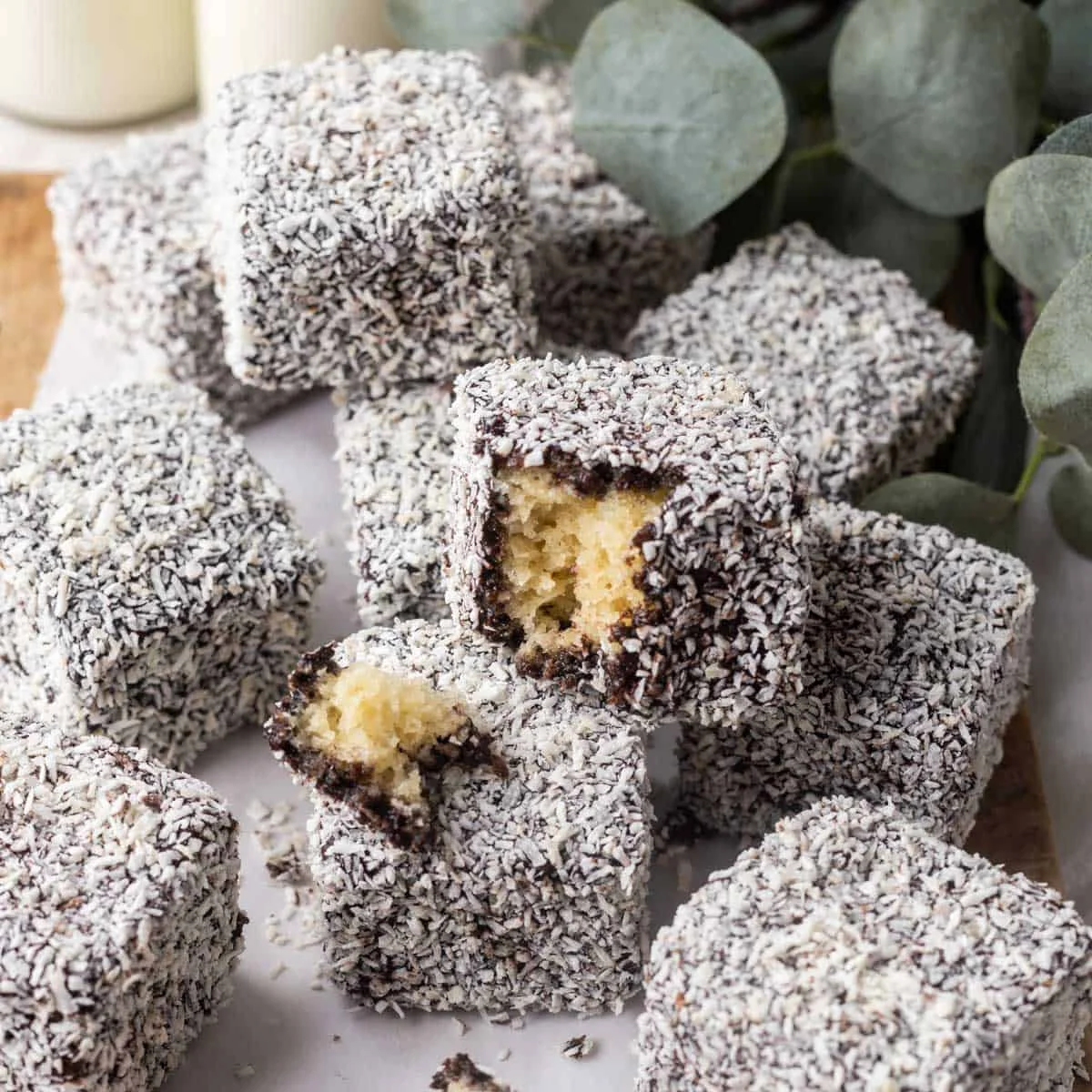
Classic Australian lamingtons are squares of soft sponge coated in chocolate icing and rolled in desiccated coconut. They take a little time to assemble, but make a lovely treat for sharing or serving with tea.
Ingredients
- 230 gunsalted butter, at room temperature
- 250 ggranulated sugar
- 3 largeeggs, at room temperature
- 250 gplain flour, sifted
- 3 tspbaking powder
- 1/2 tspfine salt
- 120 mlwhole milk, at room temperature
- 300 gicing sugar
- 35 gcocoa powder
- 180 mlboiling water
- 60 gunsalted butter, melted
- 170 gdesiccated coconut
Instructions
- 1
Prepare the tin
Heat the oven to 180°C (350°F). Grease the base and sides of a 23 cm (9-inch) square baking tin and line it with baking parchment.
- 2
Cream butter and sugar
Using a stand mixer with a paddle attachment, beat the butter and sugar on medium speed for 3 minutes, until pale and creamy.
- 3
Add the eggs
Beat in the eggs one at a time, mixing after each addition until combined. If the mixture begins to curdle, add a tablespoon or two of the flour. Scrape down the base and sides of the bowl.
- 4
Mix in flour
In a separate bowl, sift together the flour and baking powder, then whisk in the salt. Beat half of this mixture into the batter, followed by the milk. Scrape the bowl, add the remaining flour mixture and mix until just a few flour streaks remain.
- 5
Bake the sponge
Spoon the batter into the prepared tin and bake for 40–45 minutes, until a skewer inserted into the centre comes out clean and the cake springs back when lightly touched. Leave it in the tin for 10 minutes, then turn it out onto a wire rack to cool completely.
- 6
Cut and chill
When the cake is cool, trim its outer edges with a serrated bread knife and cut it into 16 squares. Freeze the squares for 30–40 minutes, until very cold but not frozen through.
- 7
Make the icing
Combine the icing sugar, cocoa powder, boiling water and melted butter in a bowl. Stir until the butter has melted and the mixture is smooth.
- 8
Set up to coat
Take the sponge squares out of the freezer. Put the chocolate icing and desiccated coconut in separate shallow bowls, with two forks nearby. Set a wire rack over a baking tray close at hand.
- 9
Dip in chocolate
Hold a sponge square with two forks and dip it into the icing to coat every side. Lift it out and let the excess icing drip back into the bowl.
- 10
Roll in coconut
Put the coated square in the coconut and sprinkle coconut over it. Roll it again, pressing the coconut into the icing with your fingers, then place it on the wire rack. Repeat with the remaining squares and leave the lamingtons on the rack for about an hour to set. If the icing thickens, set the bowl over boiling water and stir in one or two tablespoons of boiling water to loosen it.
What are lamingtons?
Lamingtons are Australian sponge cakes cut into squares, coated in chocolate icing and covered with desiccated coconut. They are closely associated with Australian home baking and are often served at gatherings and afternoon tea.
This version uses a butter-based sponge, then chills the squares before dipping. The cold cake is easier to handle while you coat it on all sides.
Nutrition and macros by portion
The nutrition label shows one serving as written: 360 calories, 4g protein, 43g carbs, 20g fat.
| Portion | Adjustment | kcal | Protein | Carbs | Fat |
|---|---|---|---|---|---|
| Lighter | Smaller lamington squares | 252 kcal | 3g | 30g | 14g |
| This serving | As written | 360 kcal | 4g | 43g | 20g |
| Hungry | Larger serving | 540 kcal | 6g | 65g | 30g |
The sponge gets most of its carbohydrates from the sugar and flour, while butter contributes much of the fat and the eggs, milk and flour provide some protein. Pair a lamington with fresh fruit or yoghurt if you want something alongside it; the supplied nutrition figures are per serving.
Building a tender sponge
Creaming: Beating the butter and sugar until pale and creamy helps give the cake a light texture. Use butter at room temperature so it blends smoothly.
Eggs: Add them one at a time and mix between additions. If the batter looks curdled, a little flour helps bring it back together.
Flour and milk: Add the flour mixture in two parts, with the milk between them. Stop mixing when only a few flour streaks remain to avoid overworking the batter.
Checking the bake
Skewer test: At 40 minutes, check the centre of the cake; bake for up to 45 minutes if the skewer still has wet batter on it. It should come out clean when the sponge is done.
Spring-back: A light touch in the centre should leave the cake springing back. Let it cool completely before trimming and cutting so the squares hold their shape.
Why chill the squares?
Chilling: The 30–40 minutes in the freezer makes the sponge very cold without freezing it solid. This helps the pieces stay intact as you dip them in the icing.
Handling: Use two forks to lift and turn each square, letting extra icing drip off before adding coconut. Work steadily so the icing remains easy to stir and spread.
Keeping the icing workable
Consistency: The icing should be smooth enough to coat the sponge. It thickens as it stands, so stir it occasionally while you work.
Loosening: If it becomes too thick, set the bowl over a bowl of boiling water and stir in one or two tablespoons of boiling water. Add the water gradually and mix until the icing loosens.
Finishing and serving
Coconut: Sprinkle coconut over the coated sponge, then roll the square and press the flakes into the icing with your fingers. A shallow bowl makes this easier and helps keep the coconut in place.
Setting: Leave the finished lamingtons on the rack for about an hour so the coating can set. Serve them with tea or coffee, or alongside fresh fruit.
Recipe notes & tips
- Bring the butter, eggs and milk to room temperature before mixing for a smoother batter.
- Scrape the bowl after adding the eggs so the mixture combines evenly.
- Cool the sponge completely before trimming it or the squares may crumble.
- Use two forks to dip and turn each square without handling the icing too much.
- Keep the icing warm and stir it as you coat the lamingtons.
- Let the finished squares rest on the rack for about an hour before serving.
Variations
- Jam filling: Split each sponge square horizontally and spread a little jam inside before coating.
- Chocolate centre: Add a thin layer of chocolate spread between two pieces of sponge.
- Coconut finish: Use finely shredded coconut for a more delicate coating.
- Cocoa icing: Adjust the cocoa slightly to make the coating more or less chocolatey.
- Mini lamingtons: Cut the sponge into smaller squares and check them early during baking.
Common mistakes to avoid
- Overmixing the batter: Stop once only a few flour streaks remain so the sponge stays tender.
- Dipping warm cake: Cool the sponge completely, then chill the squares so they hold together.
- Skipping the edge trim: Trim the outside crust before cutting for more even squares.
- Leaving the icing unstirred: Stir it between dips so it stays smooth and consistent.
- Icing too thick: Loosen it with one or two tablespoons of boiling water, added gradually.
- Moving them too soon: Leave the coated squares on the rack for about an hour to set.
How to store
Once set, keep the lamingtons in an airtight container at room temperature for up to 2 days, or refrigerate them for up to 4 days. Bring chilled lamingtons to room temperature before serving.
Frequently asked questions
Can I make the sponge ahead?
Yes. Bake the sponge, cool it completely and keep it covered until you are ready to cut and coat it. Chilling the cut squares before dipping is still useful.
Can I freeze lamingtons?
The uncoated sponge squares can be frozen and thawed before dipping. Finished lamingtons can also be frozen in an airtight container, though the coating may soften slightly as they thaw.
Why is my sponge crumbly when I dip it?
It may not have cooled fully, or the squares may need more time to chill. Handle them gently with two forks and let the coating drip off rather than shaking them.
What should I do if the icing thickens?
Set the bowl over a bowl of boiling water and stir in one or two tablespoons of boiling water. Add it gradually until the icing is loose enough to coat the sponge.
How do I know when the sponge is baked?
A skewer inserted into the centre should come out clean, and the cake should spring back when lightly touched. The recipe gives a baking time of 40–45 minutes.
Cook it from the original
This recipe comes from emmaduckworthbakes.com. Their page has the author’s own photos, notes and tips — the best place to cook it from.
Open the recipe on emmaduckworthbakes.com