
Fish Piccata
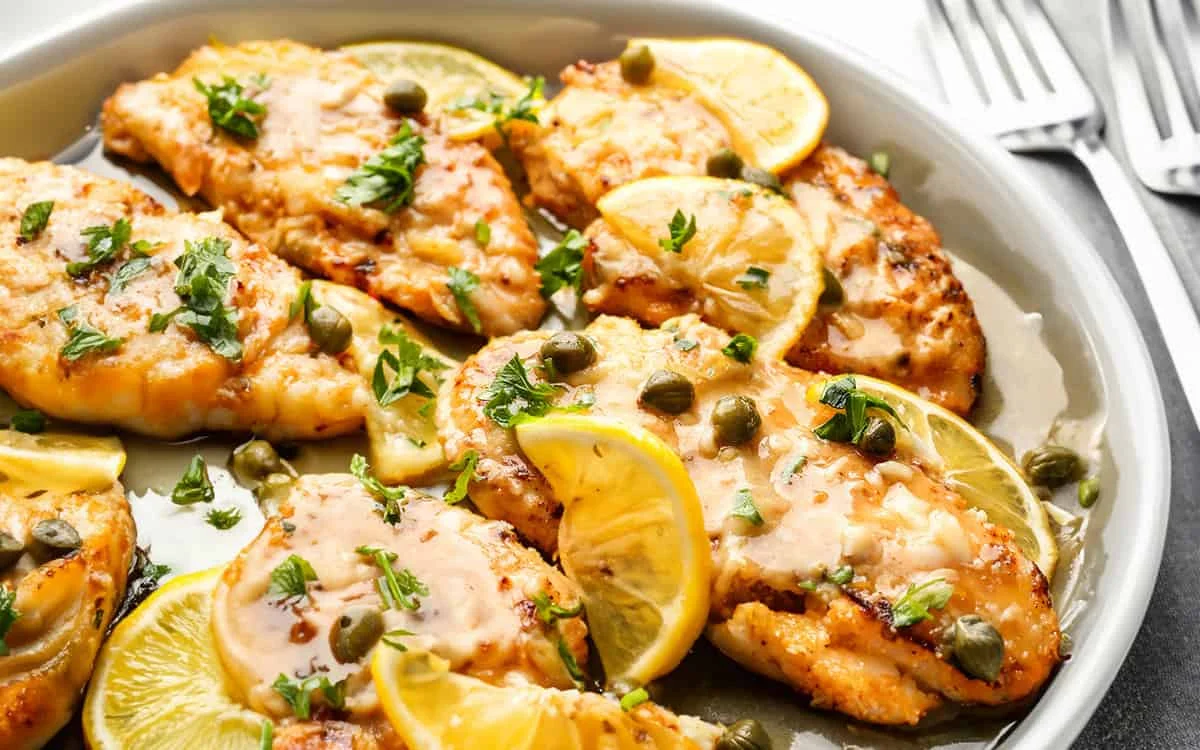
Fish piccata pairs crisp, golden fish fillets with a bright lemon, garlic and caper sauce. The coating and pan sauce make it a satisfying choice for a special dinner, with plenty of flavour from simple ingredients.
Ingredients
- 30 mlmelted butter
- 8 gplain flour
- 454 gfish fillets
- 2eggs
- 60 mlmilk
- to tastesalt and black pepper
- 125 gplain flour
- 240 mlrapeseed oil (or grapeseed oil)
- 30 gbutter, cubed
- 30 mlolive oil
- 6 clovesgarlic
- 120 mldry white wine
- 360 mlchicken stock (or fish stock)
- 1 tablespoonlemon zest
- 30 mlfreshly squeezed lemon juice
- a good handfulfresh parsley, chopped
- 30 mlcapers, drained
- 1lemon with rind, cut into thin rounds for optional garnish
Instructions
- 1
Season the fish
Take the fish out of the fridge 15 minutes before cooking. Pat it dry with paper towels, season both sides well with salt and set aside.
- 2
Mix butter and flour
Stir the melted butter into 8 g of flour until combined. Set this mixture aside for the sauce.
- 3
Beat the eggs
Whisk the eggs and milk together in a shallow bowl, seasoning with salt and pepper.
- 4
Season the flour
Put the remaining flour in a shallow dish, season generously with salt and pepper, and mix.
- 5
Coat the fish
Coat each fillet in flour, dip it in the egg mixture, then coat it in flour again. Shake off any excess.
- 6
Rest the coating
Leave the fish at room temperature for 30 minutes before frying so the coating has time to set.
- 7
Heat the oil
Heat the oil in a 30 cm (12-inch) frying pan over medium-high heat until hot and shimmering.
- 8
Fry the fish
Add the fish and cook without moving it for 2 to 3 minutes, or until golden. Turn and cook until golden on the other side and the centre reaches 63°C (145°F). Transfer the fillets to a large platter in a single layer and keep warm.
- 9
Clean the pan
Pour the oil out of the pan and wipe it clean with paper towels. If any coating has scorched onto the pan, put it back over medium heat.
- 10
Cook the garlic
Melt the cubed butter with the olive oil. Once they start to sizzle, add the garlic and cook for about 30 seconds, until tender and fragrant.
- 11
Reduce the wine
Add the wine, bring it to a boil and cook for about 2 minutes, until almost completely evaporated.
- 12
Thicken the sauce
Add the stock, lemon zest and lemon juice, then bring to a boil. Whisk in the reserved butter and flour mixture until melted and combined, and cook until the sauce thickens slightly.
- 13
Finish the sauce
Turn the heat down to medium-low and stir in the parsley and capers. Taste and add salt and pepper as needed.
- 14
Serve with lemon
Spoon the sauce over the fish and garnish with the lemon rounds, if using.
What is fish piccata?
Piccata is an Italian-American style of preparation, commonly associated with thin cuts served in a sharp, savoury sauce. This version uses fish fillets coated in flour and egg, then paired with lemon, garlic, wine, stock and capers.
The crisp coating contrasts with the light, tangy sauce. Keeping the fish in a single layer after frying helps preserve that texture until serving.
Nutrition and macros by portion
The nutrition label shows one serving as written: 989 calories, 33g protein, 35g carbs, 79g fat.
| Portion | Adjustment | kcal | Protein | Carbs | Fat |
|---|---|---|---|---|---|
| Lighter | Use less frying oil | 692 kcal | 23g | 25g | 55g |
| This serving | As written | 989 kcal | 33g | 35g | 79g |
| Hungry | Add a larger fillet | 1484 kcal | 50g | 53g | 119g |
The fish provides most of the protein, while the flour coating contributes carbohydrates. Most of the fat comes from the frying oil, butter and olive oil; serve with vegetables or salad to balance the plate.
Why this coating works
Flour first: the initial dusting gives the egg mixture a surface to cling to. The second layer of flour forms the outside crust as the fish fries.
Resting time: leaving the coated fish at room temperature for 30 minutes lets the coating settle. Shake off loose flour before frying to reduce excess in the pan.
Frying the fillets
Hot oil: wait until the oil is shimmering before adding the fish, then leave the fillets undisturbed for 2 to 3 minutes. Moving them too early can interfere with browning.
Doneness: look for a golden crust and check that the centre reaches 63°C. The exact cooking time after turning depends on the thickness of the fillets.
Building the piccata sauce
Garlic and wine: briefly cook the garlic in the butter and olive oil, then boil the wine until it has almost evaporated. This leaves a concentrated base for the stock and citrus.
Butter and flour: whisk the reserved mixture into the boiling liquid to help it thicken. Add the parsley and capers over medium-low heat at the end, then adjust the seasoning.
Keeping the fish crisp
Once fried, place the fillets in a single layer rather than stacking them, which can soften the crust. Keep them warm while you make the sauce.
For the best contrast, spoon the sauce over the fish just before serving. Add the lemon rounds as a fresh garnish if you like.
What to serve alongside
The lemony sauce works well with simple sides that can take up some of its flavour, such as boiled potatoes, rice or crusty bread. A green salad or steamed vegetables add freshness alongside the rich coating.
Serve the fish soon after adding the sauce so the crust stays as crisp as possible.
Recipe notes & tips
- Pat the fish dry before seasoning so the coating adheres more readily.
- Prepare the egg mixture and seasoned flour before beginning to coat the fillets.
- Let the oil become hot and shimmering before adding the fish.
- Fry in batches if the fillets do not fit in the pan without crowding.
- Keep the fried fillets in a single layer while you prepare the sauce.
- Taste the sauce before adding extra salt, as capers and stock can already be savoury.
Variations
- Use fish stock: choose it instead of chicken stock for a more seafood-led sauce.
- Change the frying oil: grapeseed oil can be used in place of rapeseed oil.
- Add extra lemon: serve additional lemon wedges alongside the optional rounds.
- Adjust the capers: use fewer for a milder, less briny sauce.
- Choose a side: pair the fish with potatoes, rice or crusty bread to catch the sauce.
Common mistakes to avoid
- Wet fish: the coating may not adhere well; pat the fillets dry before seasoning.
- Loose coating: it can fall away during frying; allow the coated fish to rest for 30 minutes.
- Moving the fish too soon: the crust may tear; leave it undisturbed for the first 2 to 3 minutes.
- Crowded pan: the fillets may not brown evenly; cook in batches if needed.
- Overcooked garlic: it can turn bitter; cook it only until tender and fragrant, about 30 seconds.
- Sauce too thin: give it a little more time to cook after whisking in the butter and flour mixture.
How to store
Refrigerate leftover fish and sauce in a covered container for up to 2 days. Reheat gently in a frying pan or oven until hot; the coating may soften, especially if stored with the sauce.
Frequently asked questions
Can I use a different type of fish?
Yes. Use fish fillets suitable for pan-frying, and adjust the cooking time to their thickness while checking for a centre temperature of 63°C.
Can I make the sauce without wine?
The recipe uses dry white wine for its sauce base. It does not specify a substitute, so leaving it out will change the flavour and liquid balance.
Why does the coating need to rest?
The 30-minute rest gives the coating time to settle onto the fish. The recipe notes that frying too soon can cause it to fall off.
How do I know when the fish is cooked?
The exterior should be golden, and the centre should reach 63°C. Thicker fillets may need longer than thinner ones.
Can I prepare the sauce ahead?
The method makes the sauce after frying the fish. For the crispest result, finish the sauce and spoon it over the fish just before serving.
What can I serve with fish piccata?
Try potatoes, rice or crusty bread, plus a green salad or vegetables. These sides work well with the lemon and caper sauce.
Cook it from the original
This recipe comes from errenskitchen.com. Their page has the author’s own photos, notes and tips — the best place to cook it from.
Open the recipe on errenskitchen.com