
Spaghetti cacio e pepe
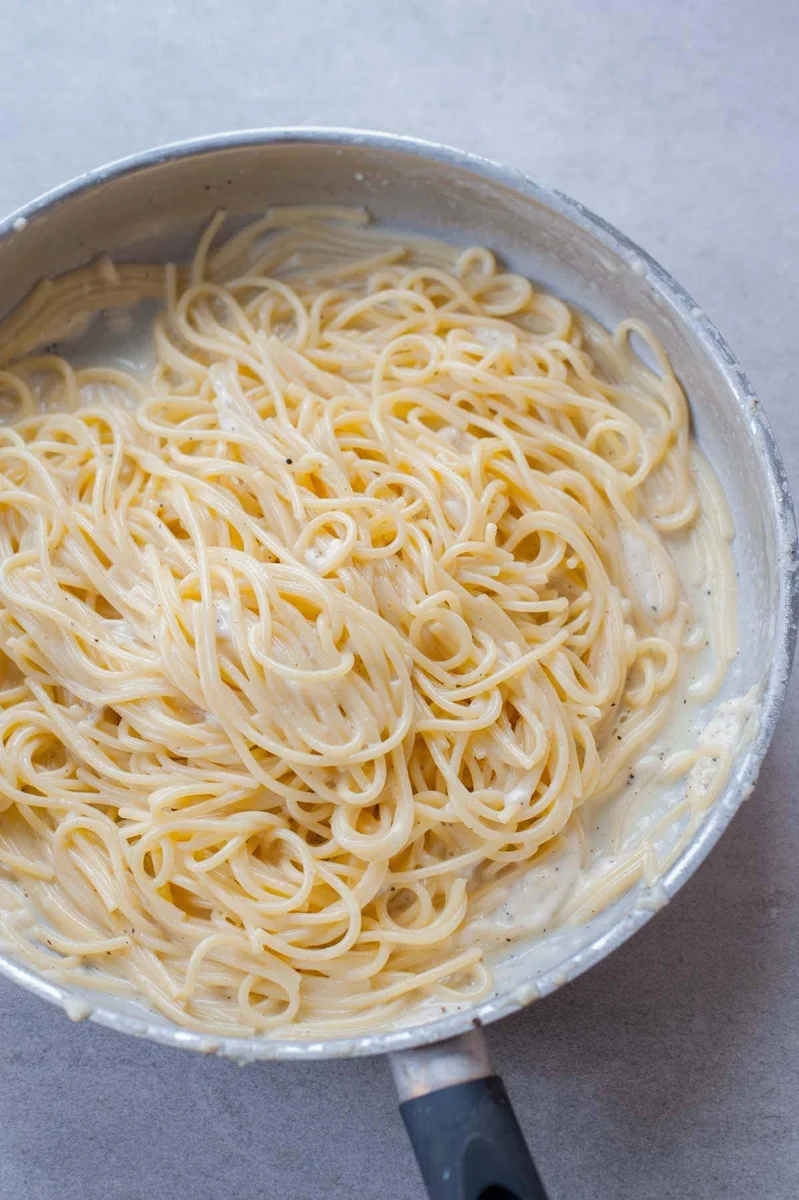
Spaghetti cacio e pepe is a classic Roman pasta dish built around Pecorino cheese and freshly ground black pepper. This version adds butter and olive oil for a quick, savoury sauce that comes together with starchy pasta water.
Ingredients
- 250 g (9 oz)spaghetti
- 135 g (5 oz)aged Pecorino Toscano or Pecorino Romano cheese
- 120 ml (½ cup), plus extra as neededpasta cooking water
- 15 g (1 tablespoon)butter
- 15 ml (1 tablespoon)olive oil
- 1–2 teaspoonsfreshly ground black pepper
Instructions
- 1
Prepare ingredients
Finely grate the cheese using a microplane zester or the smallest holes on a box grater. Grind the pepper and set both aside.
- 2
Toast the pepper
Warm the olive oil and butter in a large frying pan over low heat. Once hot, add the pepper and cook, stirring, for about 1 minute, until fragrant. Take the pan off the heat.
- 3
Cook the pasta
Bring a medium pot of well-salted water to the boil. Use just enough water to cover the pasta and do not add oil. Cook the spaghetti for about 1–2 minutes less than the packet instructions.
- 4
Reserve pasta water
About 3 minutes before the pasta finishes cooking, reserve about 240 ml (1 cup) of its cooking water. You will use 120 ml (½ cup) for the recipe, but keep the rest in case the sauce needs loosening.
- 5
Whisk the sauce
Pour 120 ml (½ cup) of the pasta water into the pan and whisk vigorously to combine it with the butter and olive oil. Set the pan aside and keep the remaining pasta water.
- 6
Toss the pasta
Add the cooked spaghetti to the pan and toss it with the sauce. Leave it for about 1–2 minutes so it cools slightly before you add the cheese.
- 7
Melt in cheese
Add the cheese and stir vigorously with kitchen tongs or two forks until it melts into a smooth, creamy sauce. If needed, set the pan over very low heat to help the cheese melt, adding more reserved pasta water if it is not coming together. Heat gently until all the cheese has melted.
- 8
Check seasoning
Taste the pasta and add more pepper if needed.
- 9
Serve immediately
Serve the pasta straight away.
What is spaghetti cacio e pepe?
Cacio e pepe is a Roman pasta dish whose name means cheese and pepper. Its traditional character comes from Pecorino cheese, black pepper and pasta water, which form a simple sauce without a separate cream base.
This version uses spaghetti with butter and olive oil to help carry the pepper and create a cohesive sauce. Grating the cheese very finely and adding it after the pasta has cooled briefly helps the mixture turn silky.
Nutrition and macros by portion
The nutrition label shows one serving as written: 924 calories, 0g protein, 0g carbs, 0g fat.
| Portion | Adjustment | kcal | Protein | Carbs | Fat |
|---|---|---|---|---|---|
| Lighter | Use less butter and oil | 647 kcal | 0g | 0g | 0g |
| This serving | As written | 924 kcal | 0g | 0g | 0g |
| Hungry | Add another serving | 1386 kcal | 0g | 0g | 0g |
The spaghetti provides most of the carbohydrates, while the Pecorino contributes protein and fat; butter and olive oil add further fat. Pair a serving with salad or vegetables for freshness and a more balanced plate.
Choose and grate the cheese
Pecorino: Aged Pecorino Toscano or Pecorino Romano both suit the recipe. Their savoury, salty flavour gives the pasta its defining taste.
Fine texture: Grate the cheese finely, using a microplane or the smallest holes of a box grater. Smaller pieces melt more readily into the sauce.
Build the pepper base
Low heat: Warm the butter and olive oil gently before adding the pepper. Cooking it for about a minute releases its aroma without scorching it.
Pasta water: Whisk the measured water into the fat while the pan is off the heat. The reserved extra water gives you room to adjust the sauce if it becomes too thick.
Get the cheese to melt smoothly
Slight pause: Toss the drained pasta with the sauce and leave it for 1–2 minutes before adding the cheese. This brief rest lets the pasta cool slightly.
Gentle heat: Stir vigorously with tongs or two forks, using very low heat only if the cheese needs help melting. Add a little reserved pasta water if the sauce is not becoming smooth.
Cook the spaghetti just shy of done
Shorter cooking: The pasta cooks for about 1–2 minutes less than the packet timing before it is tossed in the pan. This gives it a little time to finish in the sauce.
Small pot of water: Use the smallest amount of water that covers the spaghetti, as directed, and salt it well. Do not add oil to the cooking water.
Serve while it is silky
Timing: This pasta is best served immediately, while the sauce is smooth and coats the strands. Have the cheese grated and pepper ready before the pasta goes into the pot.
On the side: A crisp green salad or lightly dressed vegetables can add freshness alongside the rich, savoury pasta.
Recipe notes & tips
- Grate the Pecorino finely before you start cooking the pasta.
- Keep extra pasta water nearby so you can loosen the sauce gradually.
- Use freshly ground pepper for a more aromatic result.
- Take the pan off the heat before whisking in the first measure of pasta water.
- Wait about 1–2 minutes after tossing the pasta before adding the cheese.
Variations
- More pepper: Use the upper end of the suggested range for a bolder, peppery finish.
- Different Pecorino: Choose aged Pecorino Toscano or Pecorino Romano according to what you have available.
- Extra sauce: Add reserved pasta water a little at a time if the cheese mixture feels too thick.
- Salad pairing: Serve with a crisp green salad for a fresh contrast.
- Vegetable pairing: Add lightly dressed vegetables on the side for extra freshness.
Common mistakes to avoid
- Scorching the pepper: Keep the pan over low heat and stir it for about a minute, just until fragrant.
- Adding cheese too soon: Let the pasta stand for 1–2 minutes first so it cools slightly.
- Using coarse grated cheese: Grate it finely so it can melt more easily into the sauce.
- Heating the sauce too strongly: Use very low heat if needed, as high heat can make it harder to achieve a smooth texture.
- Discarding all the pasta water: Reserve about 240 ml (1 cup) before draining so you can adjust the sauce.
How to store
For the best texture, serve this pasta immediately. If you have leftovers, refrigerate them in an airtight container and use within 2 days; reheat gently in a pan with a splash of water, stirring until warmed through.
Frequently asked questions
Can I use Pecorino Romano instead of Pecorino Toscano?
Yes. The recipe allows for either aged Pecorino Toscano or Pecorino Romano.
Why should I save more pasta water than the recipe uses?
The sauce may need extra water to loosen it while the cheese melts. Add it gradually until the sauce is smooth and coats the spaghetti.
When should I add the cheese?
Toss the pasta with the sauce first, then leave it for about 1–2 minutes so it cools slightly before adding the cheese.
What if the cheese does not melt?
Stir vigorously and warm the pan over very low heat if needed. Add a little reserved pasta water to help the sauce come together.
Can I prepare cacio e pepe ahead?
It is best made just before serving because the sauce is at its silkiest when freshly combined. Have the cheese grated and pepper ready in advance instead.
Cook it from the original
This recipe comes from everyday-delicious.com. Their page has the author’s own photos, notes and tips — the best place to cook it from.
Open the recipe on everyday-delicious.com