
Orange pomegranate salad with mint lime dressing
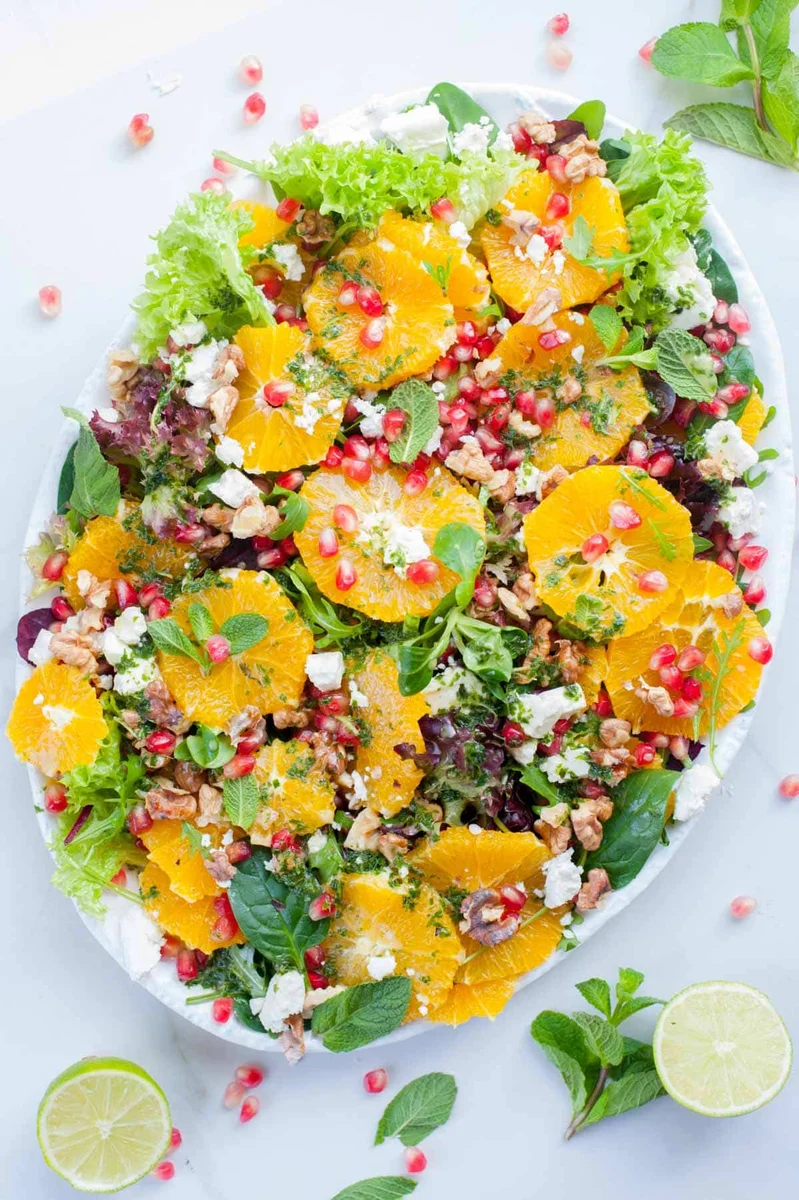
A bright composed salad of juicy orange, pomegranate, crunchy walnuts and salty feta, brought together with a mint and lime dressing. It makes a refreshing meal or side when you want a mix of sweet, sharp and savoury flavours.
Ingredients
- 2 largeoranges
- 110 g (⅔ cup; 4 oz)pomegranate seeds
- 2 big handfulssalad mix
- 100 g (3.5 oz)feta cheese
- 35 g (⅓ cup; 1.2 oz)walnuts, roughly chopped
- 1 tablespoonfresh mint leaves, chopped
- 2 tablespoonslime juice
- 2 teaspoonshoney
- 2 tablespoonsolive oil
- to tastesalt and pepper
Instructions
- 1
Wash the leaves
Wash the salad leaves thoroughly, then spin them dry or drain them well in a colander so excess water does not make the salad soggy.
- 2
Prepare the oranges
Use a sharp knife to cut away the peel and white pith, following the curve of each orange. Turn it as you work, trim the bottom, then slice the peeled orange.
- 3
Seed the pomegranate
With a paring knife, remove the top of the pomegranate and score its sides along the ridges, taking care not to cut the seeds. Peel it and separate it into segments along the white membranes, or break it into segments by hand if that is easier. Remove the seeds and measure out 110 g (⅔ cup).
- 4
Toast the walnuts
Roughly chop the walnuts and put them in a hot, dry pan. Toast, stirring occasionally, until fragrant and browned, then remove them from the pan straight away to prevent burning.
- 5
Shake the dressing
Put the dressing ingredients in a medium jar, close the lid and shake vigorously until combined. Alternatively, use a food processor on its lowest speed; this lets you leave the mint unchopped and helps avoid making the olive oil bitter.
- 6
Assemble the salad
Arrange the salad leaves on a large plate and top with orange slices, pomegranate seeds and walnuts. Crumble the feta over the top, spoon on the dressing, season lightly with salt and pepper, and serve.
What is orange pomegranate salad?
This is a composed salad rather than a dish tied to one particular culinary tradition. It brings together familiar Mediterranean-style ingredients—feta, olive oil, mint and citrus—with pomegranate for a lively sweet-and-sour contrast.
The combination works because the juicy fruit offsets the salty cheese, while toasted walnuts add crunch and the lime dressing sharpens each bite.
Nutrition and macros by portion
The nutrition label shows one serving as written: 225 calories, 0g protein, 0g carbs, 0g fat.
| Portion | Adjustment | kcal | Protein | Carbs | Fat |
|---|---|---|---|---|---|
| Lighter | Less feta and oil | 158 kcal | 0g | 0g | 0g |
| This serving | As written | 225 kcal | 0g | 0g | 0g |
| Hungry | Add bread or lentils | 338 kcal | 0g | 0g | 0g |
The fruit and honey provide most of the carbohydrates, while olive oil and walnuts contribute much of the fat; feta adds protein as well as fat. For a more substantial balanced plate, serve the salad with a protein-rich accompaniment such as grilled chicken, beans or lentils.
Choosing the ingredients
Oranges: Choose fruit that feels heavy for its size, as it should be juicy. Removing the white pith along with the peel keeps the slices neater and avoids its bitter flavour.
Feta: A crumbly, briny feta gives the salad a savoury counterpoint to the fruit. Add it at the end so the pieces remain distinct.
Salad mix: Use leaves you enjoy raw, and dry them thoroughly after washing. Wet leaves dilute the dressing and can leave liquid on the plate.
Getting clean orange slices
Set each orange on a stable cutting board and use a sharp knife to follow its curve, cutting away both the peel and the pith. Rotate the fruit little by little rather than trying to remove everything in one cut.
Once peeled, trim the base and slice the orange. Keeping the slices reasonably even makes the salad easier to arrange and eat.
Toasting the walnuts
A dry pan is all you need: the walnuts toast in their own oils, so added fat is unnecessary. Stir them from time to time and watch for a browned surface and a warm, nutty aroma.
Take them off the heat as soon as they are ready. They can burn quickly in a hot pan, and leaving them there may take them past the point of a pleasant toast.
Balancing the mint lime dressing
The lime juice and honey provide sharpness and sweetness, while olive oil rounds out the dressing. Shake the ingredients in a jar until combined, then taste and adjust the seasoning lightly when dressing the salad.
If using a food processor, run it at the lowest speed. The recipe notes that blending olive oil at high speed can make it slightly bitter.
Assembling and serving
Lay the leaves on a large plate, then scatter the orange, pomegranate and toasted walnuts over them. Finish with crumbled feta and spoon the dressing across the salad just before serving.
Serve it on its own as a light meal or alongside bread, grilled vegetables or a simply cooked protein. Add the dressing at the table if you want the leaves to stay crisp for longer.
Recipe notes & tips
- Dry the salad leaves thoroughly after washing so the dressing clings to them.
- Use a sharp knife to remove the orange pith without cutting away too much fruit.
- Measure the pomegranate seeds after removing them from the fruit.
- Keep the pan dry when toasting the walnuts.
- Transfer toasted walnuts out of the hot pan as soon as they are fragrant and browned.
- Dress the salad just before serving to keep the leaves fresh.
Variations
- Use other citrus: Substitute some orange slices with grapefruit for a sharper flavour.
- Add cucumber: Slice it thinly for extra crunch and freshness.
- Swap the nuts: Use roughly chopped pecans in place of walnuts.
- Make it vegan: Replace the feta with a plant-based alternative and use maple syrup instead of honey.
- Add herbs: Include a little chopped parsley alongside the mint.
Common mistakes to avoid
- Leaving wet leaves: Excess water dilutes the dressing; spin the leaves dry or drain them thoroughly.
- Keeping the pith: White pith can taste bitter; remove it along with the orange peel.
- Cutting into the pomegranate seeds: Score only the rind along its ridges, then separate the fruit at the white membranes.
- Walking away from the walnuts: They can burn quickly; stir them and remove them as soon as they are toasted.
- Over-processing the dressing: High-speed blending can make the olive oil slightly bitter; use a jar or the lowest processor speed.
- Dressing too early: The leaves may soften; spoon the dressing over the salad just before serving.
How to store
Store leftover salad and dressing separately in covered containers in the fridge and eat within 1 day. The leaves and fruit will soften after dressing, so this salad is best assembled shortly before serving.
Frequently asked questions
Can I prepare the salad ahead of time?
You can wash and dry the leaves, prepare the fruit and make the dressing ahead, storing each separately in the fridge. Assemble and dress the salad just before serving.
Can I use ready-to-eat pomegranate seeds?
Yes. Measure out 110 g (⅔ cup) and add them directly to the salad.
How do I know when the walnuts are toasted?
They should smell fragrant and look browned. Stir them occasionally and take them out of the pan promptly, as they can burn easily.
Can I make the dressing without a food processor?
Yes. Put the ingredients in a medium jar, close the lid and shake vigorously until combined.
What can I serve with this salad?
Serve it with bread, grilled vegetables or a simply cooked protein. It can also be enjoyed by itself as a light meal.
Cook it from the original
This recipe comes from everyday-delicious.com. Their page has the author’s own photos, notes and tips — the best place to cook it from.
Open the recipe on everyday-delicious.com