
Refried Black Beans (Caraotas negras refritas)
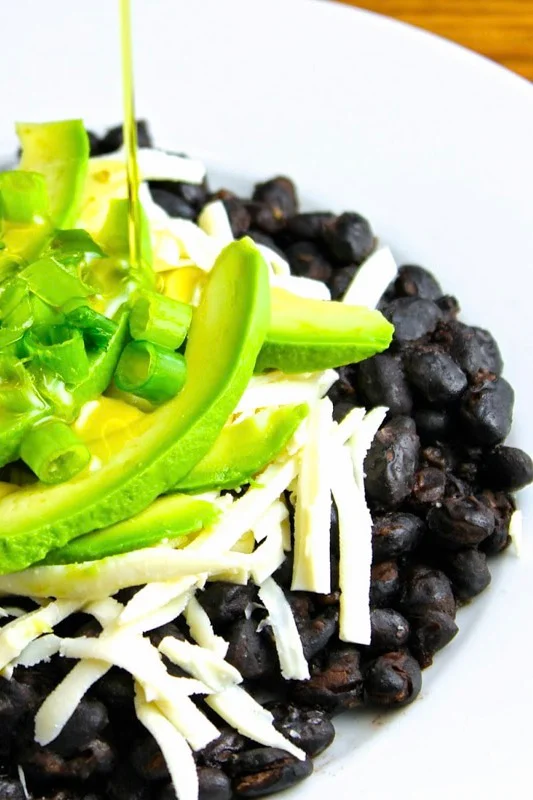
These Venezuelan-style refried black beans are simmered with garlic, onion, red pepper and ají dulce, then topped with white cheese, avocado and green onion. Serve them on their own or as a filling for arepas, empanadas or carabinas.
Ingredients
- 30 ml (2 tablespoons)olive oil
- 1 clovegarlic, minced
- 53 g (1/3 cup)onion, finely chopped
- 37 g (1/4 cup)red bell pepper, deseeded, with the veins removed, and finely chopped
- 20 g (2 tablespoons)ají dulce, finely chopped
- 710 ml (3 cups)black bean soup from the previous day
- 1 pinchcumin
- to tastesalt
- 110 g (1 cup)Venezuelan white cheese, llanero-style, grated
- 2Hass avocados, peeled, pitted and sliced
- 2 tablespoonsgreen onion, green part only, chopped
- 20 ml (4 teaspoons)extra virgin olive oil
- to tastesalt
Instructions
- 1
Soften the aromatics
Warm the olive oil in a frying pan over medium heat. Add the garlic and onion and sauté for about 3 minutes, until softened.
- 2
Cook the peppers
Stir in the red bell pepper and ají dulce, then sauté for a further 3–4 minutes.
- 3
Add the beans
Add the black beans, taking care that they are not carrying too much liquid.
- 4
Season the beans
Add the cumin, stir and sauté until the beans start to boil.
- 5
Simmer until dry
Once boiling, turn the heat down and simmer uncovered for about 10 minutes, stirring occasionally, until the beans are dry.
- 6
Add the toppings
Spread the beans on a plate and garnish with the grated cheese, avocado slices and green onion.
- 7
Finish and season
Drizzle with the extra virgin olive oil and season with salt.
What are refried black beans?
In Venezuelan cooking, caraotas negras refritas are black beans cooked again in a pan with aromatics. They are served at different times of day and can be enjoyed as a dish or used as a filling for arepas, empanadas and carabinas.
This version uses black bean soup from the previous day, reducing it until the beans are nearly dry. Cheese, avocado and green onion add a fresh, creamy contrast when serving.
Nutrition and macros by portion
The nutrition label shows one serving as written: 435 calories, 8g protein, 12g carbs, 33g fat.
| Portion | Adjustment | kcal | Protein | Carbs | Fat |
|---|---|---|---|---|---|
| Lighter | Less oil and cheese | 305 kcal | 6g | 8g | 23g |
| This serving | As written | 435 kcal | 8g | 12g | 33g |
| Hungry | Larger bean portion | 653 kcal | 12g | 18g | 50g |
The black beans provide most of the carbohydrates and some of the protein, while the olive oils, avocado and cheese contribute much of the fat. Serve a moderate portion with vegetables or salad to add freshness and balance to the plate.
Choose the right beans
Leftover beans: Use the beans from the soup, but avoid adding too much of its liquid at the start. Excess liquid takes longer to cook away and can leave the finished beans loose.
Ají dulce: This mild Venezuelan pepper brings a distinctive pepper flavour without making the dish hot. Chop it finely so it cooks evenly with the onion and red pepper.
Build the flavour first
Garlic and onion: Give these about 3 minutes in the oil, until softened rather than browned. This creates a gentle aromatic base for the beans.
Peppers: Cook the red pepper and ají dulce for a further 3–4 minutes. Stir them through the pan so they soften evenly before adding the beans.
Reduce without scorching
Low heat: After the beans come to a boil, lower the heat and leave the pan uncovered. This lets moisture evaporate during the roughly 10-minute simmer.
Occasional stirring: Stir from time to time, paying attention to the bottom of the pan as the mixture thickens. The beans are ready when they look dry rather than soupy.
Finish with the toppings
Cheese and avocado: Grate the llanero-style cheese and slice the avocado shortly before serving. Their textures and flavours complement the savoury beans.
Green onion and oil: Scatter over the chopped green part of the onion, then drizzle with extra virgin olive oil. Season with salt at the end, tasting first if the cheese is salty.
How to serve them
As a filling: Spoon the beans into arepas, empanadas or carabinas while they are still warm and thick enough to hold their shape.
As a plate: Serve them with the listed cheese and avocado toppings, or alongside a simple salad or cooked vegetables for a more rounded meal.
Recipe notes & tips
- Drain off excess soup liquid before adding the beans to the pan.
- Keep the heat moderate while cooking the peppers so they soften without browning too quickly.
- Stir more often as the beans thicken to stop them catching on the pan.
- Taste before adding the final salt, particularly if your white cheese is salty.
- Slice the avocado just before serving to keep it looking fresh.
Variations
- Add heat: Include a little chopped chilli if you would like a spicier result.
- Use another pepper: Replace the red bell pepper with an equal amount of finely chopped sweet pepper.
- Change the cheese: Use another firm, salty white cheese if llanero-style cheese is unavailable.
- Mash some beans: Lightly crush a portion of the beans in the pan for a thicker, more cohesive texture.
- Serve with eggs: Add fried or scrambled eggs alongside the beans for a breakfast plate.
Common mistakes to avoid
- Adding too much bean liquid: The mixture will take longer to dry; drain excess liquid before cooking.
- Skipping the simmer: Give the beans about 10 minutes uncovered so they can reduce rather than remain soupy.
- Using high heat: The beans can catch as they thicken; lower the heat after they come to a boil.
- Leaving the pan unstirred: The bottom may scorch; stir occasionally, more often near the end.
- Salting too early: Cheese can add saltiness; taste the finished beans before seasoning.
How to store
Refrigerate leftover beans in a covered container for up to 3 days, keeping the avocado and other fresh toppings separate. Reheat the beans gently in a pan, stirring until hot; add a splash of water if they have become too thick, then top just before serving.
Frequently asked questions
Can I use freshly cooked black beans?
Yes. Use cooked black beans and add only a little cooking liquid, if needed, since the method relies on reducing the mixture until dry.
What is ají dulce?
It is a mild, aromatic pepper used in Venezuelan cooking. If you cannot find it, use finely chopped sweet pepper, though the flavour will differ.
Do I need to mash the beans?
Not for this method: the beans are simmered until dry and then spread on a plate. You can lightly mash some of them if you prefer a thicker texture.
How can I tell when the beans are ready?
They should look reduced and dry rather than surrounded by liquid. Stir occasionally and allow extra time if they are still soupy.
What can I serve with these beans?
They work as a filling for arepas, empanadas and carabinas, or as a plate with the cheese and avocado toppings. Salad or cooked vegetables also make a simple accompaniment.
Can I prepare them ahead?
You can cook the beans ahead and refrigerate them, then reheat gently. Add the avocado and fresh toppings when serving.
Cook it from the original
This recipe comes from enrilemoine.com. Their page has the author’s own photos, notes and tips — the best place to cook it from.
Open the recipe on enrilemoine.com