
Lasagna Bolognese with Bechamel
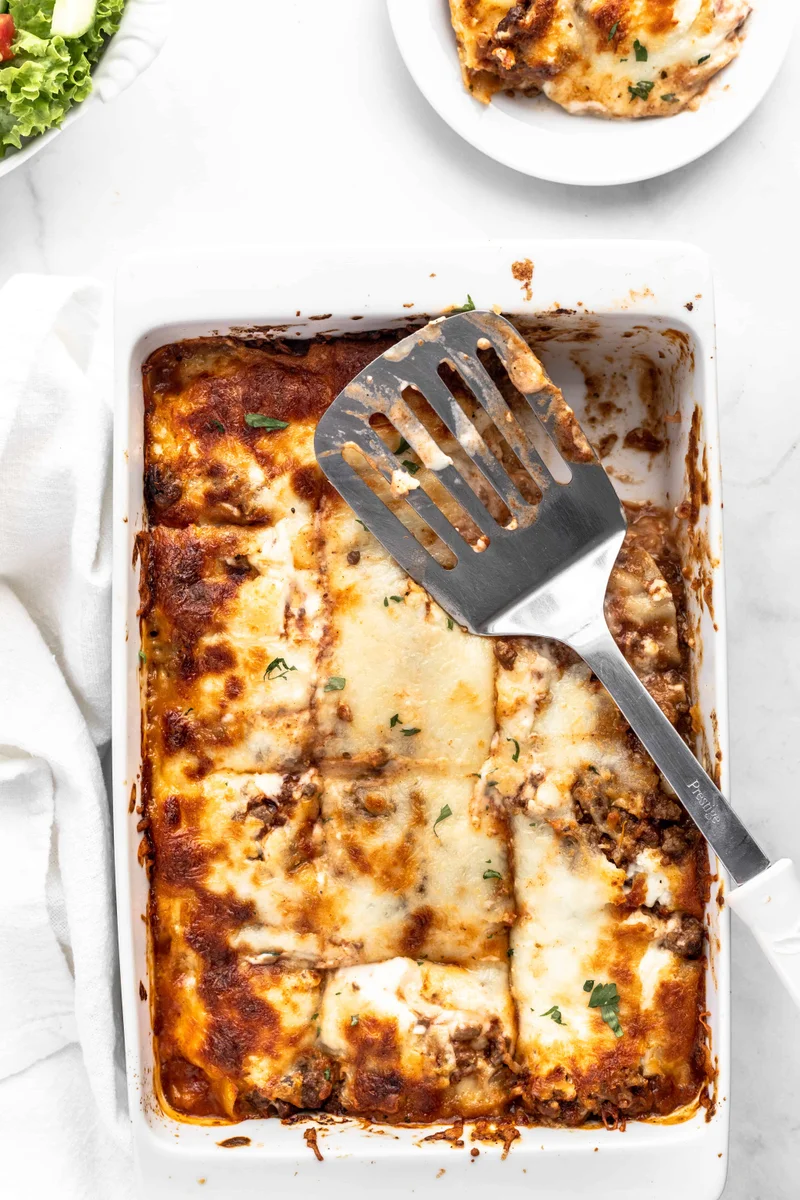
This lasagna layers a warmly spiced beef and tomato sauce with a homemade garlic and Parmesan béchamel, then bakes it beneath mozzarella until bubbling. It is a hearty take on an Italian classic, made with no-boil noodles to keep assembly straightforward.
Ingredients
- 2 tbsp (30 ml)vegetable oil
- 1onion, diced
- 500 g (1 lb)minced beef
- 1 tspallspice
- 1/2 tspcinnamon
- to taste (approximately 1/2 tsp)black pepper
- to taste (approximately 1 tsp)salt
- 4 clovesgarlic, minced
- 1 large can (400 g / 15 oz)tomato sauce
- 1 small cartontomato purée
- 1 tspItalian seasoning
- 1/2 tspgarlic powder
- 1 tspsoft brown sugar
- 1/2 cup (120 ml)hot water
- 1/4 cup (approximately 57 g; 1/2 stick)butter
- 1/4 cup (approximately 30 g)plain flour
- 2 cups (480 ml)milk
- 1 cup (240 ml)double cream
- 2 clovesgarlic, minced
- 1 pinchnutmeg
- 1/4 cup (approximately 25 g)grated Parmesan
- 9–12no-boil lasagne sheets
- 1 cup (approximately 100 g)grated mozzarella
- 1 handful, optionalgrated Parmesan
Instructions
- 1
Cook the onion
For the meat sauce, heat the vegetable oil in a medium saucepan over medium-high heat. Sauté the onion for a few minutes, until soft and translucent.
- 2
Brown the beef
Add the minced beef and cook until browned, breaking it up with a wooden spoon as it cooks.
- 3
Season the beef
Stir in the allspice, cinnamon, black pepper, salt and minced garlic.
- 4
Simmer the sauce
Add the tomato sauce, tomato purée, Italian seasoning, garlic powder and brown sugar. Boil for 5 minutes, then add the hot water, lower the heat and simmer for 30 minutes.
- 5
Make the roux
For the béchamel, melt the butter in a medium saucepan over medium heat with the flour. Whisk for about 3 minutes, until the mixture turns golden brown.
- 6
Warm the dairy
Combine the milk and double cream in a large microwave-safe bowl. Warm for 1 minute, until warm but not boiling.
- 7
Thicken the sauce
Pour the warm milk and cream into the butter and flour mixture, whisking constantly. Add the garlic, nutmeg, salt and pepper. Reduce the heat to medium-low so the sauce simmers, and keep whisking for 8–10 minutes, until thickened.
- 8
Add the Parmesan
Turn off the heat once the béchamel has formed, then stir in the Parmesan. Set the pan aside to cool slightly.
- 9
Heat the oven
Preheat the oven to 180°C (350°F). Spread a little béchamel over the bottom of a 9 × 13-inch Pyrex or ceramic baking dish to help stop the noodles sticking.
- 10
Lay the noodles
Arrange a layer of uncooked lasagne sheets in the dish. If needed, break some into narrower strips or pieces to cover the base.
- 11
Build the layers
Spread one-third of the meat sauce over the dry noodles, followed by one-third of the béchamel. Repeat with another layer of noodles, one-third of each sauce, then finish with the remaining meat sauce and béchamel. Top with mozzarella and the optional Parmesan.
- 12
Bake until bubbling
Cover the lasagna loosely with foil and bake for 30 minutes. Remove the foil and bake for another 5–10 minutes, until golden and bubbling. For more browning, switch on the grill for the final minute or so.
What is lasagna Bolognese?
Lasagna is an Italian baked pasta dish built from alternating layers of pasta and filling. Bolognese-style versions pair pasta with a meat-and-tomato sauce, while béchamel adds a creamy layer.
This version combines minced beef with cinnamon and allspice, then balances the rich meat sauce with a garlic and Parmesan béchamel. No-boil sheets make it possible to assemble the layers without cooking the pasta first.
Nutrition and macros by portion
The nutrition label shows one serving as written: 338 calories, 0g protein, 0g carbs, 0g fat.
| Portion | Adjustment | kcal | Protein | Carbs | Fat |
|---|---|---|---|---|---|
| Lighter | Smaller slice, extra greens | 237 kcal | 0g | 0g | 0g |
| This serving | As written | 338 kcal | 0g | 0g | 0g |
| Hungry | Larger lasagna portion | 507 kcal | 0g | 0g | 0g |
The beef provides most of the protein, while the noodles and tomato sauce contribute carbohydrates. Butter, cream and cheese account for much of the fat; serve a slice with salad or vegetables for a more balanced plate.
Building the meat sauce
Onion first: cook it until soft and translucent before adding the beef, so it has time to sweeten and soften in the oil.
Brown the beef: break it up as it cooks to avoid large clumps. The spices and garlic go in before the tomatoes, giving them a chance to coat the meat.
Getting the béchamel right
Golden roux: whisk the flour and butter for about 3 minutes, stopping when the mixture is golden brown. Keep it moving so it browns evenly.
Warm dairy: adding warm milk and cream gradually to the roux helps the sauce come together. Whisk constantly as it simmers for 8–10 minutes, until it thickens, then stir in the Parmesan off the heat.
Layering the lasagna
Base layer: a little béchamel under the first sheets helps prevent them from sticking to the dish. Arrange the dry sheets to cover the base, breaking some if needed.
Even layers: divide the meat sauce and béchamel into thirds so they can be spread across the pasta layers. Finish with the sauces and cheese on top.
Baking and doneness
Covered bake: keep the dish loosely covered with foil for the first 30 minutes at 180°C. This gives the dry noodles time to cook while the layers heat through.
Golden top: remove the foil and bake for another 5–10 minutes, until the surface is browned and the edges are bubbling. The optional final minute under the grill can add more colour, so watch it closely.
What to serve with it
A green salad dressed with a sharp vinaigrette provides a fresh contrast to the creamy sauce and rich beef. Steamed or roasted vegetables also work well alongside a slice.
If serving bread, keep it simple: a small piece is enough to mop up extra sauce without crowding the plate.
Recipe notes & tips
- Break up the beef as it browns so the meat sauce has an even texture.
- Warm the milk and cream before adding them to the roux.
- Whisk the béchamel continuously as it thickens to help keep it smooth.
- Spread the sauces evenly so the dry noodles are covered between layers.
- Keep the foil loose rather than pressing it onto the cheese.
- Watch closely if using the grill for the final minute, as the cheese can brown quickly.
Variations
- Add vegetables: stir finely diced courgette or mushrooms into the meat sauce as it cooks.
- Use a different cheese: replace some of the mozzarella with another good melting cheese.
- Adjust the spice: reduce or omit the cinnamon for a less warmly spiced sauce.
- Add herbs: finish the tomato sauce with chopped fresh basil before layering.
- Make it vegetarian: use cooked lentils in place of the minced beef.
Common mistakes to avoid
- Leaving the beef in clumps: break it up with a wooden spoon as it browns.
- Adding cold dairy: warm the milk and cream for 1 minute before pouring them into the roux.
- Stopping the whisking: keep whisking the béchamel as it simmers to help it thicken smoothly.
- Using too little sauce between sheets: spread each portion across the noodles so they are covered.
- Overbrowning the top: check the lasagna during the uncovered bake and grill only briefly if needed.
How to store
Refrigerate leftovers in a covered container for up to 3 days. Reheat portions until steaming hot throughout, either in the microwave or covered in the oven.
Frequently asked questions
Do I need to cook the lasagne sheets first?
No. The recipe uses no-boil sheets and layers them dry; they cook in the sauce as the lasagna bakes.
Can I make the sauces ahead?
Yes. Prepare the meat sauce and béchamel ahead and refrigerate them separately. Warm them gently before assembling if they have become very firm.
How do I know the lasagna is done?
After the covered bake and final uncovered 5–10 minutes, the top should be golden and the lasagna bubbling.
Can I use a different baking dish?
Use a Pyrex or ceramic dish of about 9 × 13 inches, as specified in the recipe. A substantially different size may change the depth of the layers.
Can I freeze leftover lasagna?
Yes. Cool it, wrap or seal it well, and freeze. Defrost in the fridge before reheating until steaming hot throughout.
Cook it from the original
This recipe comes from everylittlecrumb.com. Their page has the author’s own photos, notes and tips — the best place to cook it from.
Open the recipe on everylittlecrumb.com