
Chocolate Chip Scones Recipe
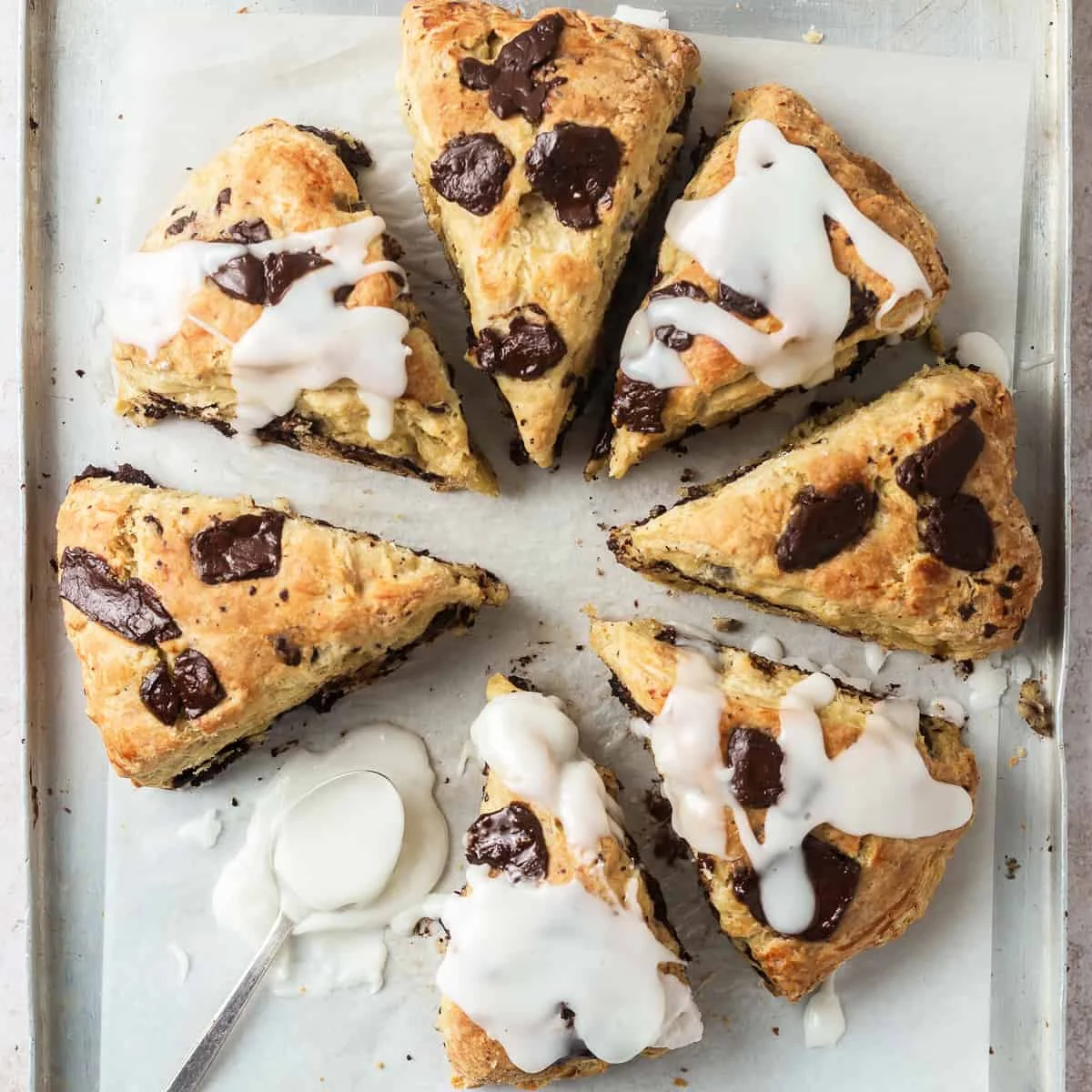
These English-style scones are tender and flaky, with chunks of dark chocolate folded through the dough and an optional yoghurt glaze. They make a sweet addition to afternoon tea or a breakfast spread.
Ingredients
- 375 gself-raising flour
- 15 gcaster sugar
- 1/4 tspfine salt
- 210 gcold buttermilk
- 1 largeegg
- 1 tspvanilla extract
- 90 gunsalted butter, chilled and cubed
- 150 gdark chocolate, 70% cocoa, chopped (or dark chocolate chips)
- 120 gpowdered icing sugar
- 1–2 tbspGreek yoghurt
Instructions
- 1
Prepare the tray
Line a baking tray with baking parchment. Sift the flour and salt into a large bowl, add the caster sugar and stir to combine.
- 2
Whisk wet ingredients
Whisk the egg and vanilla together, then whisk in the buttermilk. Set aside 1 tablespoon of this mixture to brush over the scones later.
- 3
Rub in butter
Add the cubed butter to the flour and toss to coat. Rub it in with your fingertips until the mixture resembles breadcrumbs, with a few pea-sized pieces remaining. Stir in the chopped chocolate.
- 4
Make the dough
Make a well in the dry ingredients and pour in the remaining egg and buttermilk mixture. Stir with a fork until the dough begins to come together; it will look shaggy and feel sticky. If needed, use your hands to bring in any loose flour at the bottom of the bowl.
- 5
Fold and shape
Tip the mixture onto a lightly floured surface. Bring it together with your hands, kneading just a couple of times, then flatten it gently. Fold the dough in half, turn it and fold it in half again. Divide it into two portions and shape each into a disc, or roll gently, to about 4 cm thick.
- 6
Cut and chill
Put the discs on the prepared tray and cut each into 6 equal wedges with a sharp knife or bench scraper. Refrigerate the tray for 30 minutes. While the dough chills, preheat the oven to 200°C (425°F).
- 7
Brush and bake
Brush the scone tops with the reserved egg mixture, taking care not to let it run down the sides. Bake for 15–18 minutes, until risen and golden brown.
- 8
Make the glaze
For the optional glaze, sift the icing sugar into a bowl and whisk in the Greek yoghurt until thick, adding a little more yoghurt if needed. Let the scones cool slightly, then drizzle with the glaze.
What are chocolate chip scones?
Scones are a familiar part of British baking, often served with tea and traditionally made as a quick, lightly sweetened bake. This version adds dark chocolate and a yoghurt glaze for a richer, dessert-like finish.
Self-raising flour helps the dough rise, while cold butter and a light touch keep the crumb tender. Folding the dough creates layers without extensive kneading.
Nutrition and macros by portion
The nutrition label shows one serving as written: 294 calories, 6g protein, 41g carbs, 13g fat.
| Portion | Adjustment | kcal | Protein | Carbs | Fat |
|---|---|---|---|---|---|
| Lighter | Skip the yoghurt glaze | 206 kcal | 4g | 29g | 9g |
| This serving | As written | 294 kcal | 6g | 41g | 13g |
| Hungry | Serve two scones | 441 kcal | 9g | 62g | 20g |
The flour and sugar provide most of the carbohydrates, while butter and dark chocolate contribute much of the fat. The buttermilk, egg, chocolate and yoghurt add some protein. Pair a scone with fresh fruit or yoghurt for a more rounded plate.
Choosing the ingredients
Flour: Self-raising flour is specified here, so use it as listed rather than adding extra raising agent. Sift it with the salt to distribute them evenly.
Chocolate: Chopped 70% dark chocolate gives pockets of chocolate through the scones; chocolate chips are a convenient alternative. Keep the butter chilled so it stays distinct as you work it into the flour.
Keep the dough light
Butter: Rub the cubes into the flour until most pieces are small, but leave a few pea-sized bits for a tender, flaky texture. Work with your fingertips and avoid warming the butter with your hands.
Mixing: Stir in the liquid only until the dough starts to come together. A shaggy, slightly sticky dough is expected; overworking it can make the scones firm.
Folding and shaping
Folds: Bring the dough together with only a couple of kneads, then fold it in half, turn it and fold it once more. This brief handling helps create layers while keeping the dough airy.
Cutting: Shape two discs about 4 cm thick and cut each into six wedges. Use a sharp knife or bench scraper and try to cut cleanly so the edges can rise well.
Chilling and baking
Chilling: Rest the cut scones in the fridge for 30 minutes before baking. This gives the dough time to firm up after shaping.
Doneness: Bake at 200°C for 15–18 minutes, looking for well-risen scones with golden tops. The method calls for brushing only the tops with egg wash; avoid letting it run down the sides.
Serving ideas
Glaze: The yoghurt glaze is optional and should be thick enough to drizzle rather than run over the scones. Let them cool slightly before adding it.
Pairings: Serve warm or at room temperature with tea or coffee. Fresh fruit alongside adds a bright contrast to the chocolate and sweet glaze.
Recipe notes & tips
- Keep the butter cold until it is time to rub it into the flour.
- Use your fingertips or a pastry cutter to work the butter in without warming it too much.
- Stop mixing as soon as the dough begins to come together.
- Flour the work surface lightly so the dough does not stick while you shape it.
- Brush egg wash over the tops only to avoid coating the cut sides.
- For the best texture, enjoy the scones on the day they are baked.
Variations
- Use chocolate chips: Swap the chopped dark chocolate for dark chocolate chips.
- Change the chocolate: Try another dark chocolate percentage to adjust the intensity.
- Leave off the glaze: Serve the scones plain for a less sweet finish.
- Add a citrus note: Stir a little finely grated orange zest into the dry ingredients.
- Serve with fruit: Add fresh berries alongside for a fresh contrast.
Common mistakes to avoid
- Warming the butter: Work quickly with your fingertips so the butter stays chilled.
- Overworking the dough: Stop kneading after a couple of turns to keep the scones tender.
- Adding too much flour: Flour the surface lightly rather than working extra flour into the dough.
- Cutting with a blunt knife: Use a sharp knife or bench scraper for clean wedge edges.
- Egg wash down the sides: Brush only the tops so the sides remain free to rise.
- Skipping the chill: Refrigerate the cut dough for 30 minutes before baking.
How to store
These scones are best on the day they are made. Store leftovers in an airtight container at room temperature and warm briefly in a low oven before serving; add the glaze after reheating if possible.
Frequently asked questions
Can I use chocolate chips instead of chopped chocolate?
Yes. The ingredients list dark chocolate chips as an alternative to chopped 70% dark chocolate.
Is the yoghurt glaze essential?
No, it is optional. The scones can be served plain, or you can add the glaze after they have cooled slightly.
Why is the dough sticky and shaggy?
That texture is expected before the dough is brought together. Use your hands lightly to incorporate any loose flour, without kneading it extensively.
How thick should I make the dough?
Shape each portion into a disc about 4 cm thick before cutting it into six wedges.
How do I know when the scones are done?
They should be well risen and golden brown after 15–18 minutes at 200°C.
Can I make the dough ahead?
The method includes chilling the cut scones for 30 minutes before baking. For the best result, bake them on the day you plan to serve them.
Cook it from the original
This recipe comes from emmaduckworthbakes.com. Their page has the author’s own photos, notes and tips — the best place to cook it from.
Open the recipe on emmaduckworthbakes.com