
Shrimp and Clam Pasta
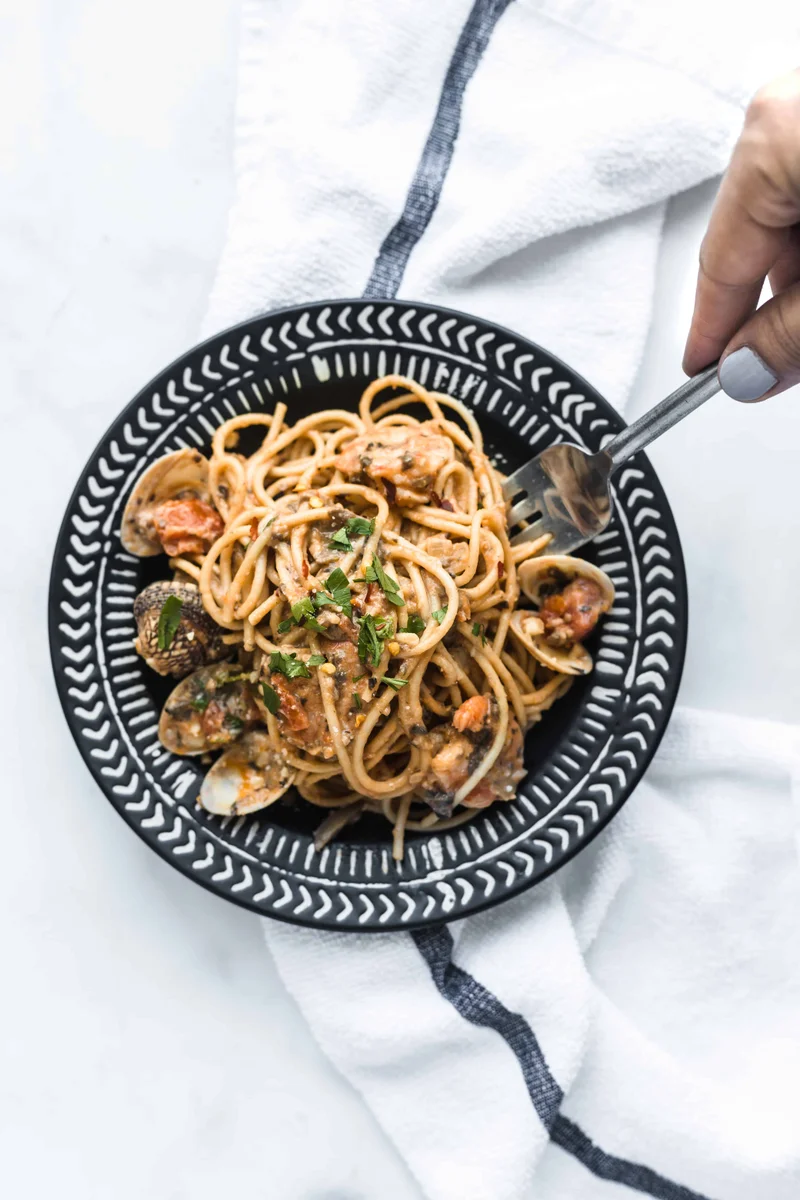
Linguine is tossed with shrimp, fresh clams and a light, savoury sauce made with clam broth, milk and vegetables. It brings a restaurant-style seafood pasta to the home kitchen, with the clams steaming in the same pan used to build the sauce.
Ingredients
- 500 glinguine or spaghetti pasta, cooked according to the packet instructions and drained
- 1 kg (2 lb)fresh clams
- 1 tbspbutter
- 1 largeonion, finely diced
- 6–8white button mushrooms, finely diced
- 1tomato, finely diced
- ½ tspsalt
- A pinchblack pepper
- ¼ tspdried basil
- ¼ tsppaprika
- 400 g (1 lb)fresh shrimp, deveined and with tails removed
- To tastesalt and pepper
- 240 ml (1 cup)non-alcoholic white wine or white grape juice
- 240 ml (1 cup)milk
- 1 tbspbutter
- 1 tbspflour
- A handfulfresh parsley, chopped, for topping
Instructions
- 1
Rinse the clams
Rinse the clams under cold water and discard any that are cracked or already open. Leave the rest soaking in cold water until you are ready to cook them.
- 2
Cook the vegetables
In a large lidded pan, melt 1 tbsp butter over medium-high heat. Add the diced onion and garlic and sauté for a few minutes, until the onion softens without browning. Add the diced mushrooms and sauté for a few more minutes, then add the tomato, ½ tsp salt, a pinch of black pepper, ¼ tsp dried basil and ¼ tsp paprika. Cook for a few minutes more, then transfer the mixture to a small bowl.
- 3
Cook the shrimp
Arrange the shrimp in a single layer in the same pan. Season with salt and pepper and cook for 1–2 minutes, until pink and opaque underneath. Turn them over, season the other side, and cook for another 1–2 minutes until cooked through. Transfer to a separate plate.
- 4
Steam the clams
Turn the heat to high. Drain the clams and add them to the same pan, then immediately pour in 240 ml non-alcoholic white wine or white grape juice and cover tightly. Steam for 7–8 minutes, then take the pan off the heat. Discard any clams that have not opened, and set the opened clams aside, leaving the liquid in the pan.
- 5
Strain the broth
Let the liquid stand for a few minutes, then strain it through a fine-mesh sieve into a measuring jug to remove any sand or grit. Wash the pan to clear away any grit, return it to the hob over medium heat and pour the broth back in.
- 6
Make the sauce
Add 1 tbsp butter and 1 tbsp flour to the broth, whisking for about 5 minutes until the mixture thickens. Pour in 240 ml milk and return the cooked mushroom and tomato mixture to the pan, then whisk to combine. The sauce will remain fairly light rather than very thick.
- 7
Toss and serve
Add the cooked pasta and toss it through the sauce. Stir in the cooked clams and shrimp gently, keeping most of the seafood on top of the pasta. Finish with the chopped parsley.
What is shrimp and clam pasta?
This is a seafood pasta built around linguine, shrimp and clams, with the clams’ cooking liquid forming the base of the sauce. Seafood pasta is familiar in Italian cooking, particularly in coastal areas, where shellfish and pasta make a straightforward pairing.
Here, vegetables, milk and a little flour soften the savoury clam broth into a light sauce. Cooking the seafood separately helps keep the shrimp tender and lets the clams flavour the sauce.
Nutrition and macros by portion
The nutrition label shows one serving as written: 615 calories, 0g protein, 0g carbs, 0g fat.
| Portion | Adjustment | kcal | Protein | Carbs | Fat |
|---|---|---|---|---|---|
| Lighter | More vegetables, less pasta | 431 kcal | 0g | 0g | 0g |
| This serving | As written | 615 kcal | 0g | 0g | 0g |
| Hungry | Larger pasta portion | 923 kcal | 0g | 0g | 0g |
The pasta supplies most of the carbohydrates, while the butter, milk and flour contribute fat and the seafood supplies protein. Pair a serving with a generous salad or vegetables for a more balanced plate.
The seafood and its broth
Fresh clams: Rinse them well and discard any that are cracked or open before cooking. After steaming, discard any that remain closed.
Clam liquid: Straining the broth through a fine-mesh sieve catches sand and grit. Washing the pan before returning the broth helps prevent grit left behind from getting into the sauce.
Shrimp: Cook them just until pink and opaque, then set them aside. They go back into the dish at the end, so they do not spend long simmering in the sauce.
Building the sauce
Vegetables first: Softening the onion and mushrooms before adding the tomato gives them time to cook without browning the onion. The recipe method also calls for garlic, although garlic is not listed in the supplied ingredients.
Butter and flour: Whisk them into the strained broth for about 5 minutes, then add the milk. The finished sauce is meant to be light, not thick like a cream sauce.
Getting the timing right
Pasta: Cook it according to the packet instructions and drain it before making the final toss. Having it ready means it can go straight into the sauce while everything is warm.
Clams: Cover the pan tightly and steam for 7–8 minutes. Check them after steaming and remove any unopened clams before serving.
Texture and doneness cues
Shrimp: Look for pink, opaque flesh and take the shrimp out as soon as they are cooked through. Leaving them in the pan longer can make them firm.
Sauce: It should coat the pasta lightly rather than cling in a thick layer. Toss gently so the clams and shrimp stay mostly on top and the pasta does not break up.
Serving ideas
Serve the pasta as soon as it is tossed, while the seafood and sauce are hot. A crisp green salad or simply cooked vegetables make a fresh contrast to the savoury broth.
The recipe already includes parsley as a finishing touch. Put extra parsley on the table for anyone who wants a more herb-forward finish.
Recipe notes & tips
- Use a pan with a lid that fits tightly so the clams steam effectively.
- Keep the shrimp in a single layer so they cook evenly.
- Let the clam liquid settle briefly before straining it.
- Have the cooked pasta ready before you finish the sauce.
- Stir the seafood in gently to help keep the shrimp intact.
Variations
- Add garlic: The method calls for garlic, though no quantity is provided in the ingredient list.
- Use spaghetti: Swap in spaghetti, as allowed by the recipe, and cook it according to its packet instructions.
- Choose grape juice: Use non-alcoholic white grape juice instead of non-alcoholic white wine.
- Add extra herbs: Finish with more chopped parsley for a fresher, more pronounced herbal note.
Common mistakes to avoid
- Keeping cracked or open clams: Discard these before cooking, as directed in the method.
- Skipping the straining: Fine grit can remain in clam broth, so pass it through a fine-mesh sieve.
- Overcooking the shrimp: Remove them once pink and opaque, then add them back at the end.
- Leaving unopened clams in: Discard any clams that have not opened after steaming.
- Expecting a thick sauce: This recipe makes a light sauce, so do not wait for it to become very thick.
How to store
Refrigerate leftovers promptly in a sealed container and eat within 1–2 days. Reheat gently in a covered pan until piping hot, adding a splash of milk or water if the pasta has become dry.
Frequently asked questions
Can I use spaghetti instead of linguine?
Yes. The recipe lists either linguine or spaghetti; cook whichever you choose according to the packet instructions.
Can I use white grape juice instead of wine?
Yes. The recipe gives non-alcoholic white wine and white grape juice as alternatives, in the same quantity.
Why should I strain the clam liquid?
Clams can leave sand or grit in their cooking liquid. Straining it through a fine-mesh sieve helps keep that grit out of the sauce.
What should I do with clams that stay closed?
Discard any clams that have not opened after steaming, as the method instructs.
Why is the sauce not very thick?
It is intended to be a light sauce made with clam broth and milk. The method notes that it will not become very thick.
The method says to add garlic; how much should I use?
Garlic appears in the method but is missing from the supplied ingredient list, so no quantity is specified.
Cook it from the original
This recipe comes from everylittlecrumb.com. Their page has the author’s own photos, notes and tips — the best place to cook it from.
Open the recipe on everylittlecrumb.com