
Meatball stew
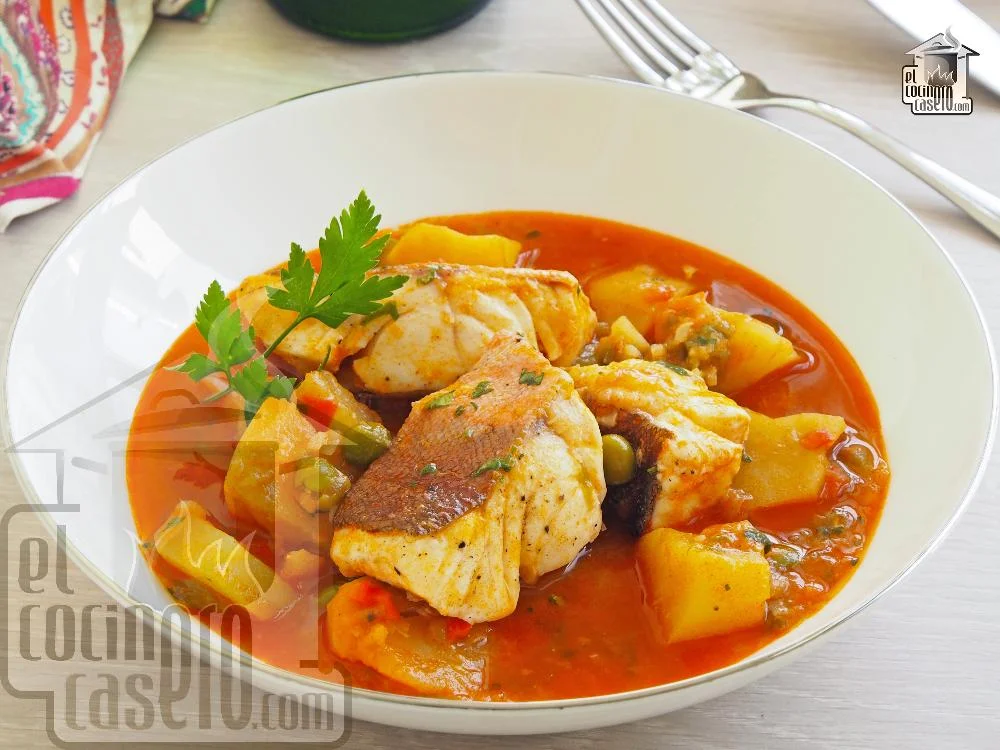
This Spanish fish stew pairs firm white gurnard with potatoes, peas and a gently cooked pepper-and-onion base. It takes time to make the fish stock, but that stock gives the potatoes a savoury broth and helps the fish stay tender.
Ingredients
- To tasteGurnard (rubio, escacho or alfóndiga)
- To tastePotatoes
- To tasteGarlic
- To tasteOnion
- To tasteRed pepper
- To tasteGreen pepper
- To tastePeas
- To tasteSweet paprika
- To tasteFlour
- To tasteWhite wine
- To tasteOlive oil
- To tasteSalt
- To tasteFresh parsley
Instructions
- 1
Choose the fish
Rubio, also called escacho or alfóndiga, is a firm-fleshed white fish suited to fish stews. It has plenty of bones, so choose a large fish if possible.
- 2
Prepare the fish
Clean and fillet the fish, keeping the head and bones to make stock. Alternatively, cut it into slices and use the head for the stock.
- 3
Make the stock
For the stock, heat olive oil in a pan over a medium heat. Add a few garlic cloves, peppercorns, onion, celery, leek and carrot, then cook for a few minutes. Add the fish head and bones and fry for 1 minute, stirring continuously. Pour in white wine to loosen any browned bits and cook for 1 minute, until the alcohol evaporates. Add water, skim off the foam and simmer for about 20 minutes from the time it comes to the boil.
- 4
Prepare ingredients
While the stock cooks, cut the fish into pieces, season with salt and set aside. Remove the peas from their pods, cut the potatoes by breaking them into chunks, finely chop the onion and dice the red and green peppers.
- 5
Cook the vegetables
Heat olive oil in a casserole over a medium heat and add the finely chopped garlic. Fry until it starts to turn golden, then add the onion and a pinch of salt. Stir and cook for about 5 minutes. Add the red and green peppers with another pinch of salt and cook gently for about 10 minutes, or until soft.
- 6
Add seasoning
Turn the heat up slightly and add the flour, if using, and the sweet paprika. Stir quickly and cook briefly, taking care not to burn the paprika. Pour in the white wine, stir well and cook for 1 minute so the alcohol evaporates.
- 7
Simmer potatoes
Add the prepared potatoes and stir them into the vegetable mixture. Strain the hot fish stock and add enough to cover the potatoes. Simmer gently for about 10 minutes from the time the stock starts to boil.
- 8
Add the peas
When the potatoes are halfway through their cooking time, add the peas and continue cooking.
- 9
Finish the stew
Once the potatoes are cooked, turn off the heat, add the fish and cover the casserole. Leave it to cook in the residual heat for about 5 minutes; the time will depend on the thickness of the pieces. Finish with freshly chopped parsley.
What is gurnard stew?
Gurnard stew, or caldeirada, is a Spanish fish dish associated with Galicia and other coastal cooking traditions. Gurnard is known by several regional names, including rubio, escacho and alfóndiga.
This version builds flavour with a homemade stock from the fish head and bones, then simmers potatoes and vegetables in it. The fish goes in at the end, where gentle residual heat helps keep its firm white flesh tender.
Nutrition and macros by portion
The nutrition label shows one serving as written: 210 calories, 0g protein, 0g carbs, 0g fat.
| Portion | Adjustment | kcal | Protein | Carbs | Fat |
|---|---|---|---|---|---|
| Lighter | Use less olive oil | 147 kcal | 0g | 0g | 0g |
| This serving | As written | 210 kcal | 0g | 0g | 0g |
| Hungry | Add more potatoes | 315 kcal | 0g | 0g | 0g |
Potatoes and peas provide most of the carbohydrates, while olive oil contributes fat and the fish provides protein. Serve a generous portion of the broth and vegetables, and add a simple salad or other vegetables alongside for balance.
Choosing and preparing the fish
Whole fish: gurnard is bony, so the method recommends choosing a large fish if you plan to fillet it. Keep the head and bones for the stock rather than discarding them.
Cut pieces: if filleting feels like too much work, the fish can be cut into slices and the head used for stock. Season the pieces and set them aside while preparing the vegetables.
Building the stock
Aromatic base: garlic, onion, celery, leek and carrot are softened in olive oil before the fish trimmings are added. Stirring as the bones fry helps prevent them catching on the bottom.
Gentle simmer: white wine loosens the browned residue, then water extracts flavour from the head and bones. Skim the surface and simmer for about 20 minutes after the stock boils; strain it before it goes into the casserole.
The vegetable base
Softening: cook the garlic until it just begins to colour, then give the onion about 5 minutes and the peppers about 10 minutes over a low heat. This gradual cooking makes a mellow base for the broth.
Paprika: stir it in briefly with the optional flour, then add the wine promptly. Paprika can turn bitter if it burns, so keep it moving and avoid leaving it over the heat for long.
Potato texture and timing
Broken chunks: the method calls for chascar the potatoes, or break them into chunks rather than making clean cuts. This gives the pieces uneven edges that help the broth cling to them.
Staged cooking: start the potatoes in hot, strained stock and add the peas halfway through their cooking time. Simmer gently until the potatoes are cooked through before adding the fish.
Cooking the fish gently
Residual heat: once the potatoes are ready, turn off the heat before adding the fish. Cover the casserole and let the heat in the broth cook the pieces for about 5 minutes.
Check the thickness: thicker pieces may need longer than thinner ones. The fish is ready when its flesh is cooked through; finish with freshly chopped parsley.
Serving the stew
Serve the stew hot in shallow bowls, with potatoes, peas and enough broth in each portion. Crusty bread is a practical accompaniment for the remaining broth.
Because the dish already includes potatoes and peas, a simple green salad or lightly dressed vegetables can round out the meal without competing with the fish.
Recipe notes & tips
- Keep the fish head and bones for the stock if you are filleting a whole gurnard.
- Strain the stock before adding it to the potatoes to remove the fish bones and aromatics.
- Add the flour only if you want to use it; the method marks it as optional.
- Keep the paprika moving in the pan and add the wine soon after it.
- Break the potatoes into chunks so their uneven edges pick up the broth.
- Let the fish finish cooking under a lid off the heat rather than boiling it with the potatoes.
Variations
- Skip the flour: leave it out for a stew without that thickening step.
- Use fish slices: cut the gurnard into slices and make stock with the head.
- Add the peas from pods: shell fresh peas just before cooking.
- Adjust the broth: add enough strained stock to cover the potatoes, as described in the method.
- Finish with parsley: add it just before serving for a fresh herbal note.
Common mistakes to avoid
- Burning the paprika: stir it briefly and pour in the wine promptly.
- Boiling the fish hard: add it after turning off the heat and let it cook covered in the residual warmth.
- Adding all the stock at once: use only enough to cover the potatoes.
- Skipping the stock straining: strain it before it goes into the casserole to remove the fish bones.
- Cooking the peas from the start: add them when the potatoes are halfway through their cooking time.
How to store
Refrigerate leftovers in a covered container and use within 1–2 days. Reheat gently in a covered pan until hot, taking care not to boil the fish for long; the potatoes and fish may soften further.
Frequently asked questions
Can I use fish slices instead of filleting the gurnard?
Yes. The method suggests cutting the fish into slices and using the head to make the stock.
Is the flour essential?
No. The method lists it as optional, so you can leave it out.
When do the peas go into the stew?
Add them when the potatoes are halfway through their cooking time, then continue simmering.
How long does the fish take to cook?
The method allows about 5 minutes under a lid with the heat off. The exact time depends on the thickness of the fish pieces.
Can I make the fish stock ahead?
Yes. Make and strain the stock in advance, then reheat it before adding it to the potatoes.
What can I serve with gurnard stew?
Crusty bread goes well with the broth. A simple salad or lightly dressed vegetables can also accompany it.
Cook it from the original
This recipe comes from elcocinerocasero.com. Their page has the author’s own photos, notes and tips — the best place to cook it from.
Open the recipe on elcocinerocasero.com