
Picarones
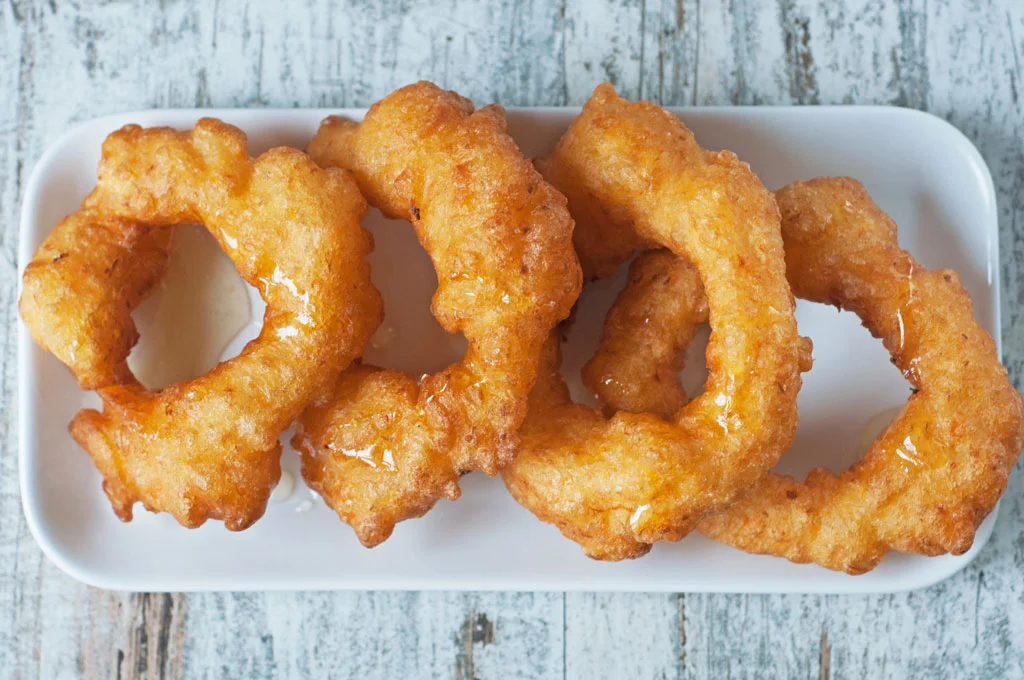
Picarones are Peruvian rings of yeast-raised squash dough, fried until crisp and served with a spiced, citrusy sugar syrup. Make them for a leisurely breakfast or a sweet treat to share.
Ingredients
- 1 tbsp (15 ml)dry baking yeast
- 1 tsp (5 ml)sugar
- 60 ml (¼ cup)water
- 1 tbsp (about 8 g)ground corn or cornmeal
- ½ tsp (about 2.5 ml)sea salt
- ¼ tsp (about 1.25 ml)crushed anise
- 375 g (3 cups)white flour
- 240 ml (1 cup)premium beer
- 205 g (1 cup)cooked butternut squash, puréed
- 200–400 g (1–2 cups)brown sugar
- 240 ml (1 cup)water
- 3 shredslemon or orange peel
Instructions
- 1
Activate the yeast
In a small bowl, dissolve the sugar and yeast in the warm water.
- 2
Mix the base
In a large bowl, combine the cornmeal, salt, anise, 1 cup of flour and beer. Add the yeast mixture and stir to combine.
- 3
Make and raise dough
Add the puréed squash or pumpkin and the remaining 2 cups of flour, then mix to make a soft dough. Cover with a towel and leave in a warm place to rise for about 2 hours, or cover with cling film and refrigerate for 4–12 hours.
- 4
Simmer the syrup
Put the syrup ingredients in a saucepan and bring to the boil over medium heat. Turn the heat to low and simmer for about 15 minutes, until thickened, then remove from the heat.
- 5
Fry and serve
Heat oil in a wok. Drop tablespoonfuls of dough into the hot oil and fry until crisp and golden. Drain on paper towels and serve hot with hot syrup.
What are picarones?
Picarones are Peruvian fried dough rings, often enjoyed as a snack, breakfast or dessert. Their roots are in Peru, where local ingredients such as squash and sweet potato became part of a doughnut-style preparation.
This version uses puréed butternut squash, anise and beer in a yeast dough, then pairs the fried pieces with a brown sugar and citrus syrup. The contrast between crisp edges and a soft centre makes them especially appealing fresh from the pan.
Nutrition and macros by portion
The nutrition label shows one serving as written: 80 calories, 1g protein, 17g carbs, 1g fat.
| Portion | Adjustment | kcal | Protein | Carbs | Fat |
|---|---|---|---|---|---|
| Lighter | Use less syrup | 56 kcal | 1g | 12g | 1g |
| This serving | As written | 80 kcal | 1g | 17g | 1g |
| Hungry | Serve a larger portion | 120 kcal | 2g | 26g | 2g |
The flour and sugars supply most of the carbohydrates, while the frying oil contributes much of the fat and the flour and yeast provide a little protein. The estimate varies with the amount of syrup used and oil absorbed; pairing a portion with fruit or plain yoghurt can round out the plate.
Building the dough
Yeast: Dissolving it with sugar in warm water gives it a chance to activate before it is mixed into the flour. The water should feel warm, not hot.
Squash: Cooked, puréed squash adds moisture and flavour. Mix it in thoroughly so the dough has an even texture.
Choosing the rise
Warm rise: Leave the covered dough in a warm spot for about 2 hours, as directed, and allow it time to expand.
Chilled rise: For a longer schedule, cover the bowl with film and refrigerate the dough for 4–12 hours. Bring it out when you are ready to fry.
Frying for crisp edges
Oil: Heat oil in the wok before adding the dough. The recipe does not specify an oil temperature, so fry a small test portion first and adjust the heat if it colours too quickly or stays pale.
Portions: Drop in tablespoonfuls, leaving room for them to fry rather than crowding the wok. Drain the cooked picarones on paper towels.
Getting the syrup right
Simmer: After the syrup comes to the boil, reduce the heat and let it simmer for about 15 minutes. It should thicken as it cooks.
Citrus: The lemon or orange peel adds a bright note to the brown sugar syrup. Remove the pan from the heat once the syrup has thickened.
Serving them hot
Picarones are best served soon after frying, while the outside is crisp and the centre remains tender. Spoon or pour the hot syrup over them just before serving.
For a more balanced plate, pair a few with plain yoghurt or fresh fruit and keep the syrup to the amount you prefer.
Recipe notes & tips
- Measure the warm water for the yeast and avoid using water that feels hot.
- Mix the squash into the dough evenly to avoid wet pockets.
- Use the towel-covered warm rise or the covered refrigerated rise, rather than leaving the dough uncovered.
- Fry a small piece first to check how quickly the oil browns the dough.
- Drain each batch on paper towels before serving with syrup.
Variations
- Citrus choice: Use either lemon or orange peel to give the syrup a different citrus note.
- Squash swap: Use cooked pumpkin in place of the butternut squash, as allowed in the method.
- Anise adjustment: Reduce the crushed anise slightly for a subtler flavour.
- Syrup sweetness: Start with the lower amount of brown sugar for a less sweet syrup.
- Chilled rise: Refrigerate the covered dough for 4–12 hours when you want to prepare it ahead.
Common mistakes to avoid
- Water too hot: It can hinder the yeast; use warm water instead.
- Skipping the rise: The dough needs its stated rising time before frying.
- Crowded wok: Too much dough at once makes frying less even; cook in batches.
- Syrup left at a boil: Reduce the heat after it boils and simmer gently for about 15 minutes.
- Serving them later: The outside is most enjoyable soon after frying, so serve the picarones hot.
How to store
The recipe does not specify storage guidance; for best texture, serve the picarones freshly fried. If keeping leftovers, refrigerate them in a covered container and reheat briefly in an oven until warm.
Frequently asked questions
Can I let the dough rise overnight?
The recipe gives a refrigerated rise of 4–12 hours. Keep the bowl covered with film during that time.
Can I use pumpkin instead of butternut squash?
Yes. The method specifies squash or pumpkin; use it cooked and puréed.
How do I know when the syrup is ready?
Simmer it over low heat for about 15 minutes, until it has thickened, then remove it from the heat.
How large should I make the picarones?
The method calls for tablespoonfuls of dough. Fry them in batches so there is room in the wok.
Why are my picarones not crisp?
The method relies on frying in hot oil. Check the heat with a small test portion and avoid overcrowding the wok.
How many servings does this recipe make?
The recipe yield is listed as 52 servings. The method does not specify the size of each serving.
Cook it from the original
This recipe comes from eatperu.com. Their page has the author’s own photos, notes and tips — the best place to cook it from.
Open the recipe on eatperu.com