
Djuvec (Vegetable Rice)
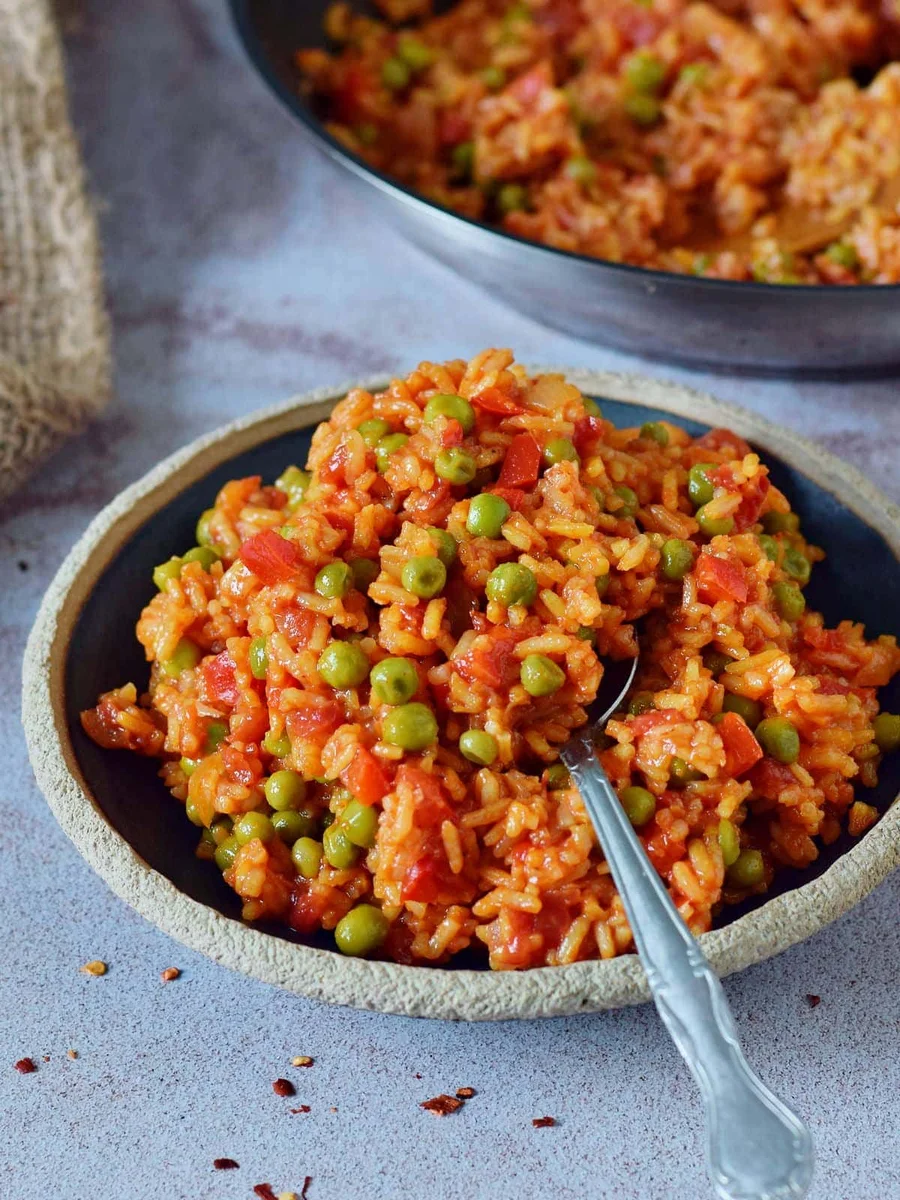
Djuvec is a Balkan one-pot rice dish cooked with vegetables, tomatoes and ajvar. This version makes a colourful, flavour-packed side or an easy vegan main, with peas stirred in near the end.
Ingredients
- 15 ml (1 tbsp)olive oil
- 1onion, diced
- 1red pepper, chopped
- 2 clovesgarlic, finely chopped
- 45–60 ml (3–4 tbsp)ajvar
- 15 ml (1 tbsp)Vegeta (optional), or vegetable bouillon powder
- 5 ml (1 tsp), or more to tastepaprika
- 2.5 ml (½ tsp, optional)onion powder
- To tastesalt and pepper
- 190 g (1 cup)rice
- 425 g (15 oz)tinned crushed tomatoes
- 480 ml (2 cups)water, or vegetable stock if not using bouillon powder
- 200 g (1⅓ cups)frozen peas
- To garnishfresh herbs, such as parsley
Instructions
- 1
Sauté vegetables
Heat the olive oil in a large pot or frying pan. Add the diced onion and chopped pepper and sauté for 3–4 minutes.
- 2
Fry rice
Add the garlic, ajvar, all the spices except the fresh herbs, and the rice. Fry for another 1–2 minutes.
- 3
Add tomatoes
Stir in the crushed tomatoes and vegetable stock or water. Mix well, then bring the mixture to the boil.
- 4
Simmer rice
Cover and simmer over a low heat for about 12–15 minutes, stirring occasionally.
- 5
Add peas
Stir in the frozen peas and simmer for a further 5–6 minutes. If too much liquid has evaporated, add a little more vegetable stock or water.
- 6
Season and serve
Taste the rice and adjust the salt, pepper or spices if needed. Garnish with fresh parsley and, if desired, add a little lemon juice.
What is Djuvec rice?
Djuvec, also spelled đuveč, is a Balkan-style rice dish named after a type of stew. It is often cooked with vegetables and seasoning in one pot, making it useful as either a side or a simple main.
This version builds its flavour with ajvar, a roasted pepper spread, alongside tomato, paprika and garlic. Peas add a sweet note and a contrasting texture at the end.
Nutrition and macros by portion
The nutrition label shows one serving as written: 317 calories, 9g protein, 59g carbs, 5g fat.
| Portion | Adjustment | kcal | Protein | Carbs | Fat |
|---|---|---|---|---|---|
| Lighter | Use less oil | 222 kcal | 6g | 41g | 4g |
| This serving | As written | 317 kcal | 9g | 59g | 5g |
| Hungry | Serve a larger portion | 476 kcal | 14g | 89g | 8g |
Most of the carbohydrates come from the rice, with additional carbs in the peas and tomatoes. Olive oil contributes most of the fat, while the vegetables and peas provide some protein. To balance the plate, serve it with a protein-rich food such as beans or lentils and a fresh salad.
Build flavour in the pot
Aromatic base: Give the onion and pepper 3–4 minutes in the oil so they begin to soften before the garlic goes in.
Ajvar and spices: Fry them briefly with the rice to spread their flavour through the grains. Keep the heat moderate so the garlic and spices do not catch.
Choose your rice and liquid
Rice: The recipe does not specify a variety. A standard long-grain rice works well; if you use a different type, follow its usual cooking needs and check the texture as it simmers.
Liquid: Use vegetable stock for a fuller savoury taste, or water with Vegeta or bouillon powder. The rice should simmer gently, not boil hard.
Get the texture right
Covered simmer: Keep the pot covered for the initial 12–15 minutes so the rice can absorb the liquid. Stir occasionally, gently, to check the bottom and help prevent sticking.
Peas: Add the frozen peas for the final 5–6 minutes. They warm through without becoming as soft as they might if simmered from the start.
Check doneness and seasoning
Rice: Taste a few grains near the end of cooking; they should be tender, with no hard centre. If they need longer and the pot looks dry, add a splash of water or stock.
Finish: Taste before adding more salt, especially if your ajvar or bouillon is already well seasoned. Parsley and an optional squeeze of lemon brighten the finished dish.
Make it a meal
As a side, serve Djuvec with grilled vegetables, kebabs or another savoury centrepiece. It also works alongside a crisp salad or warm flatbread.
For a more filling plant-based plate, pair it with beans, lentils or tofu. The rice is already seasoned, so keep accompanying dishes simply flavoured.
Recipe notes & tips
- Dice the onion and pepper evenly so they soften at roughly the same rate.
- Stir the rice gently while it simmers to check that it is not sticking to the pot.
- Keep extra hot water or stock nearby in case the rice absorbs liquid before it is tender.
- Taste before adding salt because ajvar and bouillon can both be salty.
- Garnish with parsley just before serving for a fresher flavour.
Variations
- Use stock: Replace the water with vegetable stock for a more savoury result.
- Adjust the ajvar: Use 3 tablespoons for a milder flavour or 4 for a stronger pepper taste.
- Add more vegetables: Stir in chopped courgette with the pepper so it has time to soften.
- Make it spicier: Add chilli flakes with the paprika.
- Add a protein: Serve with cooked beans or lentils for a more substantial plant-based meal.
Common mistakes to avoid
- Rushing the onion: It may stay firm; sauté it with the pepper for the full 3–4 minutes.
- Frying garlic too long: It can turn bitter; add it with the ajvar and rice and fry for just 1–2 minutes.
- Boiling too vigorously: The liquid can evaporate too quickly; keep the covered pot at a low simmer.
- Letting the pot dry out: The rice may catch before it is tender; add a splash of water or stock.
- Adding peas too early: They can become overly soft; stir in the frozen peas for the final 5–6 minutes.
How to store
Cool leftovers promptly and store them in an airtight container in the fridge for up to 3 days. Reheat until piping hot, adding a splash of water to loosen the rice if needed.
Frequently asked questions
Can I make Djuvec rice without Vegeta?
Yes. The recipe makes Vegeta optional; use vegetable bouillon powder instead, or use vegetable stock in place of the water.
What is ajvar?
Ajvar is a savoury spread made primarily from peppers, often with aubergine. It gives this rice a roasted pepper flavour and helps season the dish.
Which rice should I use?
The recipe does not name a specific variety. Standard long-grain rice is a practical choice; check it as it cooks because different varieties can absorb liquid at different rates.
Can I use fresh peas?
Yes. Add them at the same stage and cook until tender, checking them along with the rice.
Why is my rice still firm?
It may need more time or liquid. Add a small splash of water or stock, cover the pot and continue simmering until the grains are tender.
Can I prepare it ahead?
Yes. Cook it in advance and refrigerate it once cooled. Reheat thoroughly with a little water or stock to restore a softer texture.
Cook it from the original
This recipe comes from elavegan.com. Their page has the author’s own photos, notes and tips — the best place to cook it from.
Open the recipe on elavegan.com