
Peruvian Minestrone Soup
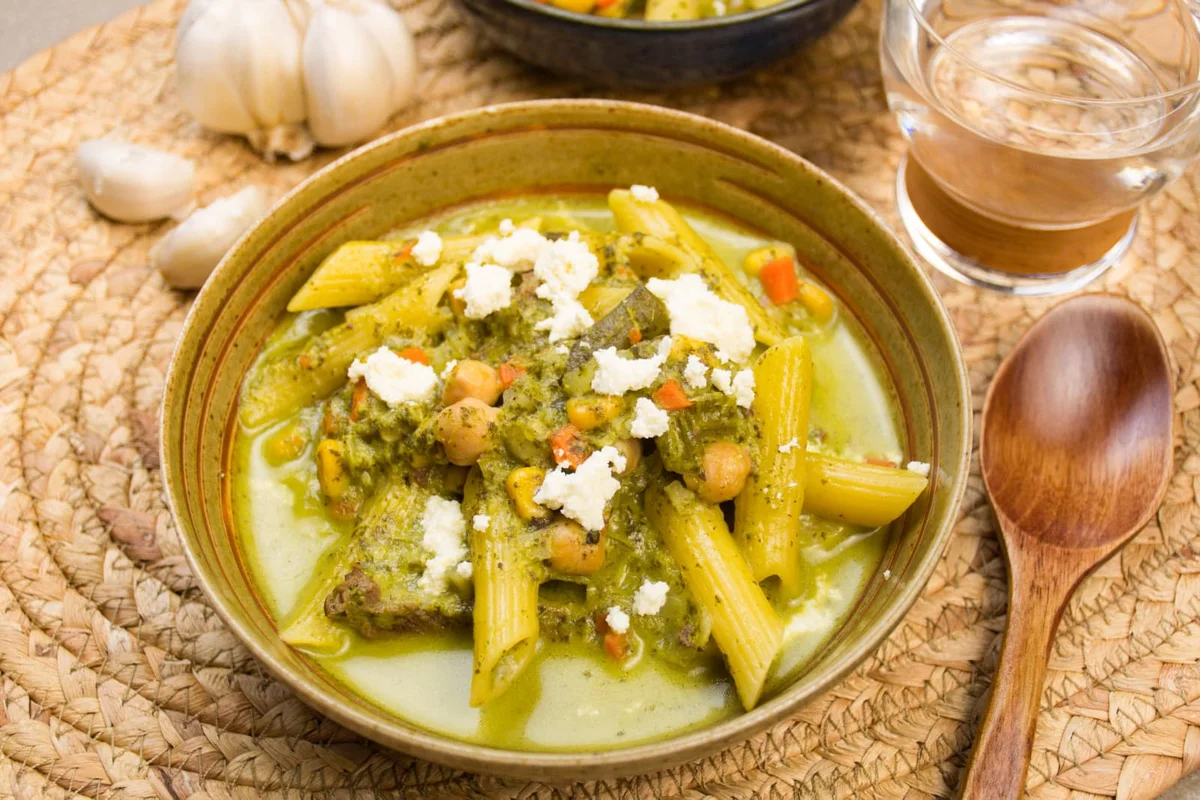
Peruvian menestrón is a hearty minestrone-style soup with beef, pasta, vegetables and a blended basil-and-cheese pesto. It makes a warming, substantial meal, with the pesto stirred in near the end for a fresh, savoury finish.
Ingredients
- 15 mlolive oil
- 45 mlgarlic, chopped
- 1 mediumred onion, sliced
- about 20 g (1½ cups)basil
- about 30 g (1 cup)spinach
- about 50 g (½ cup)Parmesan
- about 50 g (⅓ cup)feta
- 500–700 gbeef tenderloin, sliced
- 1 teaspoonsalt
- 1 teaspoonpepper
- 15 mlolive oil
- about 80 g (½ cup)potato, chopped
- about 65 g (½ cup)carrot, chopped
- 1.44 litres (6 cups)beef broth
- about 35 g (⅓ cup)string beans, chopped
- 1 canchickpeas
- about 55 g (⅓ cup)corn
- 1 smallcabbage, shredded
- about 35 g (⅓ cup)celery, chopped
- 500 gpenne or another type of pasta
- as neededwater
Instructions
- 1
Cook the aromatics
For the pesto, heat the oil in a pan over medium heat. Sauté the onion until translucent, then add the garlic and cook until fragrant.
- 2
Blend the pesto
Transfer the onion and garlic to a blender with the basil, spinach, Parmesan and feta. Blend until smooth and set aside.
- 3
Season the beef
Season the sliced beef with the salt and pepper in a bowl, then set it aside.
- 4
Brown the beef
Heat the second measure of oil in a pan over medium heat and cook the beef slices. Turn them once they have browned or changed colour slightly.
- 5
Soften the vegetables
Add the chopped potato and carrot. Sauté for 3 to 5 minutes, or until the potatoes are soft.
- 6
Simmer the broth
Pour in the beef broth and bring it to a simmer, skimming off any scum from the surface. Simmer for 5 to 7 minutes.
- 7
Add beans and corn
Stir in the string beans, chickpeas and corn. Simmer for another 5 to 7 minutes.
- 8
Add cabbage and celery
Mix in the cabbage and celery, then simmer for 3 minutes.
- 9
Cook the pasta
Add the penne or pasta of your choice and cook according to the packet instructions, or until al dente. Check the soup often and add more broth or water if the pasta absorbs most of the liquid.
- 10
Stir in pesto
Add the pesto mixture and let the soup simmer for 7 to 10 minutes.
- 11
Serve the soup
Serve garnished with feta or Parmesan.
What is Peruvian menestrón?
Menestrón is Peru’s take on minestrone, a filling soup that brings together pasta, vegetables and broth. Its name and broad style reflect the influence of Italian minestrone, while the combination of beef and a green, cheese-rich pesto gives this version its own character.
The method builds flavour in stages: beef and vegetables simmer in broth, then basil pesto is added towards the end. That final addition brings a vivid herbal note to the substantial soup.
Nutrition and macros by portion
The nutrition label shows one serving as written: 539 calories, 27g protein, 59g carbs, 22g fat.
| Portion | Adjustment | kcal | Protein | Carbs | Fat |
|---|---|---|---|---|---|
| Lighter | Less pasta, more cabbage | 377 kcal | 19g | 41g | 15g |
| This serving | As written | 539 kcal | 27g | 59g | 22g |
| Hungry | A larger bowl | 809 kcal | 41g | 89g | 33g |
The pasta and vegetables provide much of the carbohydrate, while olive oil, feta and Parmesan contribute most of the fat. Beef, chickpeas and cheese supply protein. For a more balanced plate, serve a portion with a side salad or extra vegetables.
Making the pesto
Onion and garlic: cooking them first softens their sharpness and forms the savoury base of the pesto. Let the onion turn translucent and the garlic become fragrant, rather than letting either brown heavily.
Basil and cheese: blending basil and spinach with Parmesan and feta makes a thick, savoury mixture. Blend until smooth so it can disperse evenly through the soup.
Cooking the beef and vegetables
Beef: turn the slices once they have browned or changed colour slightly, as directed. Tenderloin is lean and cooks quickly, so avoid leaving it over the heat longer than needed at this stage.
Root vegetables: give the potato and carrot their 3 to 5 minutes of sautéing before adding broth. The potato-softness cue in the method helps indicate when they are ready for the next stage.
Layering the simmer
Staggering the additions gives each ingredient time to cook: chickpeas, string beans and corn simmer first, followed by cabbage and celery. Keep the soup at a gentle simmer rather than a vigorous boil.
Skimming: remove any scum that rises after the broth comes to a simmer. This keeps the surface of the soup clearer as it cooks.
Getting the pasta right
Penne goes into the broth after the vegetables have simmered, and the packet timing is the best guide for cooking it al dente. Check it frequently because pasta continues to absorb liquid as it cooks.
If the soup becomes too thick, add more broth or water as the method specifies. A roomy pot also makes it easier to stir the pasta through the vegetables and beef.
Finishing and serving
Stir the pesto into the soup and simmer it for 7 to 10 minutes so its flavour blends into the broth. Taste the soup before serving and adjust the seasoning if needed.
Serve it hot with a little feta or Parmesan on top. Since the soup already includes beef, chickpeas, vegetables and pasta, it can stand on its own or be served with bread.
Recipe notes & tips
- Slice the beef into even pieces so it cooks at a similar rate.
- Keep the broth at a gentle simmer once it has come to temperature.
- Skim the surface after adding the broth, as instructed.
- Check the pasta early and often to avoid cooking it past al dente.
- Add broth or water if the pasta absorbs too much of the soup liquid.
- Keep some feta or Parmesan aside for the garnish.
Variations
- Use another pasta: choose a shape similar in size to penne and cook it according to its packet instructions.
- Adjust the greens: use the listed spinach in the pesto and cabbage in the broth for two different textures.
- Choose your cheese: garnish with either feta or Parmesan, as suggested in the method.
- Make it less meaty: use 500 g of beef, the lower amount in the recipe's range.
- Make it more brothy: add extra beef broth or water if the pasta absorbs much of the liquid.
Common mistakes to avoid
- Browning the garlic: add it after the onion and cook only until fragrant so it does not scorch.
- Boiling hard: keep the broth at a simmer to avoid an overly rough cook.
- Adding pasta too early: wait until the vegetables have had their allotted simmering time.
- Leaving pasta unchecked: test it often and stop when it is al dente.
- Letting the soup get too thick: add broth or water as needed while the pasta cooks.
- Skipping the surface skim: remove any scum that forms after the broth reaches a simmer.
How to store
Cool leftovers promptly and refrigerate in an airtight container for up to 3 days. Reheat gently in a saucepan until hot throughout, adding a splash of broth or water if the pasta has thickened the soup.
Frequently asked questions
Can I use a different pasta shape?
Yes. The recipe allows any type of pasta; follow its packet cooking instructions and check for an al dente texture.
When should I add the pesto?
Stir it in after the pasta has cooked, then simmer the soup for 7 to 10 minutes.
What if the pasta absorbs too much broth?
Check the soup frequently while the pasta cooks and add more broth or water if most of the liquid has been absorbed.
Can I use the lower amount of beef?
Yes. The recipe gives a range of 500 to 700 g, so either amount works.
How do I know when the pasta is ready?
Use the packet timing as a guide and taste a piece; it should be al dente rather than soft.
Can I prepare the pesto ahead?
The method makes the pesto before the broth and sets it aside. For longer storage, keep it covered and refrigerated, then add it at the finishing stage.
Cook it from the original
This recipe comes from eatperu.com. Their page has the author’s own photos, notes and tips — the best place to cook it from.
Open the recipe on eatperu.com