
Salmon Ceviche
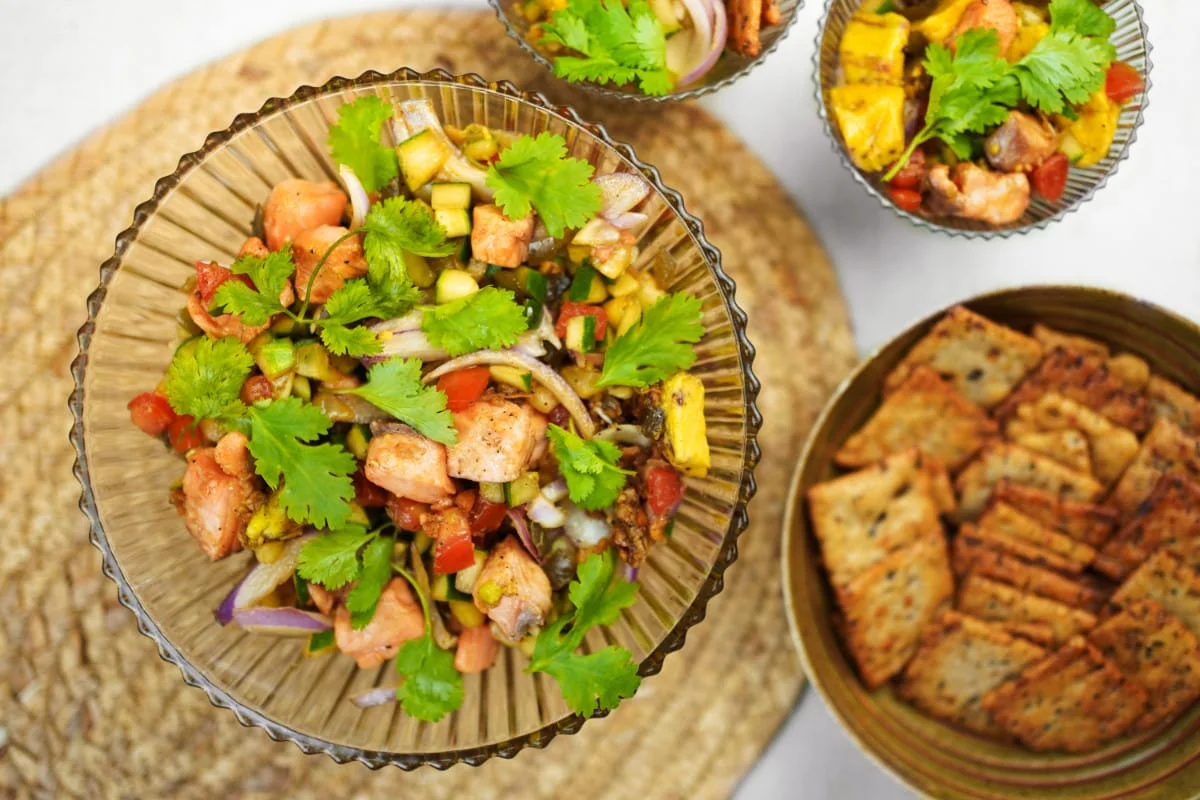
This Peruvian-inspired ceviche pairs salmon with citrus, a savoury soy-and-garlic dressing, crisp vegetables and creamy avocado. It makes a bright, chilled starter or light meal, with plenty of texture and a little heat.
Ingredients
- 255 g (9 oz)salmon fillets, boneless and skin removed
- 355–473 ml (1½–2 cups)lemon or lime juice, enough to cover the salmon
- 30 ml (2 tablespoons)lemon or lime juice
- 2.5 ml (½ teaspoon)salt
- 2.5 ml (½ teaspoon)pepper
- 30 ml (2 tablespoons)olive oil
- 30 ml (2 tablespoons)garlic, minced
- 80 ml (⅓ cup)soy sauce
- 5 ml (1 teaspoon), optionalsesame oil
- 1 mediumonion
- 1 mediumcucumber
- 2 smalltomatoes
- 15–30 ml (1–2 tablespoons)pickled jalapeño, minced, or fresh chilli peppers
- 1 mediumavocado
- 1 sprigfresh coriander leaves, for garnish
- Optional, to servecrisps or crackers
Instructions
- 1
Marinate the salmon
Cut the salmon into cubes and put them in a bowl. Add 355–473 ml (1½–2 cups) lemon or lime juice, using enough to cover the fish. Leave for 25–30 minutes, until the salmon changes colour and looks more opaque.
- 2
Mix the dressing
Combine the salt, pepper, olive oil, garlic, soy sauce and 30 ml (2 tablespoons) lemon or lime juice. Add the sesame oil if using, taste the dressing and set it aside.
- 3
Prepare the vegetables
Thinly slice the onion and remove its seeds. Chop the cucumber and tomatoes.
- 4
Combine the vegetables
Drain the salmon and return it to the bowl. Mix in the onion, cucumber, tomatoes and jalapeño.
- 5
Add the avocado
Cut the avocado into cubes and add it to the bowl with the dressing. Fold gently so the avocado does not get mashed.
- 6
Chill the ceviche
Mix everything together and taste; add more salt or pepper if needed. Refrigerate for 1–3 hours to let the flavours meld.
- 7
Garnish and serve
Spoon the ceviche into a clean bowl, leaving behind any liquid settled at the bottom of the original bowl. Garnish with fresh coriander and serve with crisps or crackers, if desired.
What is salmon ceviche?
Ceviche is a citrus-marinated seafood dish associated with Peru, where it is commonly made with fish. This version uses salmon, alongside a soy, garlic and olive oil dressing that gives the citrus a savoury counterpoint.
The method relies on marinating the fish, then combining it with fresh vegetables and avocado. The result is cool and tangy, with crisp, creamy and gently spicy elements.
Nutrition and macros by portion
The nutrition label shows one serving as written: 191 calories, 11g protein, 8g carbs, 13g fat.
| Portion | Adjustment | kcal | Protein | Carbs | Fat |
|---|---|---|---|---|---|
| Lighter | Use less oil and avocado | 134 kcal | 8g | 6g | 9g |
| This serving | As written | 191 kcal | 11g | 8g | 13g |
| Hungry | Serve with extra crackers | 287 kcal | 17g | 12g | 20g |
The salmon supplies protein and contributes much of the fat, with olive oil and avocado adding further fat. The citrus, vegetables and small amount of chilli contribute most of the carbohydrates, while soy sauce is a notable source of sodium. Serve with a generous portion of fresh vegetables or salad to round out the plate.
Choosing the salmon
Fresh fish: Use boneless, skinless salmon and keep it chilled while preparing the other ingredients. Citrus changes the fish's appearance and texture, but it does not make raw fish risk-free; choose fish intended for raw consumption and follow local food-safety guidance.
Getting the marinade right
Cover the cubes: The recipe calls for enough lemon or lime juice to submerge the salmon. Cut the pieces evenly so they are exposed to the juice in a similar way.
Watch the colour: After 25–30 minutes, the surface should look more opaque, as described in the method. The timing is a guide rather than a substitute for safe handling of raw fish.
Balancing the dressing
Savoury base: Soy sauce, garlic and olive oil give the dressing depth alongside its lemon or lime juice. Sesame oil is optional, so taste before adding it if you want to keep its flavour subtle.
Season to taste: The soy sauce contributes saltiness, so taste the mixture before adding extra salt at the end. Pepper can be adjusted after the ceviche is combined.
Keeping the texture
Gentle folding: Add the avocado with the dressing and fold carefully to keep the cubes intact. The onion, cucumber and tomatoes bring a fresher, firmer contrast.
Drain before serving: The recipe calls for leaving settled liquid behind when transferring the ceviche. This helps keep the serving bowl from becoming overly watery.
Chilling and serving
Allow time to meld: Once mixed, refrigerate the ceviche for 1–3 hours as directed. Keep it chilled during this period and serve it cold.
Serve alongside: Crisps or crackers are suggested for scooping and add crunch. For a more substantial plate, pair the ceviche with a simple side that does not overpower its citrus dressing.
Recipe notes & tips
- Cut the salmon into evenly sized cubes so the pieces marinate consistently.
- Use enough lemon or lime juice to cover the salmon during the first marinating stage.
- Taste the dressing before seasoning the finished ceviche, as soy sauce is already salty.
- Fold the avocado in gently to keep its cubes from breaking down.
- Keep the fish and finished ceviche chilled while preparing and serving.
- Drain the salmon well before mixing it with the vegetables.
Variations
- Choose your citrus: Use lemon or lime juice, as listed, for a slightly different citrus flavour.
- Adjust the heat: Use the lower or higher amount of minced jalapeño to suit your preference.
- Skip the sesame: Leave out the optional sesame oil for a less pronounced toasted flavour.
- Change the garnish: Use the fresh coriander leaves as directed, or leave them off if preferred.
- Pick a side: Serve with crisps or crackers for an easy crunchy accompaniment.
Common mistakes to avoid
- Uneven salmon cubes: Cut them to a similar size so they are exposed to the citrus more evenly.
- Not enough marinade: Add enough lemon or lime juice to cover the fish during the first stage.
- Over-mixing the avocado: Fold gently when adding it so the cubes do not turn to mash.
- Over-seasoning early: Taste the soy-based dressing before adding extra salt.
- Serving too much liquid: Drain the salmon and leave settled liquid behind when transferring the ceviche.
How to store
Keep the ceviche covered and refrigerated, and serve it promptly; it is best eaten on the day it is made. Because it contains raw fish, do not leave it at room temperature for extended periods, and do not rely on reheating to make it safe.
Frequently asked questions
Can I use lemon instead of lime?
Yes. The recipe allows either lemon or lime juice for both the salmon marinade and the dressing.
How long should the salmon sit in the citrus?
Leave it for 25–30 minutes, until it changes colour and looks more opaque. Use fish suitable for raw consumption and observe food-safety guidance, as citrus does not remove all risks associated with raw fish.
Can I leave out the sesame oil?
Yes. It is optional in the recipe, so the dressing can be made without it.
How can I make the ceviche less spicy?
Use 1 tablespoon of jalapeño or chilli, or omit it if you prefer no heat.
Why drain the salmon before serving?
Draining it and leaving settled liquid behind helps prevent the final bowl from being too watery.
Can I prepare it ahead?
The recipe includes a 1–3 hour refrigerated rest after mixing. Keep it chilled and, because it contains raw fish, serve it promptly rather than storing it for several days.
Cook it from the original
This recipe comes from eatperu.com. Their page has the author’s own photos, notes and tips — the best place to cook it from.
Open the recipe on eatperu.com