
Roasted Pork Tenderloin with Garlic Sauce
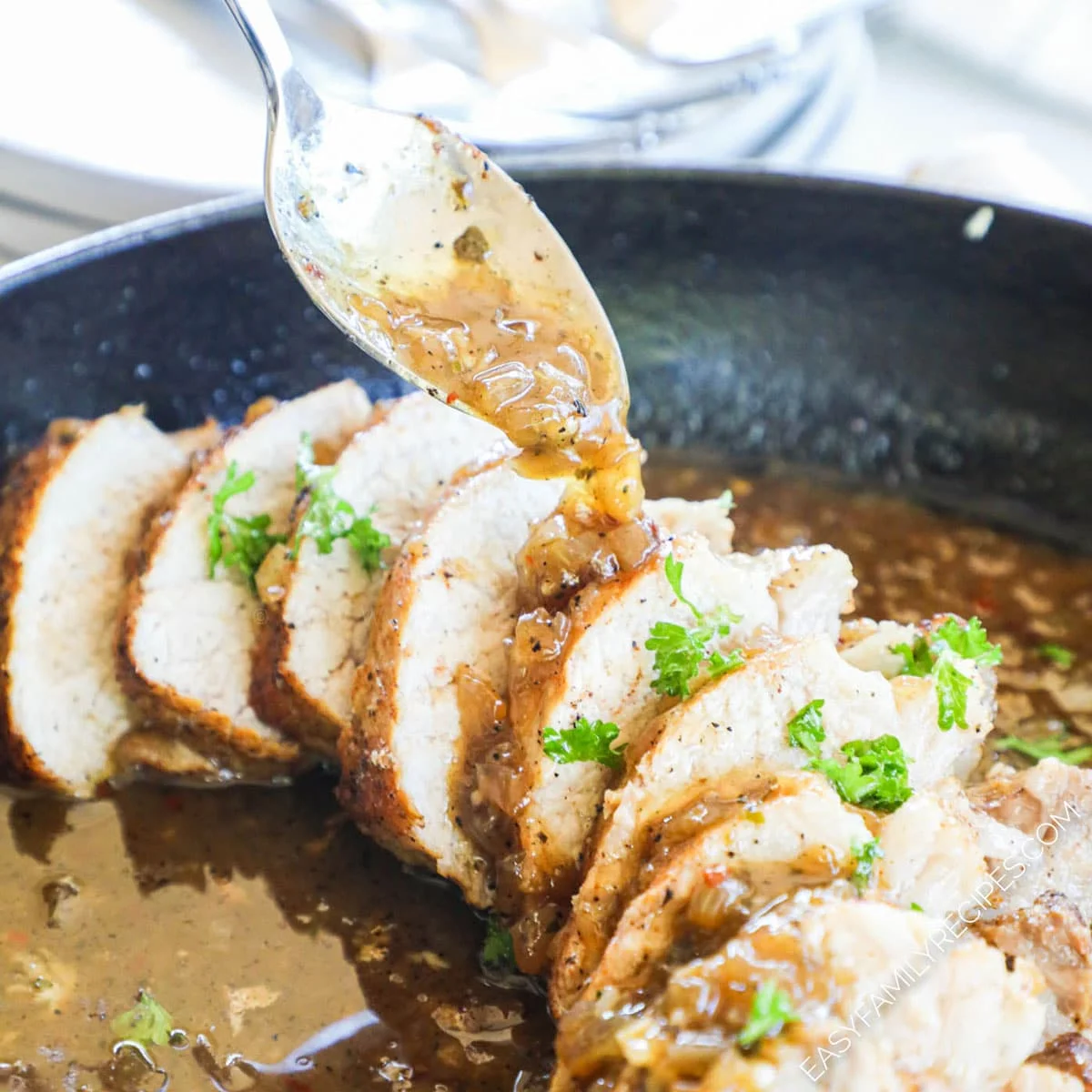
This American-style pork tenderloin is seared, oven-baked and served with a quick garlic sauce made in the same pan. It makes a straightforward centrepiece for a weeknight meal, with the pan drippings adding depth to the sauce.
Ingredients
- 907 g (2 lb)pork tenderloin
- 15 ml (1 tbsp)Cajun seasoning
- 30 ml (2 tbsp)vegetable oil
- ½ oniononion, finely diced
- 4 clovesgarlic
- ½ tspred pepper flakes
- ½ tspdried oregano
- 240 ml (1 cup)chicken or vegetable stock
- 8 g (1 tbsp)cornflour
- As neededwater, to make a paste with the cornflour
Instructions
- 1
Heat the oven
Preheat the oven to 175°C (350°F). Heat the vegetable oil in a large pan over high heat.
- 2
Season and sear
Coat the pork tenderloin on all sides with the Cajun seasoning. Place it in the hot oil and sear for about 1 minute on each side.
- 3
Bake the pork
Cover the pan with a lid or foil and transfer it to the oven. Bake for 25–35 minutes, or until the pork reaches an internal temperature of 63°C (145°F).
- 4
Cook the onion
Take the pork out of the pan and set it aside. Put the pan with its drippings on the hob over medium heat, add the onion and cook until translucent.
- 5
Add aromatics
Stir in the garlic, oregano and red pepper flakes and cook for 1 minute. Add the stock and bring the mixture to a simmer.
- 6
Thicken the sauce
Mix the cornflour with enough water to make a paste, then stir it into the sauce. Simmer for 3–5 minutes, until thickened.
- 7
Slice and serve
Slice the pork and return it to the sauce to serve.
What is roasted pork tenderloin with garlic sauce?
Pork tenderloin is a lean, tender cut from along the pig’s backbone, and roasting it whole is a familiar American-style way to make it a centrepiece. Here, a quick sear builds colour before the oven finishes the cooking.
The sauce is made in the same pan, using the browned drippings with onion, garlic and stock. Cornflour thickens it into a coating for the sliced pork.
Nutrition and macros by portion
The nutrition label shows one serving as written: 359 calories, 48g protein, 6g carbs, 15g fat.
| Portion | Adjustment | kcal | Protein | Carbs | Fat |
|---|---|---|---|---|---|
| Lighter | Serve with extra greens | 251 kcal | 34g | 4g | 11g |
| This serving | As written | 359 kcal | 48g | 6g | 15g |
| Hungry | Add potatoes or rice | 539 kcal | 72g | 9g | 23g |
The pork provides most of the protein, while the stock and cornflour contribute a small amount of carbohydrate. The oil and pan drippings supply most of the fat. Pair a serving with vegetables and a suitable starch, such as potatoes or rice, for a more rounded plate.
Choosing the pork and seasoning
Tenderloin: this recipe uses 907 g (2 lb), seasoned on every side with Cajun seasoning. If the tenderloin is particularly thick or uneven, check the temperature in its thickest part.
Cajun seasoning: it brings the main savoury, spiced flavour. Season the pork directly rather than adding extra seasoning to the sauce before tasting it.
Getting a good sear
Hot pan: heat the oil over high heat before adding the pork so the surface browns quickly. Sear for about 1 minute on each side, turning to cover the sides of the tenderloin.
Room to move: use a large pan so you can turn the meat without crowding it. The pan also needs to be suitable for the oven, or the pork can be transferred to an oven-safe dish and the drippings retained for the sauce.
Checking the doneness
Temperature: begin checking during the 25–35 minute baking window. The recipe’s target is 63°C (145°F) in the thickest part of the tenderloin.
Carry-over cooking: avoid relying only on the outside colour, as it does not show the centre’s temperature. A meat thermometer gives the clearest doneness check.
Building the garlic sauce
Pan drippings: cook the diced onion in the same pan until translucent, then add the garlic, oregano and pepper flakes for 1 minute. This brief cooking time helps the garlic flavour the sauce without leaving it over the heat for long.
Cornflour paste: stir the cornflour into a little water until smooth before adding it. Simmer the sauce for 3–5 minutes so it thickens; stir as it cooks to help prevent lumps.
Serving the pork
Slice the tenderloin and return it to the sauce as directed, so each piece gets some of the garlic-rich pan juices. Serve with a side that can catch the sauce.
Mashed potatoes, rice or crusty bread work well alongside it. For a fresh contrast, add a green vegetable or a simple salad.
Recipe notes & tips
- Pat the pork dry before seasoning if its surface is damp, to help it brown in the pan.
- Turn the tenderloin carefully so each side gets a brief sear.
- Use a thermometer in the thickest part to check for 63°C (145°F).
- Mix the cornflour with water until smooth before stirring it into the sauce.
- If the sauce thickens more than you like, loosen it with a small splash of stock.
Variations
- Use vegetable stock: choose it instead of chicken stock for the sauce.
- Adjust the heat: reduce or omit the red pepper flakes for a milder sauce.
- Add mushrooms: sauté sliced mushrooms with the onion for an earthier pan sauce.
- Add fresh herbs: finish the sauce with chopped parsley for a fresh note.
- Serve with greens: add steamed green beans or broccoli alongside the pork.
Common mistakes to avoid
- Crowded pan: the pork may brown unevenly; use a large pan with room to turn it.
- Overcooking the garlic: it can turn bitter; cook it with the herbs and pepper flakes for just 1 minute.
- Lumpy sauce: cornflour added dry can clump; first mix it with water to make a smooth paste.
- Guessing doneness: colour alone is not a reliable guide; check the thickest part with a thermometer.
- Skipping the drippings: they add flavour to the sauce; keep them in the pan when you remove the pork.
How to store
Refrigerate leftover pork and sauce in a covered container within 2 hours, and use within 3–4 days. Reheat gently in a covered pan with a splash of stock or water until hot throughout.
Frequently asked questions
Can I use vegetable stock instead of chicken stock?
Yes. The recipe allows either, and vegetable stock will still work in the garlic sauce.
Can I make this without an oven-safe pan?
Yes. After searing, move the pork to an oven-safe dish and cover it with foil. Keep the pan drippings for making the sauce on the hob.
How do I know when the pork is done?
Check the thickest part with a meat thermometer; the recipe’s target is 63°C (145°F).
Why use a cornflour paste?
Mixing the cornflour with water first makes it easier to stir into the sauce smoothly. Simmer for 3–5 minutes, until the sauce thickens.
Can I prepare the sauce ahead?
It is best made in the pan after cooking the pork, so it can use the fresh drippings. If you make it ahead, refrigerate it and reheat gently, stirring and adding a little stock or water if needed.
Cook it from the original
This recipe comes from easyfamilyrecipes.com. Their page has the author’s own photos, notes and tips — the best place to cook it from.
Open the recipe on easyfamilyrecipes.com