
Sourdough Bread Pudding with Caramel Sauce
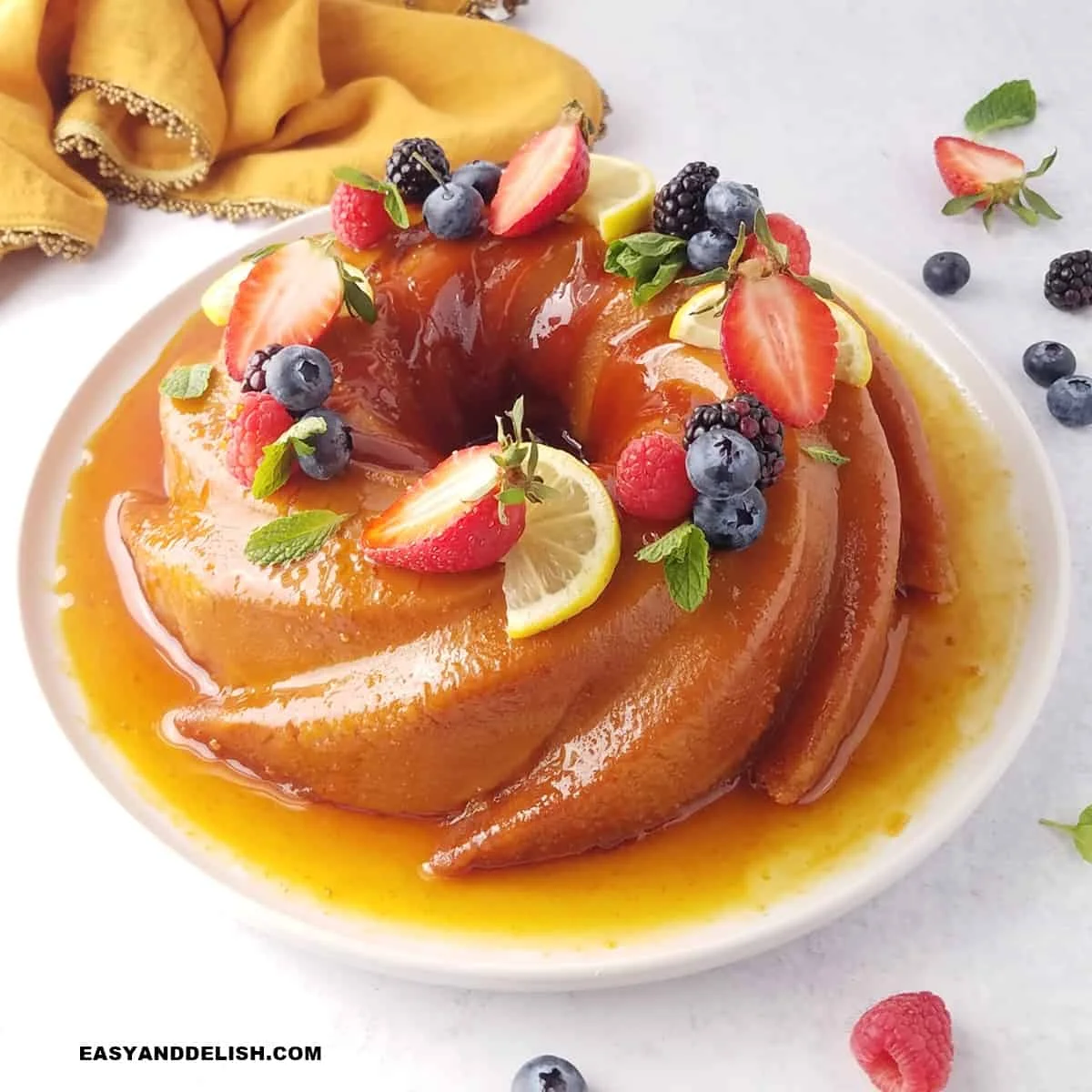
This Brazilian-inspired bread pudding blends stale sourdough with milk, eggs, sugar and vanilla for a smooth, dense, flan-like dessert, finished with a layer of caramel. It is a satisfying way to use up old bread, with most of the time spent chilling the pudding before serving.
Ingredients
- 500 g (17.6 oz)stale sourdough bread
- 710 ml (3 cups)whole milk, warmed (or unsweetened coconut milk for a dairy-free version)
- 4 largeeggs, at room temperature
- 400 g (2 cups)granulated sugar (or granulated allulose or another sugar-free sweetener)
- 5 ml (1 teaspoon)pure vanilla extract
- 300 g (1 1/2 cups)granulated sugar
- 180 ml (3/4 cup)water
- 5 ml (1 teaspoon)fresh lemon juice, optional
Instructions
- 1
Preheat the oven
Heat the oven to 180°C (350°F).
- 2
Soak the bread
Put the stale sourdough in the warm milk and leave it for about 15 minutes, until softened.
- 3
Cook the caramel
Meanwhile, combine the sugar, water and lemon juice in a medium non-stick saucepan. Cook over medium heat without stirring for about 8–10 minutes, until the sugar has melted and turned amber. You can gently tilt the pan to swirl the mixture.
- 4
Coat the mould
Take the saucepan off the heat, put on oven mitts and quickly pour the caramel into a 25 cm (10-inch) ring baking pan. Swirl it to coat the bottom and sides evenly, then leave it for at least 3–5 minutes, or until hardened.
- 5
Blend the pudding
Blend the soaked bread and any milk it has not absorbed with the eggs, sugar and vanilla until smooth and creamy. Pour the mixture into the ring pan over the hardened caramel.
- 6
Prepare the water bath
Set the ring pan inside a larger rectangular baking pan. Carefully pour boiling water into the larger pan until it reaches halfway up the sides of the ring pan, keeping water out of the pudding mixture.
- 7
Bake until set
Bake on the middle oven rack for about 45–55 minutes, until the pudding is set but still slightly jiggly. The baking time may vary by oven.
- 8
Cool the pudding
Move the ring pan to a rack and let the pudding cool until slightly warm, about 30 minutes.
- 9
Turn out and chill
Gently run a thin knife around the edges to loosen the pudding. Place a serving plate over the pan and carefully invert it onto the plate. Refrigerate for at least 4 hours, until chilled, then slice and serve.
What is sourdough bread pudding?
Bread pudding is a dessert made by turning bread into a soft, set custard. This version takes inspiration from a Brazilian family recipe and uses sourdough for its base.
Blending the soaked bread with eggs and milk makes the mixture smooth rather than leaving distinct cubes of bread. The ring mould and caramel coating give it a flan-like finish.
Nutrition and macros by portion
The nutrition label shows one serving as written: 297 calories, 6g protein, 62g carbs, 3g fat.
| Portion | Adjustment | kcal | Protein | Carbs | Fat |
|---|---|---|---|---|---|
| Lighter | Smaller slice, fresh berries | 208 kcal | 4g | 43g | 2g |
| This serving | As written | 297 kcal | 6g | 62g | 3g |
| Hungry | Larger slice | 446 kcal | 9g | 93g | 5g |
The bread and sugar provide most of the carbohydrates, while the milk and eggs contribute protein and some fat. Serve a slice with fresh berries or other fruit for a simple way to balance the plate.
Choosing the bread and milk
Stale sourdough: older, drier bread absorbs the warm milk well and helps the pudding set into a dense texture. Cut or break it into pieces small enough to soften evenly.
Warm milk: warming it helps the bread soften during its 15-minute soak. Keep any milk the bread has not absorbed; it goes into the blender with the rest of the mixture.
Making the caramel
Hands off: once the sugar, water and optional lemon juice are heating, avoid stirring, which can encourage crystallisation. Gently tilt the pan if needed to move the syrup around.
Amber colour: watch the saucepan as the syrup cooks for about 8–10 minutes, since the colour is the key cue given for readiness. Pour it into the ring pan promptly and swirl it over the base and sides before it hardens.
Blending a smooth custard
Blend well: process the softened bread, remaining milk, eggs, sugar and vanilla until the mixture looks creamy and smooth. This is what gives the finished pudding its uniform, flan-like texture.
Room-temperature eggs: using eggs at room temperature, as specified, helps them blend into the mixture. Scrape the mixture into the caramel-lined pan once it is smooth.
Using a water bath
The water bath: placing the ring pan inside a larger pan and adding boiling water halfway up its sides surrounds the pudding with water as it bakes. Pour carefully so none splashes into the mixture.
Safe handling: the larger pan and hot water are awkward to move, so take care when filling it and placing it in the oven.
Checking when it is done
Set with a wobble: after about 45–55 minutes, the pudding should be set while retaining a slight jiggle. The source notes that oven differences can change the baking time, so use this texture cue alongside the time.
Cool before turning: leave the pan on a rack for about 30 minutes, then loosen the edges with a thin knife. Invert carefully onto a serving plate and chill for at least 4 hours before slicing.
Serving and finishing
Serve the pudding chilled in slices so the custard has time to firm up. The caramel coating provides the sauce when the pudding is turned out.
For the suggested garnish, add berries, lemon slices and a few fresh mint leaves. The fruit and citrus make a fresh contrast to the rich, sweet pudding.
Recipe notes & tips
- Use genuinely stale bread so it can absorb the warm milk.
- Measure the ring pan before starting; the recipe calls for a 25 cm (10-inch) pan.
- Do not stir the caramel while it cooks; tilt the pan gently to swirl it if needed.
- Pour the caramel quickly into the mould and coat the sides before it hardens.
- Keep the water bath below the level of the pudding mixture.
- Allow at least 4 hours of chilling time before serving.
Variations
- Dairy-free milk: use unsweetened coconut milk in place of whole milk, as suggested in the ingredient list.
- Alternative sweetener: use granulated allulose or another sugar-free sweetener instead of the pudding's granulated sugar.
- Berry garnish: add berries on top when serving for a fruity finish.
- Citrus garnish: serve with lemon slices for a bright contrast.
- Fresh mint: add a few mint leaves as a fragrant garnish.
Common mistakes to avoid
- Stirring the caramel: it can encourage crystallisation; leave it undisturbed and tilt the pan gently instead.
- Waiting too long to coat the mould: the caramel hardens quickly; pour and swirl it promptly.
- Pouring water into the pudding: it can disrupt the mixture; add the boiling water carefully to the outer pan.
- Baking until completely firm: the pudding should still be slightly jiggly when it comes out of the oven.
- Skipping the chill: the pudding needs at least 4 hours in the fridge before slicing and serving.
How to store
Keep covered in the refrigerator and serve chilled. The recipe specifies refrigeration for at least 4 hours before serving but does not give a storage duration. For leftovers, keep the pudding chilled and serve cold.
Frequently asked questions
Can I use fresh sourdough bread?
Stale bread is specified because it softens in the warm milk. If your bread is fresh, let it dry out before using it.
Why is the caramel cooked without stirring?
The method avoids stirring to help prevent crystallisation. You can gently tilt the saucepan to swirl the syrup instead.
How can I tell when the pudding is baked?
It should be set but still slightly jiggly after about 45–55 minutes. The exact baking time may vary by oven.
Can I make this without dairy?
The ingredient list suggests unsweetened coconut milk as a dairy-free alternative to whole milk.
How long does the pudding need to chill?
Refrigerate it for at least 4 hours, or until chilled, before slicing and serving.
What can I use to garnish it?
The suggested toppings are berries, lemon slices and a few fresh mint leaves.
Cook it from the original
This recipe comes from easyanddelish.com. Their page has the author’s own photos, notes and tips — the best place to cook it from.
Open the recipe on easyanddelish.com