
Unleavened bread
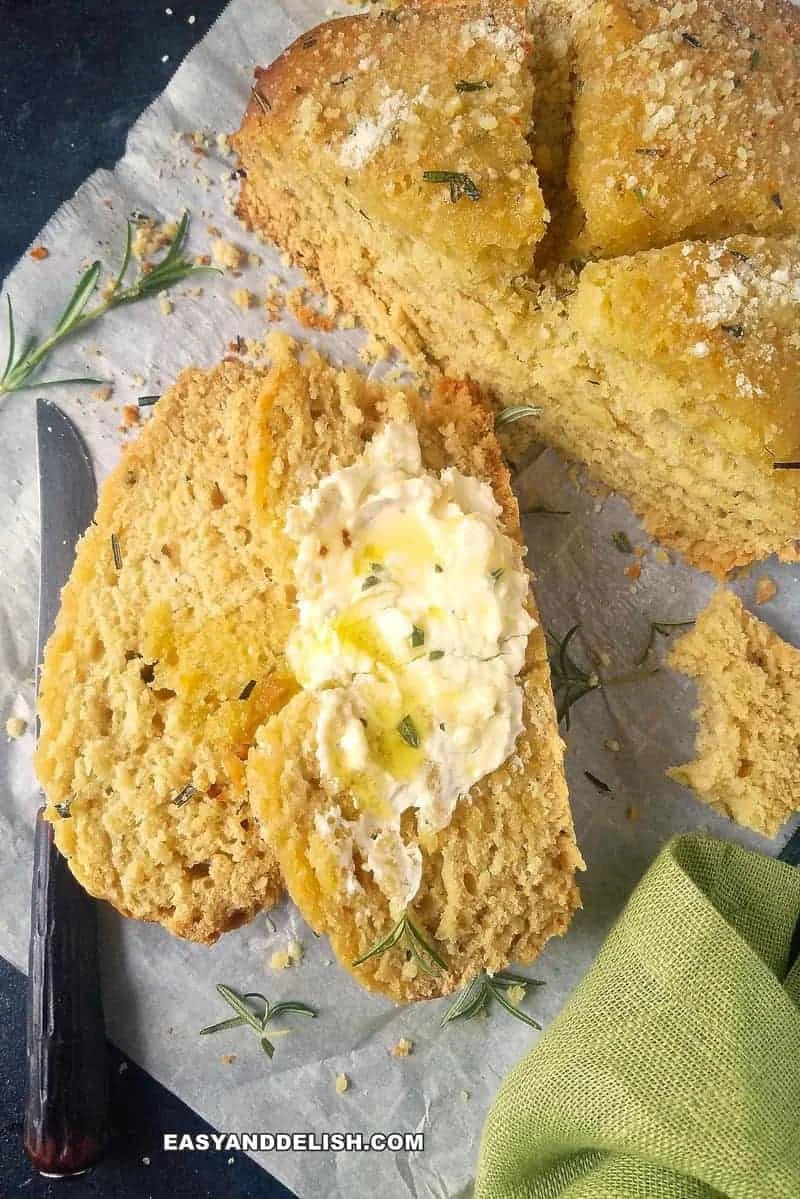
This Irish-style soda bread is a quick, yeast-free loaf with a crisp crust and a soft, dense centre. It uses bicarbonate of soda and baking powder for lift, so there is no proving time.
Ingredients
- 240 ml (1 cup)milk
- 15 ml (1 tablespoon)white vinegar or lemon juice
- 500 g (4 cups)plain flour
- 2.5 g (½ teaspoon)salt
- 50 g (¼ cup)sugar
- 5 g (1 teaspoon)bicarbonate of soda
- 12 g (1 tablespoon)baking powder
- 25 g (¼ cup)grated Parmesan (optional)
- 1 tablespoonfresh rosemary, chopped (optional)
Instructions
- 1
Make soured milk
Heat the oven to 190°C (375°F). Stir the vinegar or lemon juice into the milk and leave at room temperature for 10–15 minutes, or until it thickens and curdles.
- 2
Mix dry ingredients
Combine the flour, salt, sugar, bicarbonate of soda and baking powder in a large bowl. Stir in the Parmesan and rosemary if using.
- 3
Bring dough together
The method says to beat an egg against the inside of the bowl and mix in softened butter, then quickly add the soured milk and mix only until a uniform dough forms. Neither the egg nor butter, nor their quantities, is listed in the ingredients.
- 4
Shape the loaf
Turn the dough onto a lightly floured surface and knead briefly, no more than 4–8 times. Shape it into a ball, flatten it slightly, and cut an X in the centre of the top. Transfer it straight away to a baking tray lined with baking paper.
- 5
Bake until golden
Bake in the preheated oven at 190°C (375°F) for about 45 minutes, until a skewer inserted in the centre comes out clean and the top is golden. For a softer, moister crust, brush with soured milk before baking and again every 20 minutes while it bakes.
What is Irish soda bread?
Irish soda bread is a quick bread leavened with bicarbonate of soda rather than yeast, so it does not need time to rise. This version also includes baking powder and a simple milk-and-acid mixture, with optional Parmesan and rosemary for extra savoury flavour.
The cross cut into the top is a familiar feature of soda bread loaves. Here, a short bake and minimal kneading help keep the centre soft while the outside turns crisp.
Nutrition and macros by portion
The nutrition label shows one serving as written: 285 calories, 9g protein, 56g carbs, 2g fat.
| Portion | Adjustment | kcal | Protein | Carbs | Fat |
|---|---|---|---|---|---|
| Lighter | Skip Parmesan and sugar | 200 kcal | 6g | 39g | 1g |
| This serving | As written | 285 kcal | 9g | 56g | 2g |
| Hungry | Serve a larger slice | 428 kcal | 14g | 84g | 3g |
The flour and sugar provide most of the carbohydrates, while the milk, Parmesan and the method's unlisted egg and butter contribute to the protein and fat. Pair a slice with soup or another protein-rich savoury dish and vegetables to make a more balanced plate.
The milk and acid
Soured milk: leave the milk with vinegar or lemon juice for 10–15 minutes, until it visibly thickens or curdles. This gives the bicarbonate of soda an acidic ingredient to react with.
Leavening and flour
Dry mixture: combine the flour, salt, sugar, bicarbonate of soda and baking powder thoroughly before adding liquid, so the raising agents are spread through the dough.
Optional additions: Parmesan and chopped rosemary make the loaf more savoury. Leave them out for a simpler bread.
Keep the kneading brief
Gentle handling: knead the dough only 4–8 times, as directed, just enough to bring it together. Too much kneading can make a quick bread firm rather than tender.
Work promptly: once the soured milk is added, shape the dough and put it straight into the oven. The recipe relies on chemical raising agents rather than a long rise.
Shape and check for doneness
The X: flatten the ball slightly and cut a cross in the middle of the top before baking. Transfer the loaf to the lined tray immediately after shaping.
Doneness: the top should be golden and a skewer inserted into the centre should come out clean. The recipe gives about 45 minutes at 190°C, but use those visual and skewer cues as well.
Serving ideas
Let the loaf cool enough to slice, then serve it with soup or alongside a savoury meal. It also works well with butter or a favourite topping.
The Parmesan and rosemary variation pairs particularly well with soups and stews; the plain version is more versatile at the table.
Recipe notes & tips
- Measure the flour carefully and avoid packing it tightly into the measuring cup.
- Wait until the milk mixture thickens before adding it to the dry ingredients.
- Mix only until the dough comes together to help keep the loaf soft.
- Line the baking tray with baking paper to make transferring the shaped loaf easier.
- Use the clean-skewer test as well as the stated baking time to check the centre.
Variations
- Add Parmesan: stir in the optional grated cheese for a savoury loaf.
- Add rosemary: use the chopped fresh herb for an aromatic variation.
- Use lemon: replace the white vinegar with lemon juice to sour the milk.
- Keep it plain: omit both optional additions for a simpler loaf.
Common mistakes to avoid
- Skipping the resting time: give the milk and acid 10–15 minutes to thicken before using.
- Overworking the dough: stop after no more than 4–8 quick kneads.
- Delaying the bake: transfer the shaped dough to the oven straight away.
- Judging by time alone: check that a skewer comes out clean and the top is golden.
- Following the method without checking the list: it mentions egg and softened butter, but neither is listed with an amount.
How to store
Keep the cooled loaf in an airtight container at room temperature and use within 2–3 days. Rewarm slices briefly in the oven or toaster; freezing slices is a practical option for longer storage.
Frequently asked questions
Does this bread need to rise?
No. It uses bicarbonate of soda and baking powder rather than yeast, so it goes into the oven as soon as it is shaped.
Can I use lemon juice instead of vinegar?
Yes. The recipe lists lemon juice as an alternative for souring the milk.
How do I know the loaf is baked through?
The top should be golden, and a skewer inserted into the centre should come out clean. The stated baking time is about 45 minutes at 190°C.
Why does the recipe mention egg and butter if they are not listed?
The method refers to an egg and softened butter, but the ingredient list gives neither quantity. Check the original recipe for clarification before making the dough.
Can I leave out the Parmesan and rosemary?
Yes. Both are marked optional, so you can omit either or both.
Cook it from the original
This recipe comes from easyanddelish.com. Their page has the author’s own photos, notes and tips — the best place to cook it from.
Open the recipe on easyanddelish.com