
Sazón Dominicano [Video+Recipe] Dominican Sofrito
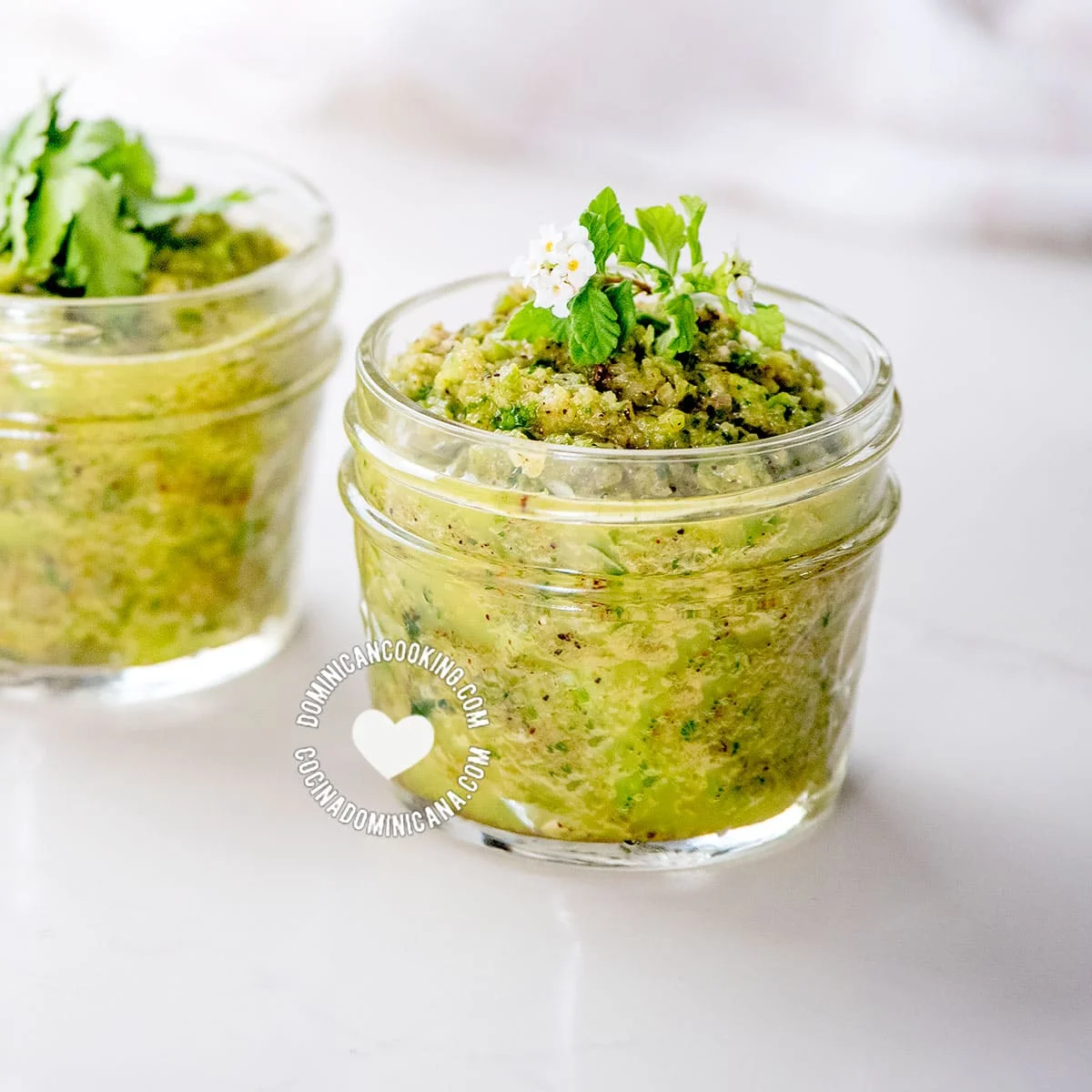
Dominican sofrito, also called sazón, is a fresh, aromatic base for building flavour in many Dominican dishes. Make it as a quick sauté to use straight away, or blend it into a thick paste for storage.
Ingredients
- 2cubanelle peppers, diced
- 6 clovesgarlic, crushed
- 1 mediumred onion, cut into strips
- 3 bunchesfresh coriander, chopped
- 1 teaspoonannatto powder (achiote)
- 1 tablespoon (or 1 teaspoon if using dried)oregano (fresh leaves or dried, ground)
- 1/4 teaspoonsalt
- 1 tablespoonolive oil
Instructions
- 1
Sauté the onion
For sofrito to use immediately, sauté the onion in the olive oil over low heat, stirring until translucent.
- 2
Finish the sofrito
Add the remaining ingredients and sauté, stirring, until cooked through. Continue with the preparation of your dish.
- 3
Blend for storage
For homemade seasoning to store, combine the ingredients in a blender or food processor and process until you have a thick paste.
- 4
Store the mixture
Refrigerate for up to a week, or freeze in a zip-top bag for up to a month.
What is Dominican sofrito?
Dominican sofrito, often called sazón, is a seasoned mixture used as a flavour base for many Dominican dishes. This version combines cubanelle peppers, onion, garlic, coriander and oregano with annatto.
You can cook it gently for an immediate dish or blend the ingredients into a thick paste to keep for later. Both approaches bring the same fresh, savoury ingredients to the cooking.
Nutrition and macros by portion
The nutrition label shows one serving as written: 50 calories, 1g protein, 5g carbs, 4g fat.
| Portion | Adjustment | kcal | Protein | Carbs | Fat |
|---|---|---|---|---|---|
| Lighter | Use less olive oil | 35 kcal | 1g | 4g | 3g |
| This serving | As written | 50 kcal | 1g | 5g | 4g |
| Hungry | Make a larger batch | 75 kcal | 2g | 8g | 6g |
The peppers, onion and coriander contribute most of the carbohydrates, while the olive oil provides most of the fat; the vegetables and herbs provide only a little protein. Since sofrito is usually used to flavour another dish, balance your meal with a protein-rich main and a vegetable side.
Choosing the ingredients
Peppers: Cubanelle peppers give the mixture its distinctive mild pepper flavour. Dice them so they are easy to sauté or process.
Herbs and spices: Fresh coriander and oregano provide the herbal notes, while annatto adds colour and a warm, earthy flavour. The recipe allows dried oregano as an alternative to fresh.
Sautéing the base
Onion first: Cook the onion over low heat, stirring until it turns translucent. This gives it time to soften without rushing the step.
The rest: Add the remaining ingredients only after the onion has softened, then keep stirring until they are cooked through. Use the cooked sofrito as the starting point for your chosen dish.
Blending for a paste
For the storage version, combine the ingredients in a blender or food processor and process them into a thick paste. The recipe does not call for cooking this batch before storage.
Use the texture as your cue: stop once the ingredients have come together into a thick mixture rather than a thin liquid.
Using the sofrito
This recipe is a seasoning base rather than a complete meal, so add it to another dish and continue cooking according to that dish's method. The cooked version is ready to use once its ingredients are cooked through.
Because the mixture is strongly flavoured, start with the amount your dish needs and adjust to taste as you cook.
Serving and pairing
Sofrito is designed to flavour a larger preparation, not to be served as a standalone portion. Add it to a dish that needs a savoury, herb-and-pepper base.
For a balanced plate, pair the finished dish with a source of protein and a vegetable or other fibre-rich side.
Recipe notes & tips
- Keep the heat low while softening the onion so it has time to become translucent.
- Stir regularly during the sauté to help the ingredients cook evenly.
- Chop the fresh ingredients before starting so they are ready to add.
- Choose fresh oregano or dried oregano according to what you have; use the recipe's smaller quantity for dried.
- Blend the storage batch only until it forms a thick paste.
Variations
- Dried oregano: Use 1 teaspoon instead of 1 tablespoon of fresh oregano.
- Immediate use: Sauté the onion and remaining ingredients, then add the cooked base to your dish.
- Make-ahead paste: Process the ingredients into a thick paste instead of sautéing them.
- Adjust the batch: Scale the ingredients together to prepare more or less seasoning.
Common mistakes to avoid
- High heat: The onion may cook too quickly; keep the heat low and stir until it is translucent.
- Adding everything at once: The onion needs to soften first; add the other ingredients after it turns translucent.
- Skipping the stirring: Ingredients may cook unevenly; stir throughout the sauté.
- Over-processing: A thin mixture misses the intended texture; stop when the paste is thick.
- Leaving it unrefrigerated: Store the prepared mixture in the fridge or freezer as directed.
How to store
Keep the mixture refrigerated for up to a week, or freeze it in a zip-top bag for up to a month. The recipe does not specify reheating instructions; add the stored sofrito to your dish and continue cooking as that dish requires.
Frequently asked questions
Is Dominican sofrito the same as sazón?
This recipe uses the names sofrito and sazón for the seasoned base. It combines cubanelle pepper, garlic, onion, coriander, annatto and oregano.
Should I cook the mixture or blend it?
Sauté it if you are using the base immediately. For a batch to store, combine and process the ingredients into a thick paste.
Can I use dried oregano?
Yes. Use 1 teaspoon of dried oregano in place of the tablespoon of fresh oregano.
How long does homemade sofrito keep?
Refrigerate it for up to a week or freeze it in a zip-top bag for up to a month.
Does the storage version need to be cooked first?
The method says to blend the ingredients into a paste for storage; it does not specify cooking that batch first.
Cook it from the original
This recipe comes from dominicancooking.com. Their page has the author’s own photos, notes and tips — the best place to cook it from.
Open the recipe on dominicancooking.com