
Tangzhong Burger Buns
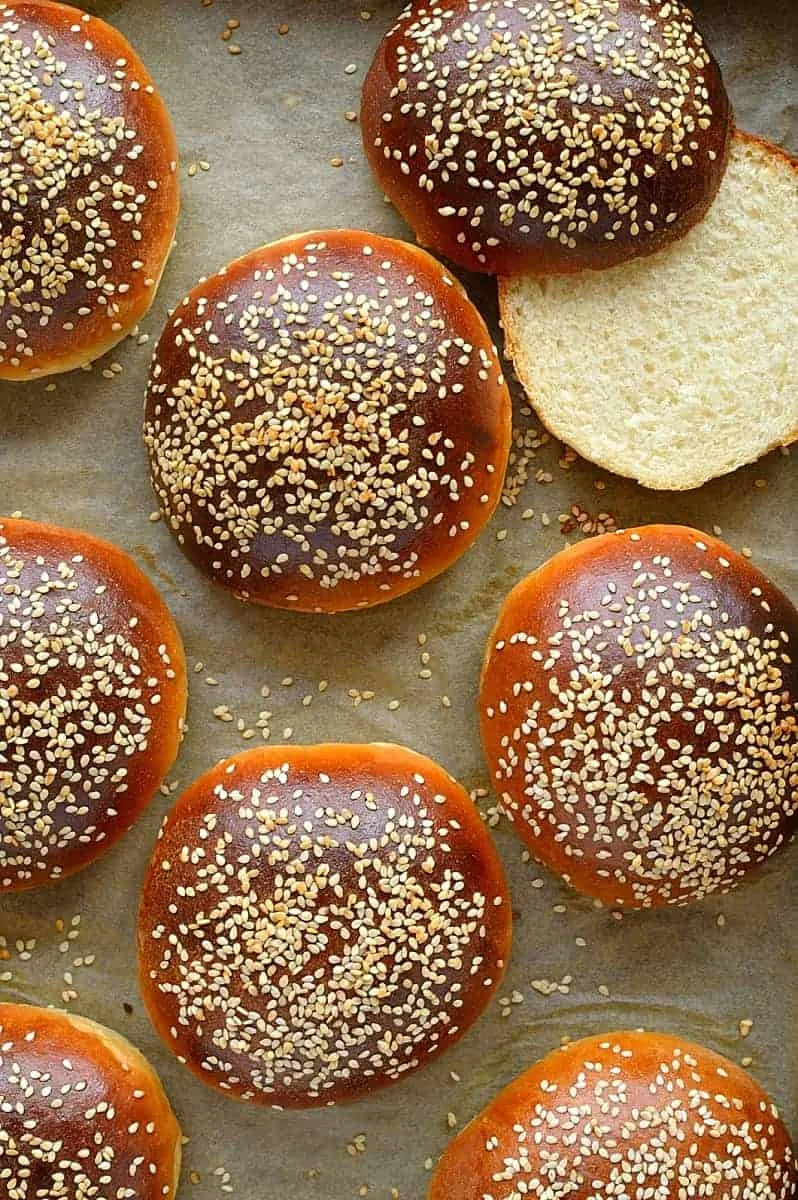
These tangzhong burger buns are soft, enriched bread rolls with a tender, fluffy crumb and a lightly golden sesame top. Make them when you want a homemade bun that can hold a burger without feeling heavy.
Ingredients
- 20 g (2 tbsp)strong white bread flour
- 100 ml (100 g; 1/3 cup + 1 tbsp + 1 tsp)water
- 350 g (scant 3 cups)strong white bread flour
- 7 g (2 tsp)fast-action yeast
- 1 tspsalt
- 50 g (1/4 cup)caster sugar
- 1 tbspmilk powder (optional)
- 125 ml (125 g; 1/2 cup)full-fat milk or unsweetened non-dairy milk
- 1 largeegg, or 3 tbsp aquafaba or non-dairy milk
- 50 g (scant 1/4 cup)softened butter or vegan butter
- 1, beaten with a splash of milkegg (use milk to glaze if vegan)
- To tastesesame seeds
Instructions
- 1
Cook the tangzhong
Put the first 20 g of flour in a small saucepan and gradually whisk in the water. Cook over medium heat, whisking continuously, until thick like wallpaper paste. Take it off the heat, scrape it into a bowl, press clingfilm directly onto its surface and leave it to cool.
- 2
Mix the dough
Add the remaining flour, yeast, salt, sugar and milk powder to a stand mixer fitted with a dough hook, and stir briefly. Make a well in the middle, add the egg or its alternative, milk and cooled tangzhong, then mix on low until a dough forms.
- 3
Knead in butter
Add the softened butter and mix on high until the dough is very stretchy and pulls away from the bowl’s sides. This may take about 15 minutes, even with a stand mixer.
- 4
Let dough rise
Move the dough to a lightly greased bowl and cover with clingfilm. Leave it somewhere warm until doubled in size, about 1–2 hours, or refrigerate it overnight.
- 5
Shape the buns
Line a baking sheet with baking parchment. Divide the risen dough into 8 equal pieces and shape each into a ball on a lightly floured surface. Space them well apart on the sheet, cover loosely with oiled clingfilm and leave for about 1 hour, until puffy.
- 6
Bake until golden
Meanwhile, heat the oven to 200°C (400°F/gas mark 6). Brush the risen buns with the beaten egg or non-dairy milk and scatter over sesame seeds. Bake for about 20 minutes, until deep golden and the centres reach 90°C.
- 7
Cool the buns
Transfer the buns to a wire rack and let them cool before serving. Store them in an airtight container.
What are tangzhong burger buns?
Tangzhong is a cooked flour-and-water paste used in enriched bread making, a technique associated with Japanese milk bread. Cooking some of the flour first gives the dough a soft, plush texture.
Here, that paste is worked into a lightly sweet dough enriched with milk, egg and butter. The result is a tender bun with enough structure for a burger.
Nutrition and macros by portion
The nutrition label shows one serving as written: 284 calories, 8g protein, 45g carbs, 7g fat.
| Portion | Adjustment | kcal | Protein | Carbs | Fat |
|---|---|---|---|---|---|
| Lighter | Use a lighter filling | 199 kcal | 6g | 32g | 5g |
| This serving | As written | 284 kcal | 8g | 45g | 7g |
| Hungry | Serve two buns | 426 kcal | 12g | 68g | 11g |
Most of the carbohydrates come from the bread flour and sugar, while butter, egg and milk contribute much of the fat and some protein. Serve one bun with a protein-rich filling and plenty of salad or vegetables to make a more balanced plate.
Why the tangzhong matters
Cooked paste: whisk the flour and water constantly over medium heat so it thickens evenly and does not catch on the pan.
Cool it first: let the paste cool before adding it to the dough. Covering its surface directly with clingfilm helps prevent a skin from forming.
Building the dough
Flour and yeast: strong white bread flour gives the dough the structure it needs, while fast-action yeast makes it rise without being activated separately.
Butter: add it after the other dough ingredients have come together. A long mix helps the dough become stretchy and cohesive rather than greasy or lumpy.
Rising and shaping
First rise: use the dough’s doubled size as the main cue, since the time can vary with room temperature. The overnight fridge option gives you a slower rise and lets you plan ahead.
Even portions: divide the dough into 8 equal pieces so the buns bake at a similar rate. Shape each piece into a smooth ball and leave ample room between them as they rise.
How to judge doneness
Puffy dough: the shaped buns should look expanded before they go into the oven. Handle them gently when brushing so you do not knock out too much air.
Golden tops: bake until deeply coloured and check that the centres reach 90°C. Let the buns cool on a rack so steam can escape instead of softening their bases.
Serving the buns
For burgers: split the cooled buns and fill them with patties, salad and your preferred sauce. Their soft crumb also works well for sandwiches or breakfast rolls.
On the side: pair a burger with a crisp salad, slaw or roasted vegetables. Toasting the cut sides briefly can help them stand up to juicy fillings.
Recipe notes & tips
- Weigh the dough portions if you want all 8 buns to be a similar size.
- Keep the clingfilm pressed against the tangzhong while it cools to stop a skin forming.
- Use softened butter so it incorporates smoothly during mixing.
- Allow enough space between the shaped buns because they expand during their second rise.
- For a vegan version, use the listed non-dairy alternatives and glaze with milk instead of egg.
Variations
- Plain tops: leave off the sesame seeds for a simple, soft finish.
- Seeded tops: use another seed you enjoy in place of sesame.
- Dairy-free dough: choose non-dairy milk and vegan butter, and use aquafaba or milk instead of the egg.
- Smaller rolls: divide the dough into more pieces and check them earlier as they bake.
- Overnight rise: refrigerate the covered dough for its first rise, then shape and proof it before baking.
Common mistakes to avoid
- Lumpy tangzhong: whisk the water in gradually and keep whisking as it heats.
- Adding hot tangzhong: cool the paste before mixing it into the dough.
- Stopping the knead too soon: continue until the dough is stretchy and clears the sides of the bowl.
- Crowding the tray: space the dough balls well apart so they have room to rise.
- Overproofing the shaped buns: bake when they are puffy rather than waiting for them to collapse or wrinkle.
- Using colour alone: check that the bun centres reach 90°C as well as looking deep golden.
How to store
Once completely cool, keep the buns in an airtight container at room temperature and use within a few days. Warm them briefly in a low oven or split and toast them before serving; freeze extras in a sealed bag for longer storage.
Frequently asked questions
Can I make the dough the night before?
Yes. After mixing, cover the dough and refrigerate it overnight for its first rise. Shape the buns the next day and let them rise until puffy before baking.
How do I know the dough has risen enough?
For the first rise, look for the dough to have doubled in size. After shaping, the buns should look noticeably puffy before they are baked.
Can I make these buns without a stand mixer?
Yes, knead the dough by hand after adding the butter. It may take patience to get it very stretchy, but use the same texture cues as for machine mixing.
Can I make the buns vegan?
Use non-dairy milk and vegan butter, and replace the egg in the dough with aquafaba or non-dairy milk. Brush the tops with non-dairy milk instead of beaten egg.
Can I freeze the baked buns?
Yes. Cool them completely, seal them in a freezer-safe bag and freeze. Thaw before serving, then warm or toast as desired.
Why are the buns dense?
They may need more kneading or more time to rise. Knead until the dough is stretchy, then allow the shaped buns to become visibly puffy before baking.
Cook it from the original
This recipe comes from domesticgothess.com. Their page has the author’s own photos, notes and tips — the best place to cook it from.
Open the recipe on domesticgothess.com