
Apple, Fig, Pecan & Honey Scones
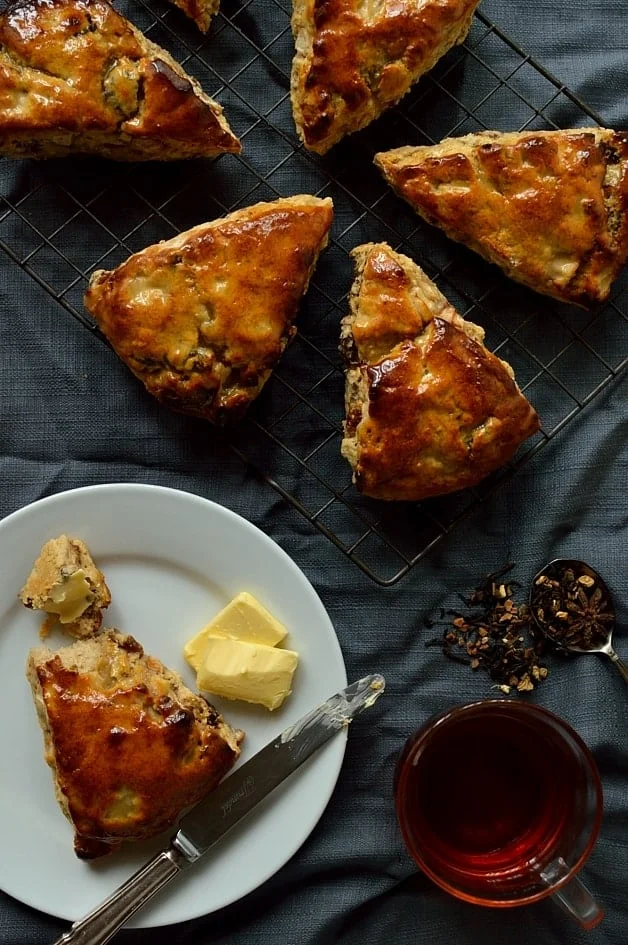
These apple, fig, pecan and honey scones are warmly spiced wedges with tender fruit and a buttery honey glaze. They make a generous bake for breakfast or an afternoon tea, and the dough comes together without cutting out individual scones.
Ingredients
- 450 gself-raising flour
- 2 rounded tspbaking powder
- 1/2 tspground cinnamon
- 1/2 tspground ginger
- 1/4 tspground nutmeg
- a pinchsalt
- 85 gcool butter, cubed
- 160 gdried figs, roughly chopped
- 1 largeeating apple, peeled and diced
- 75 gpecans, roughly chopped
- 5 tbsphoney
- 2 largeeggs
- 100 ml, plus extra for glazingfull-fat milk
- 25 gbutter
- 1 tbsphoney
Instructions
- 1
Heat the oven
Preheat the oven to 220°C (425°F/gas mark 7) and line a baking sheet with baking parchment.
- 2
Mix dry ingredients
Sift the flour, baking powder, cinnamon, ginger, nutmeg and salt into a large bowl. Rub in the 85 g of cool butter with your fingertips until the mixture looks like breadcrumbs, then stir in the figs, apple and pecans.
- 3
Make the dough
Whisk together the 5 tbsp honey, eggs and 100 ml milk. Pour this into the flour mixture and mix to make a soft dough. Turn it onto a floured surface, shape it into a ball, then flatten it into a round about 2–3 cm thick.
- 4
Cut the wedges
Dip a sharp knife in flour and cut the round into eight wedges. Transfer them to the prepared baking sheet, leaving a little space between each one for rising and spreading.
- 5
Bake until golden
Brush the tops with a little extra milk and bake for 18–20 minutes, until risen and golden and a skewer inserted into a scone comes out clean. Move the scones to a wire rack.
- 6
Brush with glaze
While the scones bake, heat the 25 g butter and 1 tbsp honey in a small pan until melted and smooth. Brush a generous coating over each scone as soon as they come out of the oven.
- 7
Store the scones
Keep them in an airtight container. They are best on the day they are made, but stay moist the next day; after that, split and toast them. To freeze, let them defrost and refresh them in a low oven for about 5 minutes.
What are these scones?
Scones are a British quick bread, usually leavened with raising agents and served with tea. This version turns the familiar bake into a fruit-and-nut scone, with diced apple, dried figs and pecans folded into a spiced dough.
Wedges make shaping straightforward: press the dough into one round and cut it before baking. Honey appears both in the dough and in the warm glaze, tying together the fruit and spices.
Nutrition and macros by portion
The nutrition label shows one serving as written: 504 calories, 9g protein, 76g carbs, 18g fat.
| Portion | Adjustment | kcal | Protein | Carbs | Fat |
|---|---|---|---|---|---|
| Lighter | Smaller scone wedge | 353 kcal | 6g | 53g | 13g |
| This serving | As written | 504 kcal | 9g | 76g | 18g |
| Hungry | Larger scone portion | 756 kcal | 14g | 114g | 27g |
The flour, dried figs, apple and honey provide most of the carbohydrates, while butter and pecans contribute much of the fat. Eggs, flour, pecans and milk supply some protein. Balance a scone with plain yoghurt or a serving of fresh fruit rather than adding another sweet topping.
The fruit and nuts
Figs and apple: Chop the figs roughly and dice the peeled apple so they are distributed through the dough. The figs bring concentrated sweetness, while the apple adds softer, juicy pieces.
Pecans: Roughly chopped nuts give the wedges a crisp contrast to the fruit. Keep the pieces small enough to mix through the dough without making it difficult to cut.
Rubbing in the butter
Cool butter: Work the cubes into the flour with your fingertips until the mixture resembles breadcrumbs. Stop there rather than kneading; the method relies on keeping the dough soft and lightly handled.
Milk mixture: Whisk the honey, eggs and milk together before adding them to the bowl. Mix only until the ingredients come together, as a little unevenness is preferable to a heavily worked dough.
Shaping and cutting
Floured surface: Turn the dough out onto a lightly floured work surface and shape it into a ball, then flatten it to 2–3 cm thick. Avoid pressing it too thin, since the wedges need thickness to rise.
Floured knife: Cut the round into eight wedges with a sharp knife dipped in flour. Leave a little room between them on the tray because they will spread as well as rise.
Checking when they are ready
Colour and rise: The scones should look risen and golden after 18–20 minutes at 220°C. If they still look pale, give them a little more time in the oven.
Skewer test: Insert a skewer into a scone; it should come out clean when the centre is cooked through. Transfer the wedges to a wire rack before glazing.
Serving ideas
Warm scones: Serve them once the glaze has settled, with tea or coffee. They are rich with fruit and nuts, so a simple drink or a spoonful of plain yoghurt alongside is enough.
Toasted leftovers: Split and toast the scones once they are no longer at their freshest. Toasting gives the cut sides some crispness and makes them enjoyable beyond the first day.
Recipe notes & tips
- Keep the butter cool so it rubs into the flour rather than melting.
- Flour the knife before cutting to help it pass cleanly through the fruit and nuts.
- Space the wedges on the baking sheet to leave room for spreading.
- Use the skewer test as well as the golden colour to check the centres are baked.
- Brush on the glaze while the scones are still hot so it coats them easily.
Variations
- Change the nuts: Use roughly chopped walnuts in place of the pecans.
- Swap the dried fruit: Try chopped dried apricots instead of figs.
- Adjust the spices: Use a little more cinnamon and leave out the ginger for a milder flavour.
- Add citrus: Stir finely grated orange zest into the dry ingredients for a bright note.
- Serve simply: Split and toast a day-old scone, then serve it with a little butter.
Common mistakes to avoid
- Warm butter: It can make the flour mixture greasy; start with cool, cubed butter.
- Overworking the dough: Too much mixing can make the scones firm; stop as soon as a soft dough forms.
- Round too thin: Thin dough makes flatter wedges; shape it to 2–3 cm thick.
- Crowded tray: The wedges need room to spread; use a second baking sheet if necessary.
- Skipping the skewer test: A golden top does not guarantee a cooked centre; check that a skewer comes out clean.
How to store
Store the cooled scones in an airtight container; they are best on the day they are made and remain moist the next day. After that, split and toast them, or freeze them and defrost before refreshing in a low oven for about 5 minutes.
Frequently asked questions
Can I make these scones ahead?
They are best freshly baked, but you can keep them in an airtight container and enjoy them the next day. Toast them after that for a better texture.
How do I know when the scones are baked?
Look for risen, golden wedges and test one with a skewer. It should come out clean when the centre is cooked through.
Can I freeze the scones?
Yes. Let them defrost, then refresh them in a low oven for about 5 minutes before serving.
Why should the butter be cool?
Cool butter rubs into the flour as small pieces, helping the mixture reach the breadcrumb-like texture described in the method. Warm butter can make it greasy.
Can I use a different nut?
Yes. Roughly chopped walnuts are a suitable alternative to pecans, with a similar crunchy texture.
Cook it from the original
This recipe comes from domesticgothess.com. Their page has the author’s own photos, notes and tips — the best place to cook it from.
Open the recipe on domesticgothess.com