
Chocolate Cherry Challah
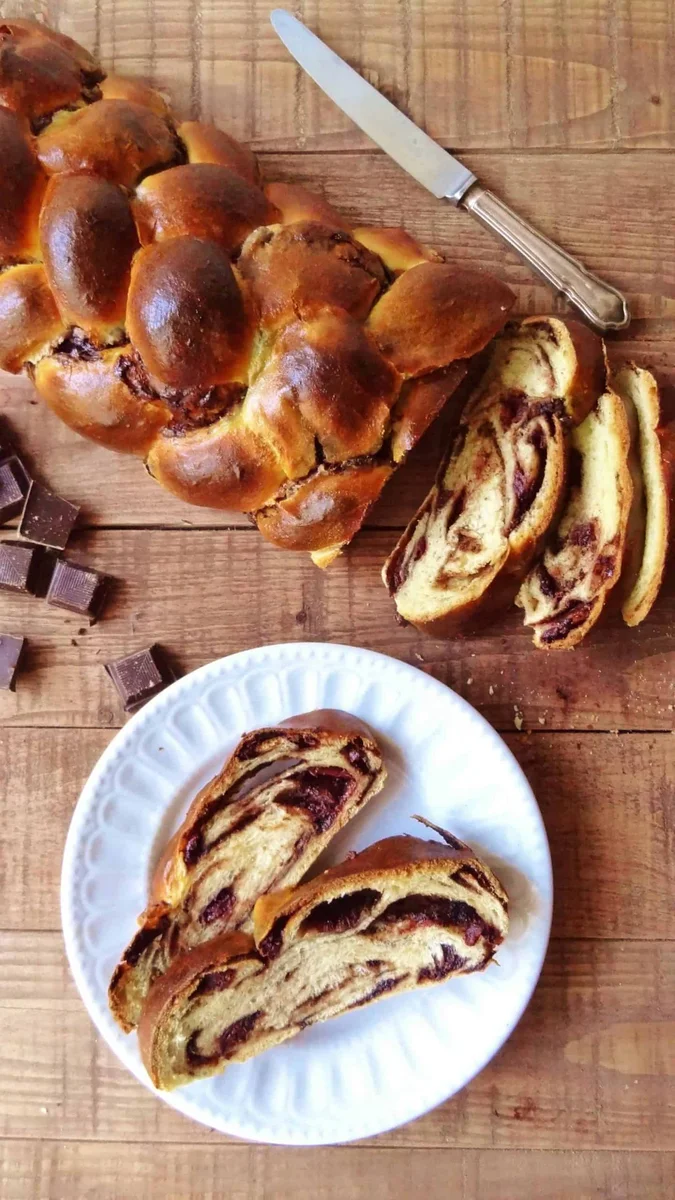
This chocolate cherry challah is a soft, enriched braided loaf filled with dark chocolate and syrupy morello cherries. The overnight rise develops the dough ahead of time, making it a lovely bake for a special breakfast or sharing at the table.
Ingredients
- 250 ml (1 cup + 1 tbsp)lukewarm water
- 7 g (2 tsp)fast-action yeast
- 5egg yolks
- 2 1/2 tbspolive oil
- 50 g (2 oz)runny honey
- 1/2 tbspvanilla extract
- 485 g (3 + 1/4 cups)strong white bread flour
- 1 tspsalt
- 125 g (4.5 oz)dark chocolate, grated or very finely chopped
- 3 tbspsugar
- 270 g (9.5 oz) drained weightmorello cherries in syrup, from a jar or tin
- 1 tbspcornflour (cornstarch)
- 1 tspcinnamon (optional)
- 1beaten egg, for egg wash
Instructions
- 1
Mix the wet ingredients
In a large bowl, gently whisk together two thirds of the water with the yeast, egg yolks, olive oil, honey and vanilla extract.
- 2
Make the dough
Add the flour and salt and mix. Add the remaining water as needed to form a soft, slightly sticky dough. Knead by hand or in a mixer for 5–10 minutes, until supple and slightly tacky rather than sticky.
- 3
Chill overnight
Put the dough in a lightly oiled bowl, cover it and refrigerate overnight. It can stay in the fridge for a couple of days if needed.
- 4
Divide the dough
The following day, take the dough from the fridge and divide it into as many equal portions as you plan to use strands for the plait. Use six portions for a six-strand braid or three for a simpler plait.
- 5
Prepare the filling
Drain and roughly chop the cherries, then pat them with kitchen roll to remove excess liquid. Mix them with the chocolate, sugar, cornflour and cinnamon, if using.
- 6
Roll the dough
Roll each piece into an oblong about 36 × 13 cm for a six-strand plait, or 36 × 20 cm for a three-strand plait.
- 7
Fill and shape
Divide the filling equally between the pieces and spread it down the centre, leaving a 2.5 cm border. Roll each piece tightly from the long side, pinch the seam to seal, then roll each cylinder by hand into an 46–53 cm rope, tapering the ends slightly.
- 8
Braid the strands
Braid the strands together in your chosen style. Use a six-strand braiding guide if you need help with that pattern.
- 9
Proof the braid
Transfer the braid to a baking sheet lined with greaseproof paper or a silicone liner. Cover it loosely with greased clingfilm and leave to rise for about 1 1/2 hours, until doubled in size.
- 10
Heat the oven
Preheat the oven to 180°C (350°F, gas mark 4).
- 11
Brush and bake
Brush the risen challah with beaten egg and bake for 45–50 minutes. Brush it with egg wash again after 15–20 minutes, and loosely cover with foil after about 30 minutes if it is browning too much.
- 12
Cool before slicing
Move the baked challah to a wire rack and leave it to cool completely before slicing.
What is chocolate cherry challah?
Challah is an enriched bread associated with Jewish cuisine and traditionally served for Shabbat and holidays. This version folds dark chocolate and morello cherries into the loaf, pairing a tender, lightly sweet dough with a rich, fruity filling.
The overnight rest makes the dough easier to handle and lets you split the work across two days. A plaited shape gives the loaf an inviting look while holding the filling in its strands.
Nutrition and macros by portion
The nutrition label shows one serving as written: 3400 calories, 79g protein, 500g carbs, 119g fat.
| Portion | Adjustment | kcal | Protein | Carbs | Fat |
|---|---|---|---|---|---|
| Lighter | Use less chocolate | 2380 kcal | 55g | 350g | 83g |
| This serving | As written | 3400 kcal | 79g | 500g | 119g |
| Hungry | Serve a larger slice | 5100 kcal | 119g | 750g | 179g |
The flour, honey, sugar and cherries provide most of the carbohydrates, while the egg yolks and olive oil contribute much of the fat. Flour, egg yolks and chocolate also supply protein, though this is still a sweet, bread-based loaf. Pair a slice with yoghurt or fruit, and treat the stated serving count as one whole loaf only if that is how the recipe is portioned.
Building a soft dough
Water first: begin with two thirds of the water, then add the rest gradually as the flour comes together. Flour absorbs liquid differently, so the dough's feel is a better guide than adding all the water at once.
Kneading: work the dough for 5–10 minutes until it feels supple and just tacky. Too much extra flour can make the baked loaf dense, so resist adding it unless the dough is genuinely difficult to handle.
Keeping the filling in place
Dry cherries: drain and pat the fruit to remove excess syrup without trying to make it completely dry. Too much liquid can soften the dough and encourage the filling to leak.
Sealed strands: leave a border around the filling, roll each piece tightly and pinch the seam closed. This gives you a more even rope to braid and helps contain the chocolate and cherries.
Choosing the braid
Three strands: this is the simpler option and uses wider dough oblongs. Keep the strands even in thickness so the loaf rises and bakes consistently.
Six strands: this makes a more intricate loaf, but the same rolling and sealing method applies. Arrange the strands so the filled seams are tucked underneath where possible.
Proofing and baking cues
Second rise: allow about 1 1/2 hours for the shaped loaf to double. The exact time can vary, so use the visible increase in size as the main cue.
Colour: the egg wash helps the crust turn glossy and golden. Give it a second coat after 15–20 minutes, and tent it loosely with foil after about 30 minutes if the surface is getting too dark before the bake is complete.
Serving the loaf
Let the challah cool completely on a wire rack before slicing, so the crumb can set and the filling is less likely to smear. A serrated knife makes neat slices through the braid.
Serve it on its own for breakfast or alongside yoghurt and fresh fruit. The chocolate and cherry filling also makes it a natural choice for an afternoon treat.
Recipe notes & tips
- Weigh the flour for a more consistent dough.
- Add the last of the water gradually, checking the dough texture as you go.
- Pat the cherries dry so their syrup does not make the filling too wet.
- Seal each filled strand firmly before rolling it into a rope.
- Grease the clingfilm lightly so it lifts away from the proofed loaf without sticking.
- Cool the loaf fully before cutting for cleaner slices.
Variations
- Use orange zest: add finely grated zest to the filling for a citrus note.
- Change the chocolate: use a different dark chocolate to suit your preferred level of bitterness.
- Skip the cinnamon: leave it out for a simpler chocolate-and-cherry flavour.
- Make three strands: use the simpler braid for an easier shaping method.
- Add chopped nuts: mix a small amount into the filling for extra crunch.
Common mistakes to avoid
- Adding all the water at once: hold some back and add it gradually until the dough is soft and slightly tacky.
- Using wet cherries: drain and pat them dry to limit excess liquid in the filling.
- Overfilling the strands: divide the filling evenly and leave a border around each piece.
- Loose seams: pinch the dough closed before rolling each filled piece into a rope.
- Rushing the proof: wait until the shaped loaf has doubled in size rather than relying only on the clock.
- Over-browning the crust: cover the loaf loosely with foil after about 30 minutes if it is getting too dark.
How to store
Once completely cool, keep the challah in an airtight container at room temperature and eat within 2–3 days. Rewarm slices briefly in a low oven, or freeze slices for longer storage and defrost before serving.
Frequently asked questions
Can I leave the dough in the fridge for more than one night?
Yes. The method allows it to stay in the fridge for a couple of days if needed; keep it covered in its bowl.
Do I have to make a six-strand braid?
No. Divide the dough into three portions for a simpler plait. Roll those pieces into oblongs about 36 × 20 cm before filling.
How do I know when the challah has proofed enough?
The shaped braid should have doubled in size, which takes about 1 1/2 hours in the stated method. The visual cue matters more than an exact rise time.
Why is the dough sticky?
It is meant to feel slightly tacky, but not sticky, after kneading. Add the remaining water gradually and avoid adding extra flour unless the dough is hard to handle.
Can I use frozen cherries?
The recipe specifies morello cherries in syrup from a jar or tin. If substituting another type, drain and pat it dry so excess liquid does not make the filling soggy.
When can I slice the loaf?
Wait until it has cooled completely on a wire rack. Slicing while warm can make the crumb and chocolate filling messy.
Cook it from the original
This recipe comes from domesticgothess.com. Their page has the author’s own photos, notes and tips — the best place to cook it from.
Open the recipe on domesticgothess.com