
Fresh Vegetable Summer Rolls
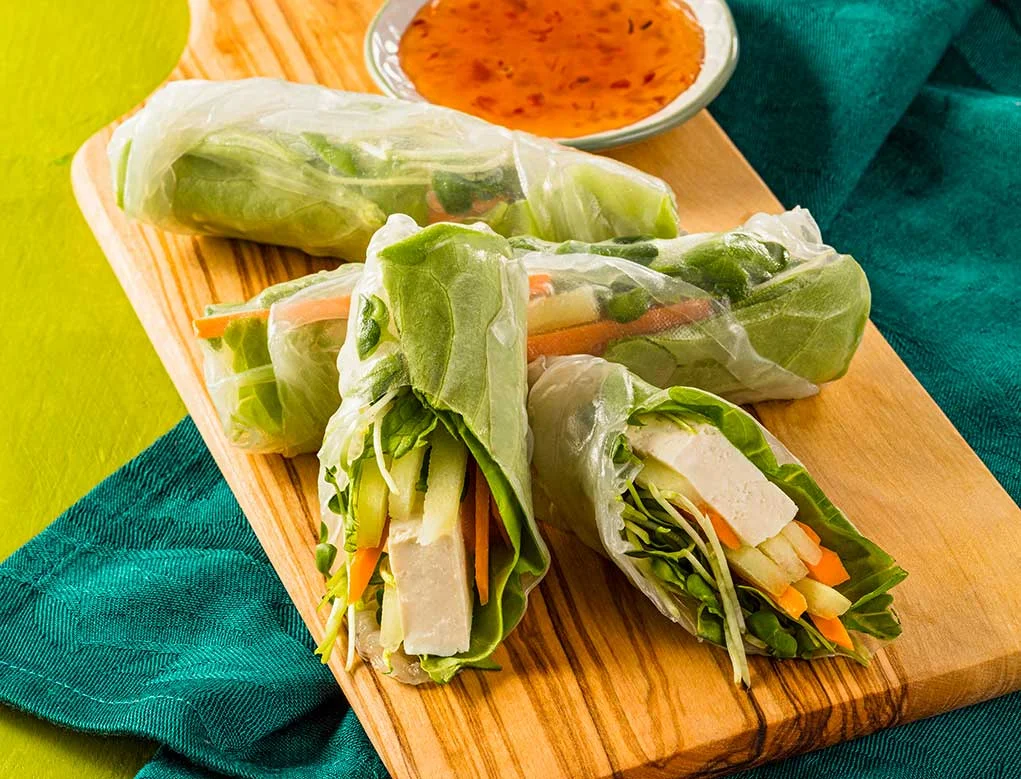
These fresh summer rolls wrap tofu, crisp vegetables and mint in softened rice paper. They make a light, hands-on meal or appetiser, with a dipping sauce served on the side if you like.
Ingredients
- 12 leavesBibb or Boston lettuce
- 454 g (1 lb)Extra-firm tofu, drained and cut lengthwise into 12 planks, each 1.3 cm (½ inch) thick
- 1 largeCarrot, peeled and cut into 5 cm (2 inch) matchsticks
- ½ mediumEnglish or hothouse cucumber, peeled, seeded and cut into 5 cm (2 inch) matchsticks
- 480 ml (2 cups)Fresh mung bean or clover sprouts, blanched
- 24 leavesFresh mint
- 12 sheetsRice paper spring roll wrappers
Instructions
- 1
Arrange the filling
Fill a flat, round cake pan with water. Lay a clean, smooth (not fluffy) kitchen towel on your work surface. Put the lettuce, tofu, carrot, cucumber, sprouts and mint in separate piles on a plate.
- 2
Soften the wrapper
Dip one rice paper sheet in the water and soak it until pliable. Lay it on the towel and blot it dry; it should feel sticky, not slippery.
- 3
Stack the filling
On the side of the rice paper nearest you, stack one lettuce leaf, one piece of tofu, some carrot, cucumber, sprouts and two mint leaves, placing them side by side.
- 4
Roll the wrapper
Bring the far side of the rice paper tightly over the filling, taking care not to tear it. Fold in the sides, then roll all the way to the end. Repeat with the remaining ingredients.
What are summer rolls?
Summer rolls are Vietnamese-style rolls made with fresh fillings enclosed in softened rice paper, rather than cooked in a crisp pastry wrapper. They are often associated with a shrimp filling; this version uses tofu for a vegetarian take.
The combination works because crisp vegetables and fragrant mint contrast with the soft wrapper and mild tofu. Keeping the fillings in separate piles also makes assembly easier.
Nutrition and macros by portion
The nutrition label shows one serving as written: 90 calories, 5g protein, 13g carbs, 2g fat.
| Portion | Adjustment | kcal | Protein | Carbs | Fat |
|---|---|---|---|---|---|
| Lighter | Use less dipping sauce | 63 kcal | 4g | 9g | 1g |
| This serving | As written | 90 kcal | 5g | 13g | 2g |
| Hungry | Serve extra rolls | 135 kcal | 8g | 20g | 3g |
The rice paper, carrot and sprouts contribute most of the carbohydrate, while tofu provides protein and a modest amount of fat. Serve the rolls with extra vegetables or a vegetable-based side to balance the plate; any dipping sauce will add to the meal's nutrition.
Choosing the fillings
Tofu: Extra-firm tofu holds its shape when cut into planks, making it easier to stack and roll. Drain it well so excess moisture does not make the wrapper slippery.
Vegetables: Cut the carrot and cucumber into matchsticks about 5 cm long, as directed, so they fit neatly across the wrapper. Use the specified lettuce leaves and blanched sprouts for layers that are easy to fold around.
Soaking rice paper
Water: Dip one sheet at a time and soak only until pliable; rice paper continues to soften after it comes out of the water. If it is still a little firm, give it a moment on the towel rather than leaving it in the pan too long.
Towel: A clean, smooth towel helps blot away excess water without catching on the wrapper. The target is sticky rather than wet or slippery.
Folding without tearing
Filling: Keep the ingredients on the side nearest you and arrange them side by side as instructed. Avoid making the pile so bulky that the wrapper cannot cover it.
Rolling: Bring the far edge over the filling firmly, fold in both sides and roll to the end. Use a steady, gentle pull; tugging hard can split the softened rice paper.
Texture and timing
The rolls are ready when the rice paper is pliable and wrapped snugly around the fillings, while the carrot, cucumber and sprouts remain distinct. The recipe gives a total time of 25 minutes, so prepare the vegetables and tofu before beginning to soak the wrappers.
Work with one wrapper at a time, since softened rice paper can become difficult to handle if left sitting. If a sheet feels slippery, blot it again before adding the filling.
Serving suggestions
These rolls can be served as a light meal or as an appetiser. The original description suggests a small amount of low-sodium peanut or chilli sauce for dipping, if desired.
For a more substantial plate, serve the rolls alongside a filling of your choice. Keep any sauce separate until serving so the wrappers stay easy to handle.
Recipe notes & tips
- Prepare all the vegetables and arrange the fillings before soaking the first wrapper.
- Use a flat, round pan wide enough to dip a rice paper sheet without folding it.
- Blanch the sprouts as specified, then let excess water drain away before arranging them.
- Blot each softened wrapper so it is sticky rather than slippery before filling it.
- Keep the rolls covered with a clean, slightly damp towel while you finish the batch.
Variations
- Change the herbs: Use another fresh herb alongside or instead of some of the mint.
- Add a dipping sauce: Serve with a small amount of low-sodium peanut or chilli sauce.
- Vary the sprouts: Use clover sprouts in place of mung bean sprouts.
- Change the lettuce: Choose Bibb or Boston lettuce, as available.
- Make smaller rolls: Divide the filling between more wrappers for smaller portions.
Common mistakes to avoid
- Over-soaking the wrapper: It can become too soft to handle, so remove it as soon as it is pliable.
- Leaving the wrapper wet: Blot it on the towel until sticky rather than slippery before filling.
- Overfilling: A bulky pile is harder to enclose, so keep the filling compact and side by side.
- Pulling too hard: Rice paper can tear under tension, so roll firmly but gently.
- Using a fluffy towel: Fibres can catch on the wrapper, so choose a clean, smooth towel.
How to store
Keep leftover rolls in an airtight container in the refrigerator and eat within 1 day for the best texture. Separate them with baking paper if needed, and serve chilled; these fresh rolls are not suited to reheating.
Frequently asked questions
Can I make these rolls ahead?
They are best soon after assembly, when the wrappers are pliable and the vegetables remain crisp. If preparing ahead, refrigerate them covered and aim to eat them within a day.
How do I know when the rice paper is ready?
It should be pliable enough to fold but still hold together. After soaking, blot it so the surface feels sticky rather than slippery.
Why is my wrapper tearing?
It may have softened too much or be under strain from a large filling. Soak only until pliable and roll gently around a compact filling.
Can I use clover sprouts instead?
Yes. The recipe lists mung bean or clover sprouts as options; blanch whichever you use.
What can I serve with the rolls?
The description suggests a small amount of low-sodium peanut or chilli sauce for dipping. They can also be served with a vegetable-based side.
Cook it from the original
This recipe comes from diabetesfoodhub.org. Their page has the author’s own photos, notes and tips — the best place to cook it from.
Open the recipe on diabetesfoodhub.org