
Vaca frita
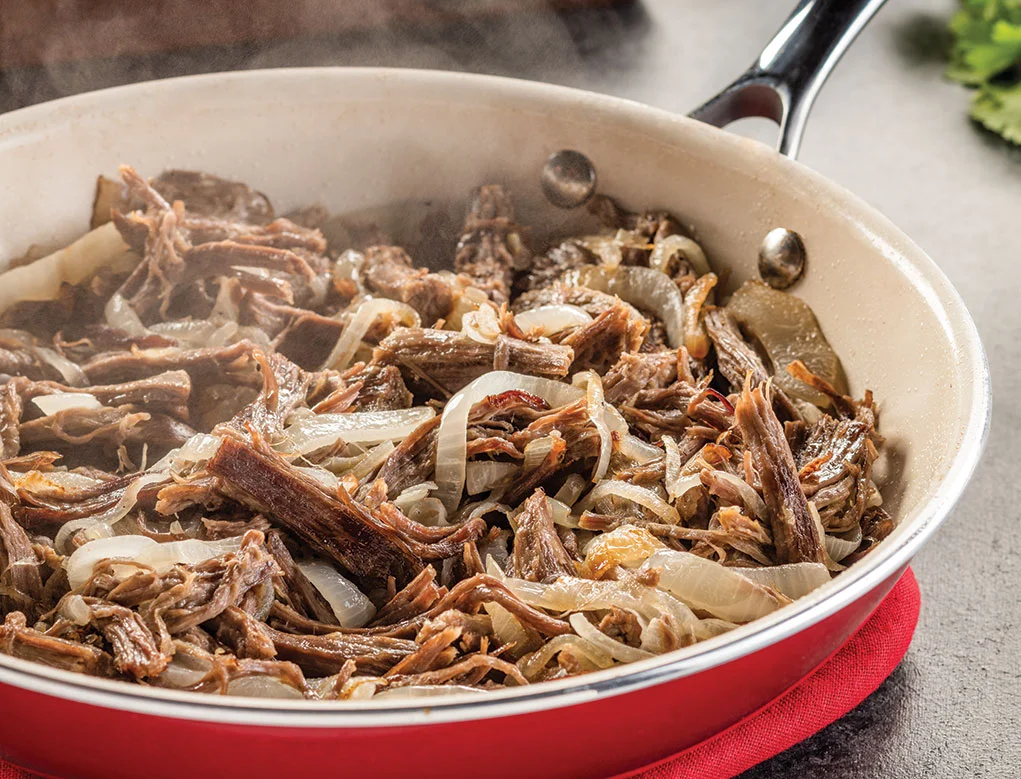
Vaca frita is Cuban shredded beef, marinated with lime and garlic, then browned with caramelised onion. This lighter-style version starts by simmering flank steak until tender, making it a good choice when you want a crisp-edged main that can also provide broth for another dish.
Ingredients
- 454 g, cut into 4 equal piecesflank steak
- 1 medium onion, cut into quartersonion
- 1 bay leafbay leaf
- 946 mlwater
- 1 tbsp plus 1 tsp, dividedolive oil
- 1 large onion, thinly slicedonion
- 59 mllime juice
- 2 cloves, mincedgarlic
- ¼ tspsalt
- ¼ tspblack pepper
- 1non-stick cooking spray
- 1 lime, cut into wedgeslime
- 59 ml, choppedfresh coriander
Instructions
- 1
Simmer the beef
Put the beef, quartered onion, bay leaf and water in a large saucepan. Bring to the boil, cover and cook over a medium-low heat until the beef is tender, about 1 hour 10 minutes.
- 2
Cool and strain
Transfer the beef to a chopping board and leave it to cool. Save the cooking broth for another dish: skim off the fat, discard the bay leaf and strain the broth. Refrigerate it for up to 1 week or freeze it for up to 1 month.
- 3
Cook the onion
Heat 1 tablespoon of the olive oil in a large frying pan over a medium heat. Add the sliced onion and cook, stirring occasionally, until soft and beginning to caramelise, about 10 minutes.
- 4
Shred and marinate
Meanwhile, shred the beef with two forks and place it in a large bowl. Add the lime juice, garlic, remaining teaspoon of oil, salt and pepper, then leave to stand for 20 minutes.
- 5
Brown the beef
Coat a griddle or non-stick frying pan with cooking spray and heat over a medium-high heat. Add the beef and caramelised onion, turning them occasionally, until browned, about 8 minutes. Garnish with lime wedges and chopped coriander.
What is vaca frita?
Vaca frita, meaning “fried cow”, is a Cuban dish of beef that is cooked until tender, shredded and then fried until browned. It is often served with citrus and onion, which cut through the savoury meat.
This version first simmers flank steak with onion and bay, then seasons it with lime and garlic before browning it with caramelised onion. The cooking liquid is saved as broth rather than discarded.
Nutrition and macros by portion
The nutrition label shows one serving as written: 220 calories, 23g protein, 6g carbs, 11g fat.
| Portion | Adjustment | kcal | Protein | Carbs | Fat |
|---|---|---|---|---|---|
| Lighter | More vegetables, less beef | 154 kcal | 16g | 4g | 8g |
| This serving | As written | 220 kcal | 23g | 6g | 11g |
| Hungry | Larger beef portion | 330 kcal | 35g | 9g | 17g |
The beef supplies most of the protein, while the lime juice and onions contribute some carbohydrate. Olive oil accounts for much of the fat. For a balanced plate, serve a portion with vegetables and a modest amount of rice or beans.
Why flank steak works
Flank steak is a lean, fibrous cut that becomes easy to pull apart after a slow simmer. Cutting it into four pieces helps it fit in the pan and makes it easier to handle once tender.
Let the meat cool enough to manage before shredding it with two forks. Pull along the grain into strands so the pieces can pick up the lime and garlic marinade.
Build flavour in stages
Simmering aromatics: the quartered onion and bay leaf flavour the beef and its cooking liquid as the meat softens.
Caramelising onion: cook the thin slices over medium heat, stirring now and then, until soft and beginning to colour. A steady heat gives them time to soften without rushing.
Marinating beef: lime juice, garlic, salt and pepper season the shredded meat before it meets the pan. The 20-minute rest gives the flavours time to settle in.
Get browned edges
Use a well-heated non-stick pan or griddle and cooking spray for the final stage. Turn the beef and onion occasionally over medium-high heat so they brown rather than sit untouched in one place.
The meat is ready when it has browned patches and the strands still look distinct. The recipe gives about 8 minutes for this stage; use the colour as your cue.
Make use of the broth
After the beef comes out of the saucepan, skim the fat from the cooking liquid, remove the bay leaf and strain it. Chill the broth if you plan to use it within a week, or freeze it for up to a month.
The broth is not used in the final frying stage, so keep it separate from the shredded beef. Label a frozen portion with the date to make it easier to keep track of.
Serve with fresh accompaniments
Finish the beef with lime wedges and chopped fresh coriander, as directed. A squeeze of lime just before eating brings out the citrus already used in the marinade.
Serve it with rice, beans or vegetables if you want a fuller plate. The recipe itself does not specify a side, so choose accompaniments to suit your meal.
Recipe notes & tips
- Keep the saucepan at a gentle simmer so the beef has time to become tender.
- Save the cooking broth before straining it, and skim off the fat as instructed.
- Shred the beef with two forks while it is cool enough to handle.
- Give the lime and garlic marinade the full 20 minutes to rest.
- Heat the griddle or frying pan before adding the beef and onion.
- Turn the meat occasionally during browning to colour several sides.
Variations
- Extra lime: serve with additional lime wedges for a sharper finish.
- More coriander: add extra chopped fresh coriander at the table.
- Gentle heat: use a lower hob setting if the onion begins to brown too quickly.
- Broth for later: freeze the strained cooking liquid in portions for another dish.
- Side pairing: serve with rice or beans to make the meal more substantial.
Common mistakes to avoid
- Boiling too hard: keep the covered saucepan at a medium-low simmer so the liquid does not rapidly evaporate.
- Skipping the cooling time: let the beef cool before shredding so it is easier to handle.
- Rushing the onion: cook it for about 10 minutes over medium heat until soft and beginning to caramelise.
- Shortening the marinade: leave the shredded beef for the full 20 minutes to take on the lime and garlic.
- Crowding the pan: brown the beef and onion in batches if they cannot fit in a single layer.
- Overlooking the broth: remove the bay leaf and strain the liquid before storing it.
How to store
Refrigerate leftover cooked beef in a covered container and use within 3–4 days. Reheat until piping hot in a frying pan or microwave; the recipe's broth can be refrigerated for up to 1 week or frozen for up to 1 month.
Frequently asked questions
Can I make the beef ahead?
Yes. Cook and shred the beef ahead, then refrigerate it until you are ready to marinate and brown it. Keep the reserved broth separate.
How do I know when the beef is tender enough?
It should be soft enough to pull apart with two forks after simmering. The recipe allows about 1 hour 10 minutes, but tenderness is the key cue.
Can I use the cooking liquid?
Yes. Skim off the fat, discard the bay leaf and strain the broth, then refrigerate it for up to 1 week or freeze it for up to 1 month.
Can I use lemon instead of lime?
The recipe calls for lime juice and lime wedges. Lemon will give a different citrus flavour, though it can be used if lime is unavailable.
What can I serve with vaca frita?
The recipe suggests lime wedges and coriander as garnishes. Rice, beans or vegetables are practical sides, though they are not part of the listed ingredients.
Cook it from the original
This recipe comes from diabetesfoodhub.org. Their page has the author’s own photos, notes and tips — the best place to cook it from.
Open the recipe on diabetesfoodhub.org