
Spinach & Feta Cheese Quiche
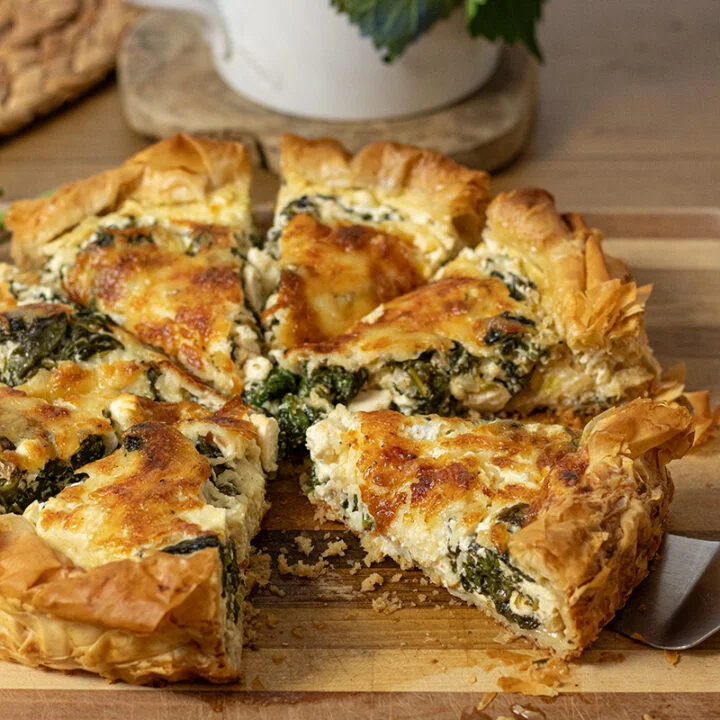
This Greek-inspired quiche combines spinach, feta and a savoury egg custard beneath crisp, buttery layers of filo pastry. It makes a generous centrepiece for brunch or a light dinner, and is just as good served warm or at room temperature.
Ingredients
- 227 g (½ lb)filo pastry, thawed and at room temperature
- 114 g (4 oz)salted butter, melted
- 55 g (½ cup, approximate)plain breadcrumbs
- 19-inch tart tin or 23–25 cm pie dish
- 1 smallonion, finely chopped
- 3–4 tablespoonsolive oil
- 2spring onions, thinly sliced
- 454 g (1 lb)spinach leaves, roughly chopped
- to tastesalt and freshly ground black pepper
- 200 g (8 oz)feta cheese, crumbled
- 1 (optional)roasted red pepper, diced
- 2 largeeggs
- 250 ml (1¼ cups; 250 g)half-and-half
- ⅛–¼ teaspoonground nutmeg
- to tastesalt and pepper
- 150 g (6 oz)shredded mozzarella, Gruyère or Gouda
Instructions
- 1
Preheat the oven
Heat the oven to 180°C (350°F).
- 2
Soften the onion
Warm the olive oil in a pan over medium heat. Cook the onion for about 8 minutes, until soft, then add the spring onions and cook for a further 2 minutes.
- 3
Wilt the spinach
Add the spinach in batches, seasoning each batch with salt and pepper. Cook until wilted and most of its liquid has evaporated; a few tablespoons of liquid can remain.
- 4
Mix the filling
Take the pan off the heat and stir in the crumbled feta and the diced roasted pepper, if using. Taste and adjust the seasoning, then leave the filling to cool.
- 5
Prepare the tin
Set the tart tin or pie dish on a baking tray. Brush the inside with melted butter and scatter the breadcrumbs evenly over the base.
- 6
Layer the filo
Working quickly, arrange the filo sheets in the tin, drizzling melted butter between each layer. Let the excess pastry hang over the sides.
- 7
Whisk the custard
Whisk the eggs in a bowl with the half-and-half, nutmeg, salt and pepper.
- 8
Fill the pastry
Spoon the spinach mixture into the pastry case. Scatter the shredded cheese over it, then pour on the custard.
- 9
Fold the edges
Fold the overhanging filo over the filling to make a rustic crust. Brush the pastry with the remaining butter.
- 10
Bake until set
Bake on the centre rack for 45 minutes, until golden and set.
- 11
Cool before serving
Leave the quiche to cool for at least 20 minutes before taking it out of the tin.
What is spinach and feta quiche?
Quiche is a savoury baked custard tart, with roots in the French region of Lorraine. This version takes a Greek-inspired direction, pairing spinach and feta—familiar from spanakopita—with a creamy egg filling.
Filo rather than a conventional pastry shell gives it a delicate, crisp crust. The layers, salty cheese and tender greens make it feel rustic yet well suited to a brunch table.
Nutrition and macros by portion
The nutrition label shows one serving as written: 640 calories, 23g protein, 39g carbs, 44g fat.
| Portion | Adjustment | kcal | Protein | Carbs | Fat |
|---|---|---|---|---|---|
| Lighter | Use less butter | 448 kcal | 16g | 27g | 31g |
| This serving | As written | 640 kcal | 23g | 39g | 44g |
| Hungry | Serve with potatoes | 960 kcal | 35g | 59g | 66g |
The pastry, butter and olive oil provide much of the energy and fat, while filo, breadcrumbs and spinach contribute carbohydrates. Eggs, feta, half-and-half and the shredded cheese supply most of the protein, with cheese also contributing saturated fat and salt. Balance a slice with a generous Greek-style salad or other fresh vegetables.
Why the filling works
Spinach: Cooking it in batches gives the leaves room to wilt and lets excess moisture evaporate. A little liquid can remain, but a wet filling may make the pastry soft.
Feta: Its savoury tang seasons the greens as well as adding richness. Taste the mixture before adding more salt, since feta and salted butter both contribute saltiness.
Red pepper: The roasted pepper is optional; it adds a sweet, smoky note and colour without changing the basic spinach-and-feta character.
Handling filo pastry
Room-temperature pastry is easier to unfold without cracking. Work promptly once the sheets are open, and keep the unused pastry covered while you layer the tin.
Butter between the sheets helps them bake into separate, crisp layers. Let the pastry drape over the rim so there is enough to fold back over the filling.
Getting a crisp base
Breadcrumbs: Brushing the tin with butter first helps the crumbs cling to the base. They also provide a buffer between the pastry and the moist filling.
Spinach: Cook it until most of its liquid has gone, rather than relying on the oven to dry it out. Letting the filling cool before assembly also avoids adding extra heat and moisture to the pastry.
How to tell when it is done
Look for a deeply golden filo crust and a centre that has set rather than sloshing when the tin is moved. The custard will continue to firm as the quiche rests.
Give it at least 20 minutes to cool before removing it from the tin. Cutting too soon can leave the slices loose and make the crust more difficult to handle.
Serving ideas
Serve a slice warm or at room temperature with tzatziki and a crisp Greek salad, as suggested for this style of quiche. The cool, fresh accompaniments balance the rich custard and buttery pastry.
For a larger meal, add roast vegetables or a simple green salad. For brunch or a buffet, the quiche can be made ahead and served once it has cooled.
Recipe notes & tips
- Thaw the filo fully and bring it to room temperature before opening the packet.
- Keep the pastry sheets covered while you work so they do not dry out.
- Cook the spinach in batches and let most of its liquid evaporate.
- Taste the filling before seasoning further, as the feta and salted butter are already salty.
- Place the tin on a baking tray before filling it to make it easier to move.
- Allow at least 20 minutes of cooling time before removing the quiche from its tin.
Variations
- Skip the pepper: Leave out the roasted red pepper for a simpler spinach-and-feta filling.
- Choose the cheese: Use mozzarella, Gruyère or Gouda for the shredded cheese layer.
- Add herbs: Stir chopped dill or parsley into the cooled spinach mixture for a fresh herbal note.
- Use pepper: Add extra roasted red pepper for more sweetness and colour.
- Change the dish: Use a 23–25 cm pie dish if you do not have a 9-inch tart tin.
Common mistakes to avoid
- Wet spinach: Cook until most of the liquid has evaporated so the filling does not make the pastry soggy.
- Dry filo: Keep unused sheets covered and work quickly to reduce cracking.
- Skipping the breadcrumbs: Scatter them over the buttered base to help protect the pastry from the filling.
- Overseasoning: Taste the feta mixture before adding extra salt, as the cheeses are already savoury.
- Removing it too soon: Rest the quiche for at least 20 minutes so the custard can settle before slicing.
- Overbaking: Check at 45 minutes and take it out when the crust is golden and the centre is set.
How to store
Once cool, cover and refrigerate leftovers for up to 3 days. Reheat portions in an oven until warmed through to help the filo regain some crispness; a microwave will soften the pastry.
Frequently asked questions
Can I make this quiche ahead?
Yes. Bake it ahead, let it cool, then cover and refrigerate. Reheat it in the oven or serve it at room temperature.
Can I use frozen spinach?
You can, but thaw it completely and squeeze out as much water as possible before adding it to the filling. Cook it briefly with the onions if needed to remove any remaining excess moisture.
Do I need to use the roasted red pepper?
No, it is optional. The quiche will still work with spinach, feta and the custard without it.
Why is my filo tearing?
Filo can crack if it dries out or is still cold and stiff. Bring it to room temperature, handle it gently and keep the sheets you are not using covered.
How can I tell whether the custard has set?
The centre should look set rather than liquid when the tin is gently moved, and the top should be golden. It will firm further as it cools.
Can I serve it at room temperature?
Yes. The recipe is suitable for serving warm or at room temperature, which makes it handy for brunches and shared meals.
Cook it from the original
This recipe comes from dimitrasdishes.com. Their page has the author’s own photos, notes and tips — the best place to cook it from.
Open the recipe on dimitrasdishes.com