
Spinach & Feta Pasta
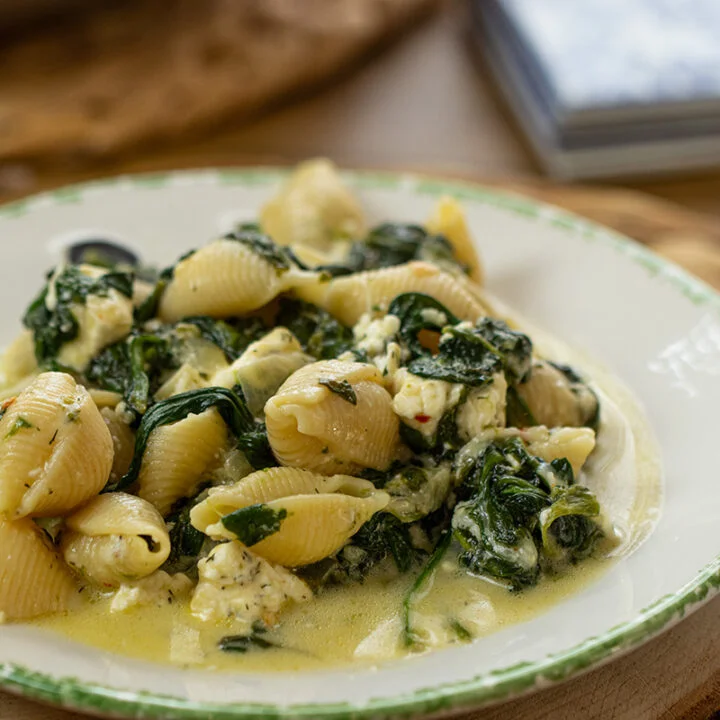
This Greek-inspired pasta pairs wilted spinach with garlic, dill, tangy feta and a squeeze of lemon. It takes its cue from spanakorizo, swapping rice for pasta for a comforting meal that can work as a main or side.
Ingredients
- 1 pound (500 g)spinach leaves
- a few tablespoonsolive oil
- 1 smallonion, finely chopped
- 6 clovesgarlic, grated
- 1/2 poundmini pasta shells or fusilli pasta
- to tastesalt
- to tastefreshly cracked black pepper
- 1 teaspoondried dill
- to tastegrated kefalograviera or Parmesan cheese
- to tastefeta cheese
- juice of 1fresh lemon
Instructions
- 1
Warm the oil
Heat a few tablespoons of olive oil in a large pan over medium heat.
- 2
Soften onion
Add the finely chopped onion and sauté until soft and translucent.
- 3
Cook the garlic
Stir in the grated garlic and cook for about 30 seconds, until fragrant.
- 4
Wilt the spinach
Add the spinach and cook until wilted. Season with salt, freshly cracked black pepper and dried dill.
What is spinach and feta pasta?
This is a pasta-based take on spanakorizo, a Greek dish made with spinach and rice. Here, small shells or fusilli stand in for the rice, while feta, herbs and lemon give the bowl a bright, savoury finish.
The method supplied builds a flavoured spinach base with onion, garlic and dill. The cheeses and lemon are listed as ingredients, though the supplied method does not include the later pasta or finishing steps.
Nutrition and macros by portion
The nutrition label shows one serving as written: 360 calories, 15g protein, 46g carbs, 13g fat.
| Portion | Adjustment | kcal | Protein | Carbs | Fat |
|---|---|---|---|---|---|
| Lighter | Use less oil and cheese | 252 kcal | 11g | 32g | 9g |
| This serving | As written | 360 kcal | 15g | 46g | 13g |
| Hungry | Add a larger pasta portion | 540 kcal | 23g | 69g | 20g |
Most of the carbohydrates come from the pasta, while olive oil and the cheeses contribute much of the fat. Spinach and feta provide some protein, with the pasta contributing additional protein. For a more balanced plate, serve it with extra vegetables or a crisp salad.
Build the aromatic base
Onion: cook it in the olive oil until soft and translucent so it loses its raw bite.
Garlic: grated garlic cooks quickly, so the brief 30-second turn is enough to release its aroma without letting it brown.
Dill: dried dill seasons the spinach with a fragrant, savoury note that suits the feta and lemon.
Choosing the spinach
Fresh spinach leaves are the listed choice, and the recipe uses 500 g for five servings. Add them to the pan and cook until they have wilted; work in batches if the pan cannot hold them all comfortably.
The recipe does not specify baby spinach or mature leaves, so either can be used. Larger leaves may take a little longer to soften.
Keep the seasoning balanced
Salt: season the spinach base to taste, keeping in mind that both feta and the grated cheese can add saltiness.
Lemon: the listed fresh lemon juice is intended to bring brightness to the rich, savoury ingredients. Add it gradually when finishing so you can adjust the balance to your preference.
Pasta shape and texture
Mini shells and fusilli are both listed options. Their curves and ridges can hold on to the spinach mixture and crumbled cheese.
The supplied method stops after the spinach wilts, so it does not give pasta-cooking or combining instructions. Follow the pasta packet for cooking time and use its texture guidance when preparing the dish.
Serving the dish
The recipe describes this as either a main course or a side. As a main, serve it on its own or alongside a simple salad; as a side, pair it with grilled vegetables or another plainly seasoned dish.
Finish with the listed feta, grated kefalograviera or Parmesan, and lemon juice according to taste. The recipe gives no amounts for these toppings, so start modestly and adjust at the table.
Recipe notes & tips
- Use a roomy pan so the spinach can wilt without spilling over.
- Add the spinach in batches if needed, allowing each batch to wilt before adding more.
- Grate the garlic finely so it distributes through the oil and spinach.
- Taste before adding more salt, as feta and the grated cheese can be salty.
- Add lemon juice a little at a time and adjust to taste.
Variations
- Use fusilli: choose the listed alternative if you prefer a ridged pasta shape.
- Choose Parmesan: use it in place of kefalograviera for the grated cheese.
- Use fresh dill: swap it for the dried dill, adjusting the amount to taste.
- Add extra lemon: increase the lemon juice for a brighter finish.
- Make it more garlicky: add extra grated garlic if you enjoy a stronger flavour.
Common mistakes to avoid
- Crowding the spinach: add it in batches if the leaves do not fit comfortably in the pan.
- Browning the garlic: keep it to about 30 seconds so it turns fragrant without catching.
- Over-salting early: season carefully because the cheeses can bring extra salt.
- Adding all the lemon at once: start with a little and taste before adding more.
- Assuming the method is complete: the supplied instructions end after the spinach wilts, so consult the pasta packet for cooking guidance.
How to store
Refrigerate leftovers in a covered container and use within 3 days. Reheat gently in a pan or microwave until hot throughout; a small splash of water can help loosen the pasta if it has dried out.
Frequently asked questions
Can I use fresh dill instead of dried?
Yes. Use fresh dill to taste; the recipe does not specify an equivalent amount.
Can I use a different pasta shape?
The recipe lists mini shells or fusilli. Another small shape can work, though it is not specified in the ingredient list.
How much cheese should I add?
The recipe does not give amounts for either cheese. Add them to taste, bearing in mind that feta is tangy and the grated cheese may be salty.
When should I add the lemon?
Lemon juice is listed as an ingredient, but the supplied method does not specify when to add it. Add it gradually when finishing the dish and taste as you go.
Can I make this without feta?
You can leave it out, though the dish will lose some of its characteristic tang and creamy, crumbly texture.
Cook it from the original
This recipe comes from dimitrasdishes.com. Their page has the author’s own photos, notes and tips — the best place to cook it from.
Open the recipe on dimitrasdishes.com