
Lemon Cream Roulade
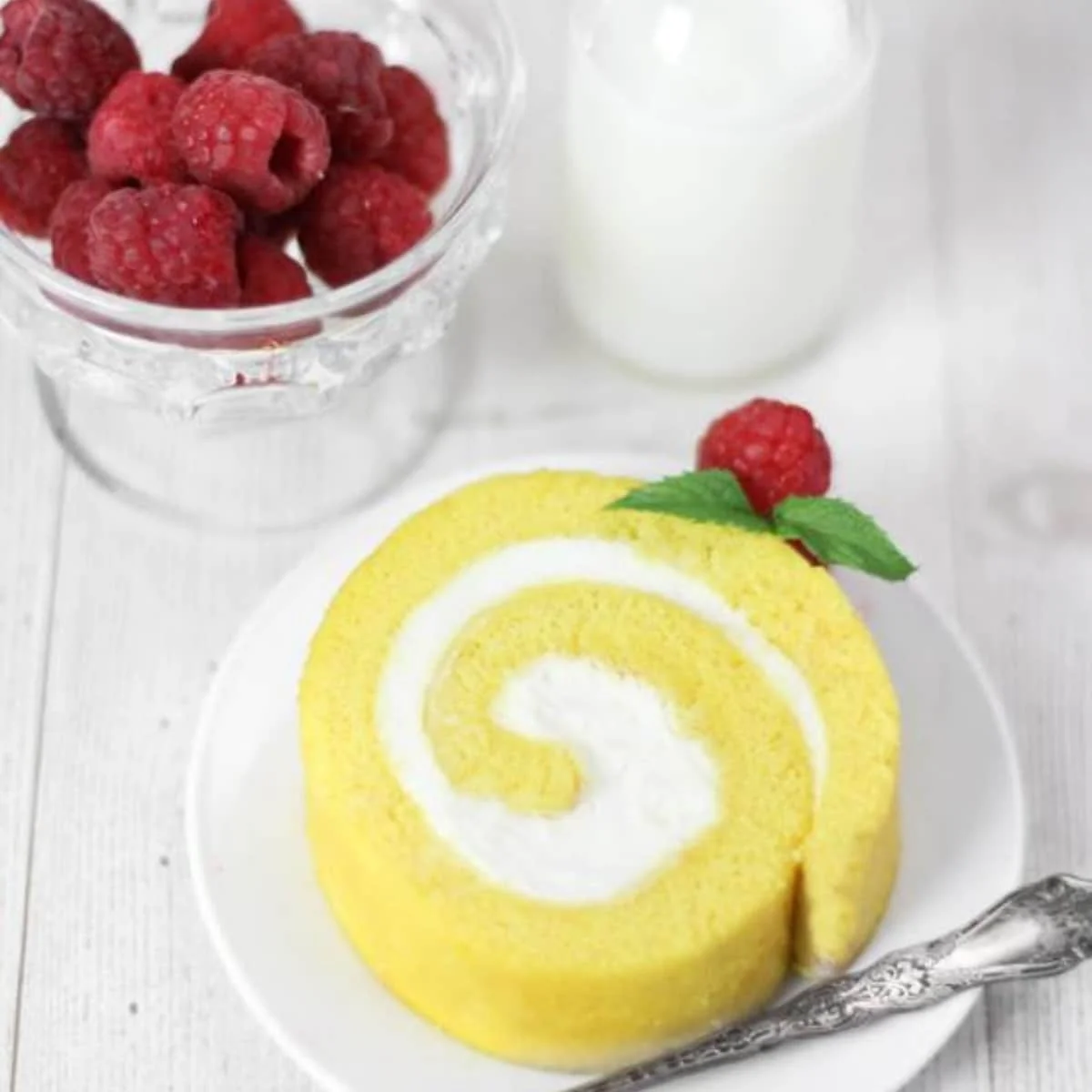
Lemon cream roulade is a light sponge cake rolled around a tangy, softly whipped lemon and cream cheese filling. It makes a bright, shareable dessert, and rolling the sponge while it is hot helps it curve without cracking.
Ingredients
- Cake
- 4eggs
- 150 g (¾ cup)extra-fine granulated sugar
- 15 ml (1 tbsp)oil
- 30 ml (2 tbsp)buttermilk
- 10 ml (2 tsp)lemon extract
- 3–4 dropsyellow liquid food colouring
- 125 g (1 cup)plain flour
- 5 ml (1 tsp)baking powder
- 2.5 ml (½ tsp)salt
- Lemon cream filling
- 270 ml (1 cup + 2 tbsp)double cream
- 100 g (½ cup)granulated sugar
- 113 g (4 oz)cream cheese, slightly softened
- 10 ml (2 tsp)lemon extract
Instructions
- 1
Prepare the tin
Heat the oven to 175°C (350°F). Grease a 23 × 33 cm (9 × 13 inch) jelly-roll tin with vegetable shortening, line it with baking parchment, then grease the parchment.
- 2
Whip the eggs
In a large bowl, beat the eggs with a hand mixer for 5 full minutes; set a timer to keep track. They should become noticeably paler and look like yellow cake batter.
- 3
Add wet ingredients
With the mixer running, slowly add the sugar and oil to the whipped eggs. Mix in the buttermilk, lemon extract and food colouring, adding the colouring gradually until you reach the shade you want.
- 4
Mix the flour
Sift the flour, baking powder and salt together. Add them slowly to the liquid mixture and mix until combined.
- 5
Fill the tin
Pour the batter into the prepared tin and tilt it so the mixture spreads evenly.
- 6
Prepare the towel
Sprinkle a cotton tea towel with icing sugar and rub the sugar into the fabric with your hands. Avoid terry-cloth or textured towels, such as waffle-weave ones.
- 7
Bake the sponge
Bake for 12–15 minutes, checking at 12 minutes. The sponge is ready when it springs back when gently pressed with your fingers.
- 8
Roll while hot
As soon as the cake is baked, turn it out onto the prepared tea towel. Peel away the parchment and immediately roll the sponge tightly and evenly into the towel, starting at a short end. Put it seam-side down on a wire rack and leave it to cool completely.
- 9
Whip the filling
Beat the double cream in a large bowl with an electric mixer on high speed. Gradually add half the granulated sugar and beat until soft peaks form. Add the cream cheese, then gradually beat in the remaining sugar. Add the lemon extract and beat until stiff peaks form.
- 10
Fill and slice
Carefully unroll the cooled sponge, allowing the tightly rolled end to curl slightly. Spread the lemon cream over the inside, then roll the cake tightly again. Cut into pieces with a serrated knife and serve.
- 11
Add a garnish
For a decorative finish, garnish the slices with sweetened whipped cream, mint sprigs and raspberries.
What is a lemon cream roulade?
A roulade is a thin sponge cake rolled around a filling, a style of dessert found in several European baking traditions. Its name refers to the rolled shape rather than one specific flavour or country of origin.
Here, lemon extract flavours both the sponge and the cream cheese filling. The sponge is rolled while warm, then filled after cooling, which helps it hold its shape without squeezing out the cream.
Nutrition and macros by portion
The nutrition label shows one serving as written: 276 calories, 5g protein, 44g carbs, 8g fat.
| Portion | Adjustment | kcal | Protein | Carbs | Fat |
|---|---|---|---|---|---|
| Lighter | Smaller slice | 193 kcal | 4g | 31g | 6g |
| This serving | As written | 276 kcal | 5g | 44g | 8g |
| Hungry | Larger slice | 414 kcal | 8g | 66g | 12g |
The sponge’s carbohydrates mainly come from the flour and sugar, while the cream and cream cheese provide most of the fat. Eggs and dairy contribute protein. Serve a slice with fresh berries for a fruity contrast alongside the dessert.
The sponge ingredients
Whipped eggs: beating them for the full 5 minutes builds air into the batter, helping the sponge bake up light enough to roll.
Flour mixture: sifting the flour, baking powder and salt together helps distribute the raising agent evenly. Fold in the dry ingredients gradually by mixing gently until combined.
Rolling without cracks
Hot sponge: turn it out and roll it into the sugared towel promptly after baking, while it is still flexible. Starting at a short end follows the method and makes a compact roll.
Tea towel: use a smooth cotton towel dusted with icing sugar so the cake is less likely to stick. Terry cloth and raised patterns can leave marks or catch on the sponge.
Getting the filling right
Soft peaks: add half the sugar to the cream and stop when its peaks bend over gently. This gives the cream cheese room to incorporate without overworking the cream too early.
Stiff peaks: add the softened cream cheese, remaining sugar and lemon extract, then beat until the filling holds firm peaks. Stop once it is stable enough to spread; continued beating can make it grainy.
How to tell when it is baked
Timing: begin checking at 12 minutes, as the recipe gives a 12–15-minute baking window. The sponge should spring back when pressed lightly with a finger.
Even layer: tilt the tin after pouring in the batter so it reaches the edges in an even layer. This helps the sponge bake consistently and roll neatly.
Serving the roulade
Slices: use a serrated knife and a gentle sawing motion to cut through the soft sponge without flattening the roll. Serve the pieces as they are or add the suggested whipped cream, mint and raspberries.
On the plate: fresh berries make a good contrast to the sweet lemon cream. A small portion alongside tea or coffee is an easy way to serve this dessert.
Recipe notes & tips
- Set a timer for the full 5 minutes of egg beating.
- Add the food colouring a few drops at a time to control the shade.
- Use a smooth cotton tea towel rather than a textured one.
- Dust the towel thoroughly with icing sugar before turning out the sponge.
- Roll the sponge as soon as it comes out of the oven.
- Let the rolled sponge cool completely before spreading on the filling.
Variations
- Fresh citrus: add finely grated lemon zest to the filling for a more pronounced citrus aroma.
- Berry filling: scatter raspberries over the cream before rolling the sponge.
- Lime twist: replace the lemon extract in both parts with lime extract.
- Vanilla cream: use vanilla extract in the filling for a softer flavour alongside the lemon sponge.
- Decorative finish: top each slice with sweetened whipped cream, mint and raspberries, as suggested in the method.
Common mistakes to avoid
- Under-whipped eggs: the sponge may be dense; beat for the full 5 minutes until the mixture is much paler.
- Uneven batter: thin or thick patches bake differently; tilt the tin to spread the batter evenly.
- Waiting to roll: a cooled sponge is more likely to crack; turn it out and roll it straight away.
- Wrong towel: textured fabric can catch on the cake; choose a smooth cotton tea towel.
- Filling warm sponge: the cream can soften and slip; cool the rolled sponge completely first.
- Overbeating the filling: it can become grainy; stop as soon as stiff peaks form.
How to store
Keep the roulade covered in the refrigerator and eat within 2 days. Serve chilled; avoid reheating, as the cream filling is best kept cold.
Frequently asked questions
Can I make the roulade ahead?
Yes. Assemble it, cover it and refrigerate it so the filling stays firm. For the neatest slices, cut it shortly before serving.
Why do I need to roll the sponge while it is hot?
The warm sponge is more flexible and can take the rolled shape as it cools. Waiting until it is cold makes it more prone to cracking.
How do I know when the sponge is done?
Check it from 12 minutes onwards. It should spring back when gently pressed with a finger.
Can I use a textured tea towel?
The method recommends a smooth cotton towel. Terry cloth and raised patterns can catch on the sponge or mark its surface.
What if the sponge cracks?
Small cracks can be covered by the filling or a garnish, so continue rolling gently. Next time, roll it immediately after baking while it is still pliable.
How should I slice the roulade?
Use a serrated knife and saw gently through the sponge and filling. This is less likely to squash the roll than pressing down with a straight-edged knife.
Cook it from the original
This recipe comes from deliciouseveryday.com. Their page has the author’s own photos, notes and tips — the best place to cook it from.
Open the recipe on deliciouseveryday.com