
Slow Cooker Pot Roast
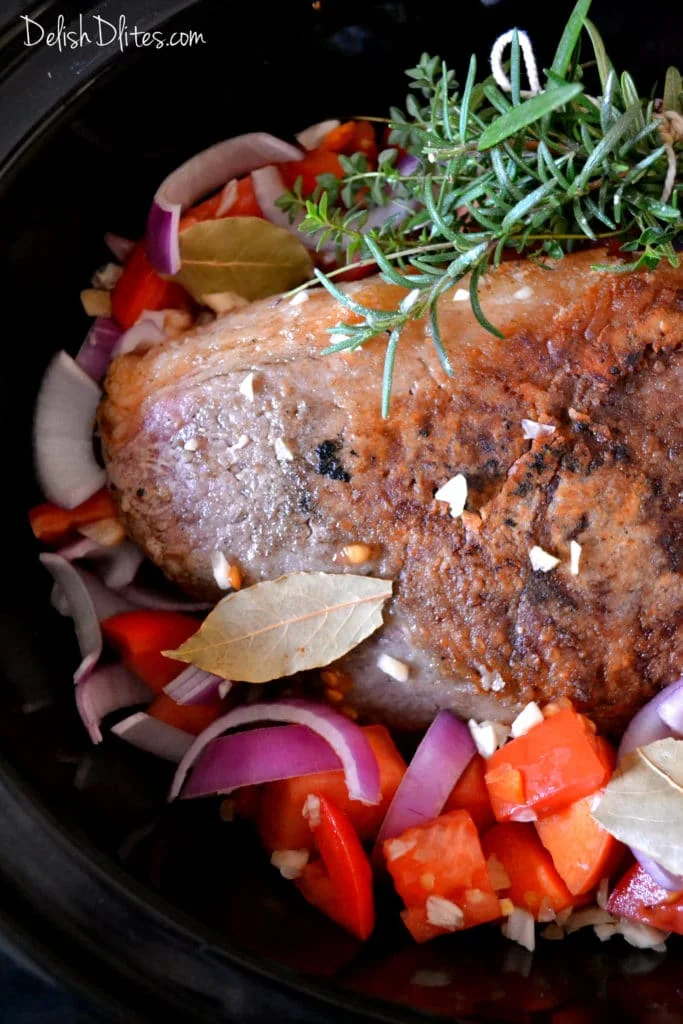
This slow cooker pot roast pairs browned beef with a savoury broth, herbs and tender vegetables. A quick sear before the long, hands-off cook builds flavour, while the cooking liquid becomes a gravy to serve with the shredded or chopped meat.
Ingredients
- 1 roast (1.36 kg / 3 lb)boneless chuck or rump roast
- 30 ml (2 tablespoons)olive oil
- 90 g (¾ cup)flour
- to tastekosher salt
- to tastefreshly ground black pepper
- 1 sprigfresh rosemary
- 8 sprigsfresh thyme
- 30 ml (2 tablespoons) tomato paste or 60 ml (¼ cup) tomato saucetomato paste or tomato sauce
- 950 ml (4 cups)beef stock
- 1 teaspoonground cumin
- 2 teaspoonspaprika
- 4bay leaves
- 5 clovesgarlic, minced
- 1 largecarrot, diced
- 1onion, peeled and sliced into half-moons
- 1 largetomato, diced
Instructions
- 1
Heat the skillet
Set a cast-iron skillet over medium-high heat.
- 2
Season the roast
Season the roast generously with salt and pepper, then coat it in flour.
- 3
Brown the beef
Pour the olive oil into the hot skillet and brown the roast on every side, for about 4–5 minutes per side.
- 4
Transfer the roast
Once browned, lift the roast from the skillet and place it in the slow cooker insert.
- 5
Prepare the vegetables
Slice and dice the vegetables.
- 6
Add herbs and vegetables
Put the vegetables, thyme, rosemary, bay leaves, cumin and paprika into the slow cooker.
- 7
Pour in the stock
Add the beef stock and tomato sauce.
- 8
Slow cook the roast
Swirl the liquid around the roast so it is evenly distributed. Cover and cook on low for 8 hours or on high for 4 hours.
- 9
Finish the gravy
When the roast is cooked, strain the gravy and skim off the fat. Taste and season with salt and pepper if needed.
- 10
Shred and serve
Shred or chop the roast and serve it with mashed potatoes, topped with some of the tender vegetables and gravy.
What is pot roast?
Pot roast is a method of cooking a large cut of beef slowly with liquid until it becomes tender enough to shred or chop. It is associated with home-style American cooking, where tougher cuts are made succulent through long, moist cooking.
This version builds flavour by browning the beef first, then cooking it with stock, tomato, herbs and vegetables. The same cooking liquid is strained and served as gravy.
Nutrition and macros by portion
The nutrition label shows one serving as written: 960 calories, 82g protein, 31g carbs, 59g fat.
| Portion | Adjustment | kcal | Protein | Carbs | Fat |
|---|---|---|---|---|---|
| Lighter | Use leaner rump | 672 kcal | 57g | 22g | 41g |
| This serving | As written | 960 kcal | 82g | 31g | 59g |
| Hungry | Larger portion | 1440 kcal | 123g | 47g | 89g |
Beef supplies most of the protein and fat, while the flour and vegetables contribute carbohydrates; olive oil adds further fat. Serve with a generous portion of vegetables and a moderate scoop of mashed potatoes to make a balanced plate.
Choosing the beef
Chuck or rump: either boneless cut works here. A well-marbled chuck roast is a particularly suitable choice for a long, slow cook, while rump is generally leaner.
Flour coating: dredging the seasoned roast gives its surface a light coating for browning. Shake off excess so loose flour does not burn in the skillet.
Why brown the roast first?
Searing: let the skillet become hot before adding the oil and beef. Brown each side for about 4–5 minutes, turning the roast as needed to colour the whole surface.
The browned bits left in the pan contribute flavour to the finished dish. Transfer the roast to the slow cooker after searing; the recipe does not call for cooking the vegetables in the skillet.
Getting the slow cook right
Low setting: cook covered for 8 hours for the stated low-temperature method. If using the high setting, the recipe gives a 4-hour cook.
Tenderness: the roast should be easy to shred or chop when it is ready. If it is still firm, give it more time in the slow cooker rather than trying to force it apart.
Building the cooking liquid
Tomato and stock: tomato paste gives a concentrated flavour, while the listed alternative is tomato sauce. Add the stock and tomato sauce as directed in the method; if using paste, add that in its place.
Herbs and spices: rosemary, thyme and bay leaves bring an aromatic base, with cumin and paprika adding warmth. Swirl the liquid around the roast so it is distributed in the slow cooker.
Finishing the gravy
Strain the liquid after cooking to remove the herbs and vegetable pieces, then skim away visible fat. Taste before adding more salt, since the stock may already be seasoned.
Serve some of the tender vegetables over the meat, with gravy spooned over the top. Mashed potatoes are the suggested accompaniment and make a natural base for the sauce.
Recipe notes & tips
- Pat the roast dry before seasoning so it browns more readily.
- Brown the roast in batches or reposition it as needed to colour all sides evenly.
- Keep the slow cooker covered during cooking to retain heat and moisture.
- Remove the woody herb stems and bay leaves before serving.
- Taste the strained gravy before seasoning it, especially if your stock is salty.
- Use two forks to shred the roast once it is tender.
Variations
- Add potatoes: dice them and cook them in the slow cooker with the other vegetables.
- Use tomato paste: add the listed 2 tablespoons for a more concentrated tomato flavour.
- Try different herbs: swap the rosemary or thyme for another fresh herb you enjoy.
- Add mushrooms: include sliced mushrooms with the diced vegetables.
- Serve over noodles: use cooked egg noodles instead of mashed potatoes.
Common mistakes to avoid
- Skipping the sear: the roast misses out on browned flavour; colour it on every side first.
- Crowding the skillet: the meat may steam rather than brown; sear in batches if needed.
- Lifting the lid repeatedly: heat escapes and interrupts the cook; keep the slow cooker covered.
- Shredding too soon: a firm roast is difficult to pull apart; wait until it is tender.
- Leaving fat in the gravy: the sauce can feel greasy; strain it and skim the surface before serving.
How to store
Refrigerate leftover beef, vegetables and gravy in a covered container for up to 3 days. Reheat gently in a saucepan or microwave until hot throughout, adding a splash of stock or water if the gravy has thickened.
Frequently asked questions
Can I cook this on high instead of low?
Yes. The method gives 4 hours on high or 8 hours on low. Check that the roast is tender before serving.
Can I use tomato paste instead of tomato sauce?
Yes. The ingredients list 2 tablespoons of tomato paste as an alternative to ¼ cup of tomato sauce. Add the option you are using with the cooking liquid.
How do I know when the roast is done?
It should be tender enough to shred or chop easily. If it remains firm, continue cooking until it loosens.
Do I need to brown the roast?
The recipe includes browning the roast in a hot skillet for about 4–5 minutes per side. This adds a browned surface before the slow-cooking stage.
Can I make the gravy thicker?
The method strains and skims the cooking liquid but does not specify a thickening step. For a thicker gravy, simmer the strained liquid in a saucepan until it reduces to the consistency you prefer.
What should I serve with pot roast?
The recipe suggests mashed potatoes, with the roast topped with tender vegetables and gravy. You could also serve it with noodles.
Cook it from the original
This recipe comes from delishdlites.com. Their page has the author’s own photos, notes and tips — the best place to cook it from.
Open the recipe on delishdlites.com