
Butternut Squash Risotto
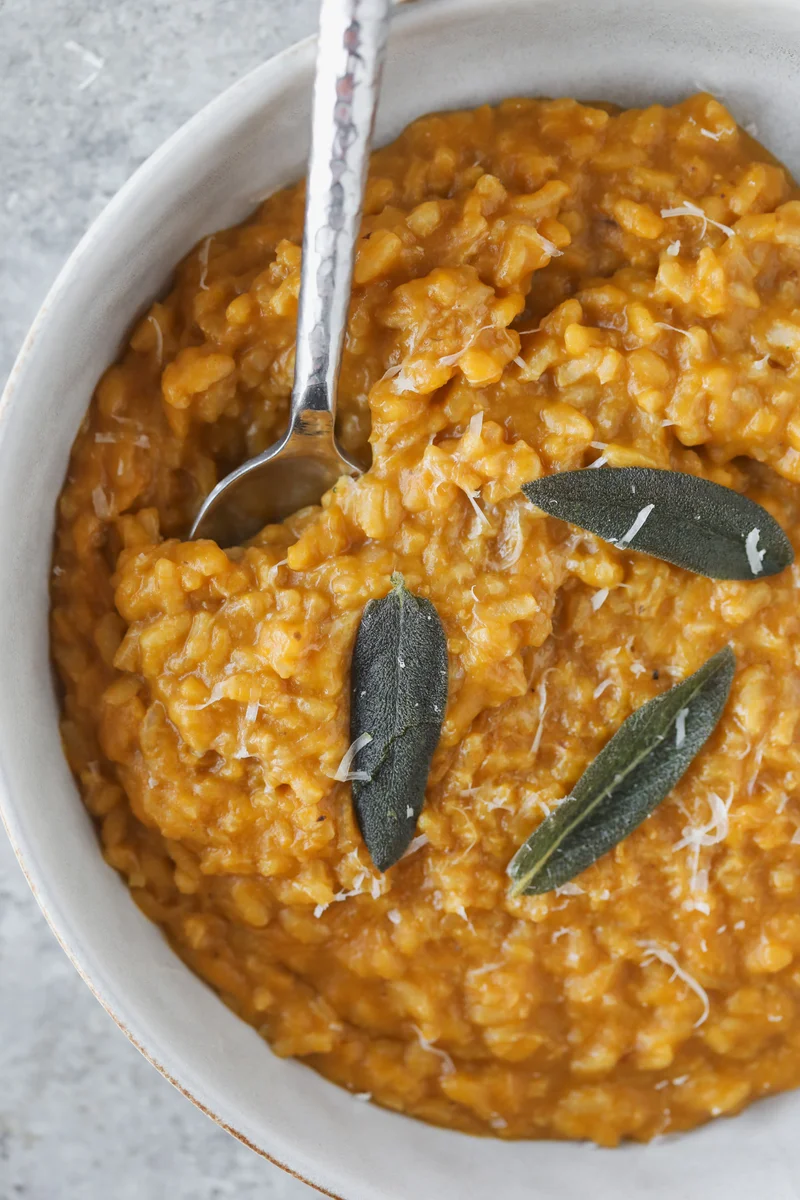
This creamy butternut squash risotto combines sweet squash, Parmesan and crisp fried sage for a comforting meal on a chilly evening. The squash is blended into the broth, giving the rice a smooth, rich texture as it cooks.
Ingredients
- 60 ml, divided (¼ cup)olive oil
- 720 ml (3 cups)peeled and cubed butternut squash
- 1 mediumwhite or yellow onion, chopped
- 2 clovesgarlic, chopped
- ¼ teaspoonred pepper flakes
- a scant ⅛ teaspoon (a pinch)nutmeg
- ½ teaspoon eachsalt and black pepper
- 480 ml (2 cups)vegetable broth
- 5 ml (1 teaspoon)olive oil
- 8 leavessage
- 360–480 ml (1½–2 cups)water
- 190 g (1 cup)Arborio rice
- 50 g (½ cup), dividedfreshly grated Parmesan cheese
Instructions
- 1
Cook the squash
Heat a large saucepan over medium heat. Add 45 ml (3 tablespoons) of the olive oil, then add the squash, onion, garlic, nutmeg, red pepper flakes, salt and pepper. Cook, stirring occasionally, until the onion is translucent, about 10 minutes.
- 2
Simmer the mixture
Pour the vegetable broth into the pan and bring it to the boil. Lower the heat and simmer until the squash is tender, about 15 minutes.
- 3
Fry the sage
As the squash cooks, heat 5 ml (1 teaspoon) olive oil in a pan over medium heat. Add the sage leaves and fry until crisp and lightly coloured, taking care not to burn them. Remove and set aside.
- 4
Blend until smooth
Transfer the squash mixture to a high-powered blender, or use an immersion blender, and purée until very smooth and creamy. The mixture will be fairly thick.
- 5
Thin the broth
Put the squash mixture in a medium saucepan and add the reserved water to thin it. Aim for a consistency similar to vegetable broth.
- 6
Toast and cook rice
In a separate saucepan, heat the remaining olive oil over medium heat. Add the rice and cook for 1–2 minutes, until toasted and golden brown. Add about 120 ml (½ cup) of the butternut broth at a time, stirring often until each addition is absorbed before adding more. Continue until the rice is creamy and cooked through; you may not need all the broth. Alternate the broth with small additions of Parmesan, about 1 tablespoon at a time, stirring until each addition melts before adding more so the cheese does not clump.
- 7
Finish and serve
The cooking process should take roughly 25–30 minutes. Stir in more Parmesan as desired, taste and adjust with salt or cheese to taste. Serve immediately, topped with the fried sage.
What is butternut squash risotto?
Risotto is an Italian rice dish cooked gradually with liquid and frequent stirring until the grains turn creamy while retaining some bite. This American-style version folds roasted-sweet-tasting squash into the broth, along with Parmesan and sage.
Blending the squash into the cooking liquid lets it coat the rice throughout, rather than leaving large pieces in the finished dish. Crisp sage provides a fragrant contrast to the creamy rice.
Nutrition and macros by portion
The nutrition label shows one serving as written: 423 calories, 9g protein, 57g carbs, 18g fat.
| Portion | Adjustment | kcal | Protein | Carbs | Fat |
|---|---|---|---|---|---|
| Lighter | Less oil, more squash | 296 kcal | 6g | 40g | 13g |
| This serving | As written | 423 kcal | 9g | 57g | 18g |
| Hungry | Larger risotto portion | 635 kcal | 14g | 86g | 27g |
The rice supplies most of the carbohydrates, while the olive oil and Parmesan contribute much of the fat. Parmesan also provides some protein, with smaller amounts coming from the rice and vegetables. For a balanced plate, serve the risotto with a generous side of green vegetables or salad.
Build the squash flavour
Squash and aromatics: Cooking the squash with onion and garlic for about 10 minutes softens the onion and starts to bring out the squash’s sweetness. Stir occasionally so the ingredients cook evenly.
Spices: Red pepper flakes add a little warmth, while a small pinch of nutmeg complements the squash. Keep the nutmeg modest so it does not overwhelm the other flavours.
Blend for a smooth broth
Tenderness first: The squash should be soft enough to blend smoothly after its 15-minute simmer. If it is still firm, continue simmering until it yields easily when pressed.
Thin gradually: Add the reserved water to the purée until it resembles vegetable broth. A pourable consistency makes it easier to add to the rice in measured portions.
Cook the rice patiently
Toast the grains: Give the Arborio rice 1–2 minutes in the remaining oil, until golden. This starts the cooking process before you begin adding the squash broth.
Add liquid in turns: Stir in about 120 ml (½ cup) at a time and wait for it to be absorbed before adding more. The recipe estimates 25–30 minutes for this stage, but follow the rice’s texture and use only as much broth as needed.
Melt in the cheese: Add Parmesan in small portions between additions of broth, stirring each portion in fully. This helps it blend smoothly instead of forming clumps.
Fry the sage carefully
Use medium heat and watch the leaves closely: they should become crisp and lightly coloured, not dark or burnt. Lift them out as soon as they are ready, since they can continue browning in hot oil.
Add the sage just before serving to preserve its crisp texture against the creamy risotto.
Serve while creamy
Risotto thickens as it stands, so serve it as soon as the rice is cooked and the Parmesan has melted in. If it has tightened before serving, stir in a little warm reserved broth to loosen it.
The fried sage makes a simple garnish. A fresh green salad or steamed vegetables can add a crisp, light contrast to the soft rice.
Recipe notes & tips
- Warm the squash broth before adding it to the rice so each addition does not cool the pan.
- Stir frequently as the rice cooks, especially after adding liquid or Parmesan.
- Add the water to the squash purée gradually; you may not need the full amount.
- Keep the sage leaves in a single layer while frying for more even crisping.
- Taste the rice near the end of cooking and stop when it is creamy but still has a little bite.
- Serve promptly, as the risotto thickens as it cools.
Variations
- More spice: Increase the red pepper flakes slightly for a warmer finish.
- Extra herbs: Add a little chopped fresh sage to the rice before serving.
- Cheesier finish: Stir in more Parmesan to taste just before serving.
- Vegetable side: Serve with steamed greens for a fresh contrast.
- Peppery garnish: Finish with a little extra black pepper at the table.
Common mistakes to avoid
- Adding too much broth at once: Add about 120 ml (½ cup) at a time and let it absorb before adding more.
- Under-blending the squash: Blend until completely smooth so the purée coats the rice evenly.
- Burning the sage: Fry over medium heat and remove the leaves as soon as they are crisp and lightly coloured.
- Skipping the rice toasting: Cook it in the oil for 1–2 minutes before adding broth to begin building flavour.
- Adding Parmesan in a lump: Stir it in a tablespoon at a time and let each addition melt before adding more.
- Letting the risotto sit: Serve as soon as it is ready, or loosen it with a little warm broth if it thickens.
How to store
Refrigerate leftovers in a covered container for up to 3 days. Reheat gently in a saucepan with a splash of water or broth, stirring until hot; the rice will be thicker than when freshly made. Store any leftover fried sage separately to help it stay crisp.
Frequently asked questions
Can I use a different type of rice?
Arborio is specified because its starch helps make the risotto creamy. Another risotto rice can work, but cooking time and liquid absorption may differ.
Do I need to use all the broth?
No. Add it gradually and stop once the rice is creamy and cooked through; the recipe notes that some broth may remain.
How do I know when the rice is done?
Taste it near the end of cooking. It should be creamy and cooked through, with a little bite rather than a hard centre.
Can I make the squash purée ahead?
Yes, you can prepare the purée ahead and refrigerate it. Reheat it gently and thin it to a broth-like consistency before adding it to the toasted rice.
Why add the Parmesan gradually?
Small additions melt more evenly into the risotto. Adding it all at once, or not stirring as it goes in, can leave clumps.
Can I leave out the fried sage?
Yes. The risotto will still work without it, though you will miss the crisp, fragrant garnish.
Cook it from the original
This recipe comes from delishknowledge.com. Their page has the author’s own photos, notes and tips — the best place to cook it from.
Open the recipe on delishknowledge.com