
Vietnamese-inspired Frittata with Ground Pork, Onion and Basil
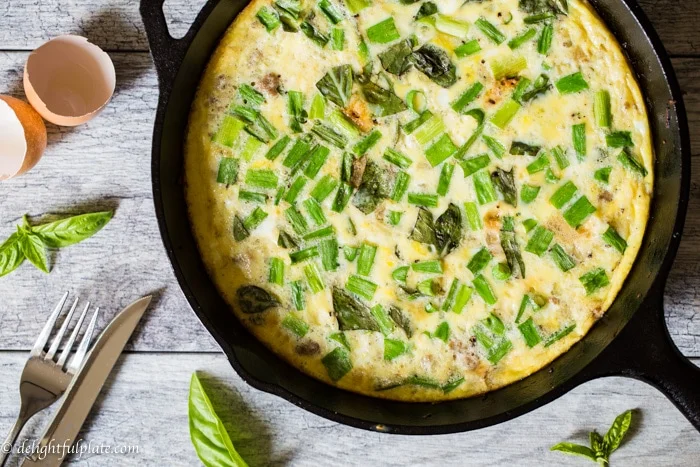
This Vietnamese-inspired frittata combines eggs with savoury ground pork, onion, scallions and basil, then finishes in the oven. It makes a straightforward, filling meal that can be sliced into wedges for lunch or dinner.
Ingredients
- 1 small to mediumyellow onion, diced
- 45 ml (3 tablespoons)finely chopped shallot
- 160 ml (⅔ cup)scallion pieces, about 2.5 cm (1 inch) long
- 8 largeeggs
- 45 ml (3 tablespoons)almond milk (or regular milk)
- 45 ml (3 tablespoons)coarsely chopped basil
- 1.9 ml (⅜ teaspoon), dividedsalt
- 17.5 ml (3½ teaspoons), dividedfish sauce
- to tasteblack pepper
- 340 g (0.75 lb)ground pork
- as neededolive oil
Instructions
- 1
Preheat the oven
Heat the oven to 200°C (400°F).
- 2
Prepare the vegetables
Dice the onion, finely chop the shallot, cut the scallions into pieces about 2.5 cm (1 inch) long and roughly chop the basil.
- 3
Mix the eggs
Beat the 8 eggs in a bowl. Add the milk, scallions, basil, ⅛ teaspoon of the salt, 1½ teaspoons of the fish sauce and black pepper, then mix to combine. Set aside.
- 4
Soften the onion
Set a 23–25 cm (9–10 inch) cast-iron skillet over medium-high heat. Add olive oil, shallot and onion, and sauté for about 2 minutes, until fragrant.
- 5
Cook the pork
Add the ground pork and break it into small pieces. Season with 2 teaspoons of fish sauce, ¼ teaspoon of salt and black pepper. Cook, stirring frequently, for 4–5 minutes to render the fat and cook off moisture.
- 6
Drain the mixture
Line a clean plate with kitchen paper and transfer the cooked pork and onion to it to absorb excess oil. If there is too much fat in the skillet, remove some, leaving just enough to coat the base and sides.
- 7
Add the eggs
Reduce the heat to medium. Return the pork and onion to the skillet and spread them into a thin, even layer. Pour in the egg mixture and cook until the edges begin to set. Take the skillet off the hob and transfer it to the oven.
- 8
Bake and serve
Bake for 12–15 minutes, depending on the frittata's thickness, until the centre has just set. Remove from the oven and rest for 2–3 minutes before cutting into wedges and serving.
What is a Vietnamese-inspired frittata?
A frittata is an egg dish cooked with other ingredients in a pan, then finished on the hob or in the oven. This version takes inspiration from Vietnamese flavour combinations, using fish sauce, pork, scallions and fresh basil.
The pork and onion are cooked first, then combined with seasoned eggs and baked in the same skillet. That gives the frittata a savoury base and keeps the method manageable for a home kitchen.
Nutrition and macros by portion
The nutrition label shows one serving as written: 500 calories, 33g protein, 8g carbs, 38g fat.
| Portion | Adjustment | kcal | Protein | Carbs | Fat |
|---|---|---|---|---|---|
| Lighter | Use leaner ground pork | 350 kcal | 23g | 6g | 27g |
| This serving | As written | 500 kcal | 33g | 8g | 38g |
| Hungry | Add rice on the side | 750 kcal | 50g | 12g | 57g |
The eggs and pork provide most of the protein and fat, while the onion and scallions contribute a small amount of carbohydrate. Fish sauce and added salt account for much of the sodium, and the amount of olive oil retained will affect the fat per serving. Serve a wedge with plenty of vegetables, or add rice if you want a more substantial plate.
Why cook the pork first?
Pork and onion: cooking them before adding the eggs gives the meat time to brown and the onion time to soften. Breaking the pork into small pieces also helps distribute it through the frittata.
Drainage: resting the cooked mixture briefly on kitchen paper removes excess rendered fat. Leave just enough in the skillet to coat it so the eggs can cook without sticking.
Seasoning the egg mixture
Fish sauce: it seasons both the pork and the eggs, so the measured amount is divided between the two stages. Taste the finished wedges before adding any extra salt at the table.
Basil and scallions: these go into the beaten eggs, where they remain bright and are spread throughout the dish. Chop the basil roughly rather than crushing it.
How to judge doneness
Set edges: wait until the egg around the sides begins to set before moving the skillet into the oven. The centre will still be soft at this point.
Just-set centre: bake for 12–15 minutes, allowing for differences in skillet size and frittata thickness. Remove it when the middle has just set; it will firm a little as it rests.
Using a cast-iron skillet
Skillet size: a 23–25 cm (9–10 inch) cast-iron skillet gives the mixture room to form a layer that cooks evenly. Make sure the handle is oven-safe before transferring the pan.
Fat coating: after draining the pork, check that a thin coating of oil or rendered fat remains over the base and sides. This helps the frittata release more easily when you cut and serve it.
Serving the frittata
Resting: leave the frittata in the skillet for 2–3 minutes after baking so the centre can settle before slicing. Cut it into wedges and serve warm.
Sides: pair it with steamed rice for a more substantial meal, or serve it with a crisp salad or lightly dressed vegetables. A squeeze of lime at the table can add a fresh note.
Recipe notes & tips
- Have the vegetables and herbs chopped before you start cooking the pork.
- Use a skillet handle that is safe to put in the oven.
- Stir the pork often so it cooks evenly and moisture can escape.
- Remove excess fat, but keep enough in the skillet to coat its sides and base.
- Check the centre at 12 minutes, especially if your frittata is on the thinner side.
- Rest the frittata for 2–3 minutes before cutting it into wedges.
Variations
- Use regular milk: swap it in for the almond milk in the same quantity.
- Add fresh chilli: finely chop it and mix it into the eggs for a little heat.
- Change the herbs: replace some or all of the basil with chopped coriander.
- Add mushrooms: sauté sliced mushrooms with the onion until their moisture has cooked off.
- Serve with rice: add steamed rice alongside the wedges for a heartier meal.
Common mistakes to avoid
- Crowding the skillet: use the specified 23–25 cm (9–10 inch) pan so the egg mixture forms an even layer.
- Leaving excess pork fat: drain the cooked mixture and remove extra fat, keeping only enough to coat the pan.
- Adding eggs too soon: cook the pork and onion fully before pouring in the egg mixture.
- Overbaking the centre: start checking at 12 minutes and remove the frittata once the middle has just set.
- Cutting immediately: let it rest for 2–3 minutes so the wedges hold together better.
How to store
Refrigerate leftovers in a covered container for up to 3 days. Reheat gently in a low oven or microwave until warmed through; avoid prolonged heating, which can make the eggs rubbery.
Frequently asked questions
Can I use regular milk instead of almond milk?
Yes. Use the same 45 ml (3 tablespoons) of regular milk.
How do I know when the frittata is ready?
The centre should have just set, with no visibly loose egg. Begin checking at 12 minutes, as the baking time depends on the thickness.
Can I make this without a cast-iron skillet?
Use another oven-safe skillet of a similar size. If your pan is not oven-safe, transfer the cooked pork mixture and egg mixture to a suitable baking dish before baking.
Can I prepare it ahead?
You can chop the vegetables and herbs in advance and refrigerate them separately. For the best texture, cook and bake the frittata shortly before serving.
What can I serve with it?
Try steamed rice, a crisp salad or lightly dressed vegetables. Serve the frittata warm, cut into wedges.
Can I freeze leftover frittata?
It is best eaten fresh or refrigerated, since the egg texture can change after freezing and thawing.
Cook it from the original
This recipe comes from delightfulplate.com. Their page has the author’s own photos, notes and tips — the best place to cook it from.
Open the recipe on delightfulplate.com