
Basil spinach stuffed chicken breast
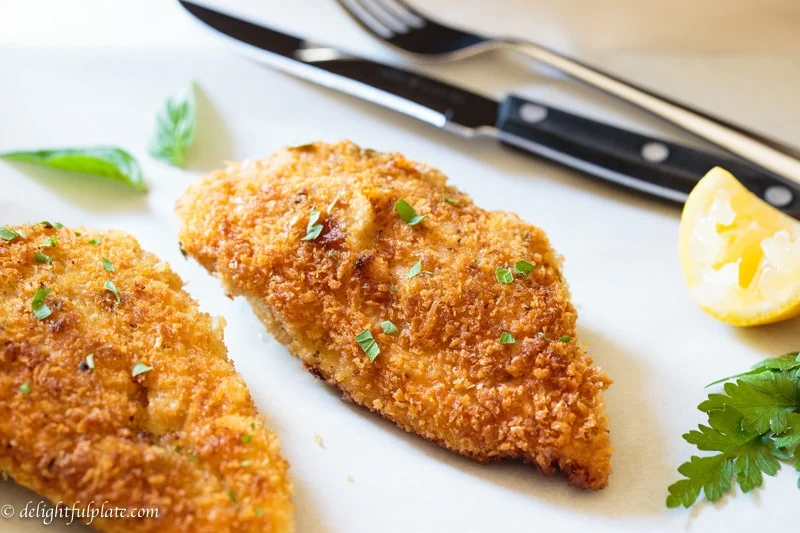
Chicken breasts are filled with a coarse basil, spinach and walnut mixture, then coated in breadcrumbs and fried until crisp. The fresh herbs and squeeze of lemon make this a flavourful main for a quick dinner.
Ingredients
- 15 g (½ cup, lightly packed)spinach
- 10 g (½ cup, lightly packed)basil
- 30 g (3 tablespoons)walnuts
- 22.5 ml (1½ tablespoons)olive oil
- 2 clovesgarlic
- 0.75 g (⅛ teaspoon)salt
- as neededplain flour
- 1egg
- as neededbreadcrumbs (Japanese panko recommended)
- 2boneless, skinless chicken breasts
- to tastesalt and pepper
- at least 1.25 cm (½ inch)frying oil
- to servelemon
Instructions
- 1
Make the filling
Put the basil, spinach, walnuts, garlic, olive oil, ⅛ teaspoon salt and pepper in a food chopper. Process to a coarse mixture.
- 2
Set up coating
Put the plain flour, egg and breadcrumbs in separate shallow bowls or plates. Beat the egg.
- 3
Even the chicken
Set the chicken breasts on a chopping board and cover them with a piece of cling film. Pound gently until they are an even thickness.
- 4
Cut a pocket
Use a sharp utility or paring knife to cut a deep pocket into each breast, taking care not to cut all the way through.
- 5
Fill and season
Divide the stuffing in half and put one portion into each breast. Press gently to flatten them slightly, then season the outsides with salt and pepper.
- 6
Coat the chicken
Dust each breast with plain flour, dip it in the beaten egg, then coat it in breadcrumbs.
- 7
Fry until cooked
Heat at least 1.25 cm (½ inch) of oil in a frying pan. When it reaches 175°C (350°F), add the chicken and fry over moderate heat for 4–5 minutes per side, or until the internal temperature reaches 74°C (165°F).
- 8
Drain and serve
Transfer the chicken to a paper-towel-lined plate or a cooling rack to drain off excess oil. Move it to a serving plate, squeeze lemon juice over the top and serve.
What is basil spinach stuffed chicken?
This is a breaded chicken main with a herb-and-nut filling tucked inside each breast. Stuffed chicken dishes appear in many cooking traditions; this version brings together basil, spinach, garlic and walnuts for a fresh, savoury centre.
The filling is chopped rather than puréed smooth, so it keeps some texture. A panko coating gives the outside a crisp finish while the chicken cooks around the pocket.
Nutrition and macros by portion
The nutrition label shows one serving as written: 650 calories, 55g protein, 30g carbs, 34g fat.
| Portion | Adjustment | kcal | Protein | Carbs | Fat |
|---|---|---|---|---|---|
| Lighter | Use less frying oil | 455 kcal | 39g | 21g | 24g |
| This serving | As written | 650 kcal | 55g | 30g | 34g |
| Hungry | Add a larger side | 975 kcal | 83g | 45g | 51g |
Chicken supplies most of the protein, while the breadcrumbs and flour contribute carbohydrates. Walnuts, olive oil and frying oil account for much of the fat; serve with vegetables or salad for a balanced plate.
A coarse, fragrant filling
Herbs and greens: Lightly packed spinach and basil give the filling its leafy flavour without overwhelming the chicken. Process them with the walnuts, garlic and olive oil just until coarse.
Walnuts: These add richness and a little bite. Avoid processing for too long, which can turn the mixture into a paste.
Cutting and filling the pockets
Even thickness: Gently pound the breasts under cling film so they cook more evenly. Keep the pressure light to avoid tearing the meat.
Deep pockets: Cut into the thick side of each breast, leaving the far edge and sides intact. Divide the filling evenly and press it in without forcing the opening wider.
Building a crisp coating
Three-stage coating: Flour helps the beaten egg cling, and the egg gives the breadcrumbs a surface to stick to. Coat each breast just before frying for an even crust.
Panko crumbs: Japanese panko is suggested for the best result and makes a light, crunchy coating. Press the crumbs gently onto the chicken, especially around the opening.
Frying and checking doneness
Oil temperature: Heat the oil to 175°C before adding the chicken, then keep the heat moderate as it fries. If the coating darkens too quickly, the centre may need more time.
Doneness cue: Fry for 4–5 minutes per side and check the thickest part reaches 74°C, avoiding the filling pocket when positioning the thermometer. Resting briefly on a rack or paper towel lets excess oil drain.
Serving the chicken
Lemon: A squeeze over the hot coating adds a bright contrast to the savoury filling. Serve soon after frying to enjoy the crisp exterior.
On the side: Pair it with a simple salad, steamed vegetables or potatoes. Choose a lighter side if you want the crunchy chicken to remain the focus.
Recipe notes & tips
- Keep the herb mixture coarse so the filling retains texture.
- Use a sharp small knife to make the pocket without cutting through the breast.
- Set up the flour, egg and breadcrumbs before coating the chicken.
- Use a thermometer to check the thickest part of each breast reaches 74°C.
- Drain the fried chicken on a rack if you want to keep the underside crisp.
- Squeeze over lemon just before serving.
Variations
- Add Parmesan: Mix a little finely grated Parmesan into the herb filling for a savoury note.
- Use pecans: Replace the walnuts with pecans for a different nutty flavour.
- Add chilli: Include a pinch of chilli flakes in the filling for gentle heat.
- Try wholemeal crumbs: Use wholemeal breadcrumbs for a heartier crust.
- Change the herbs: Replace some of the basil with parsley while keeping the same method.
Common mistakes to avoid
- Cutting through the breast: Leave one edge intact so the filling stays inside.
- Overprocessing the filling: Stop when it is coarse rather than blending it smooth.
- Filling too generously: Divide the mixture evenly and avoid overstuffing the pockets.
- Skipping the flour: Dust the chicken first so the egg and crumbs adhere more reliably.
- Oil too hot: Keep the heat moderate after the oil reaches 175°C so the coating does not brown before the chicken cooks.
- Guessing doneness: Check that the thickest part reaches 74°C rather than relying on colour alone.
How to store
Refrigerate leftovers in a covered container for up to 3 days. Reheat in an oven until hot throughout; this helps the coating crisp again better than reheating in a microwave.
Frequently asked questions
Can I prepare the chicken ahead?
You can make the filling and cut the pockets ahead, keeping them covered in the fridge. For the crispest coating, flour, egg and crumb the chicken shortly before frying.
Can I use ordinary breadcrumbs instead of panko?
Yes. The recipe recommends panko for the best result, but ordinary breadcrumbs will work and may make a denser coating.
How can I tell when the chicken is cooked?
Check the thickest part of each breast with a food thermometer. It should reach 74°C (165°F).
Why is the filling coming out?
The pocket may be cut too close to an edge or too much filling may be packed inside. Leave the edges intact and divide the stuffing evenly between the breasts.
Can I bake this instead of frying it?
The supplied method is for frying and does not give oven instructions. Baking will produce a different crust and would need its own cooking time and temperature.
What can I serve with it?
A simple salad or vegetables pair well with the crisp coating and lemon. Potatoes also make a more substantial side.
Cook it from the original
This recipe comes from delightfulplate.com. Their page has the author’s own photos, notes and tips — the best place to cook it from.
Open the recipe on delightfulplate.com