
Baked Pork Schnitzel with Caper Butter Sauce
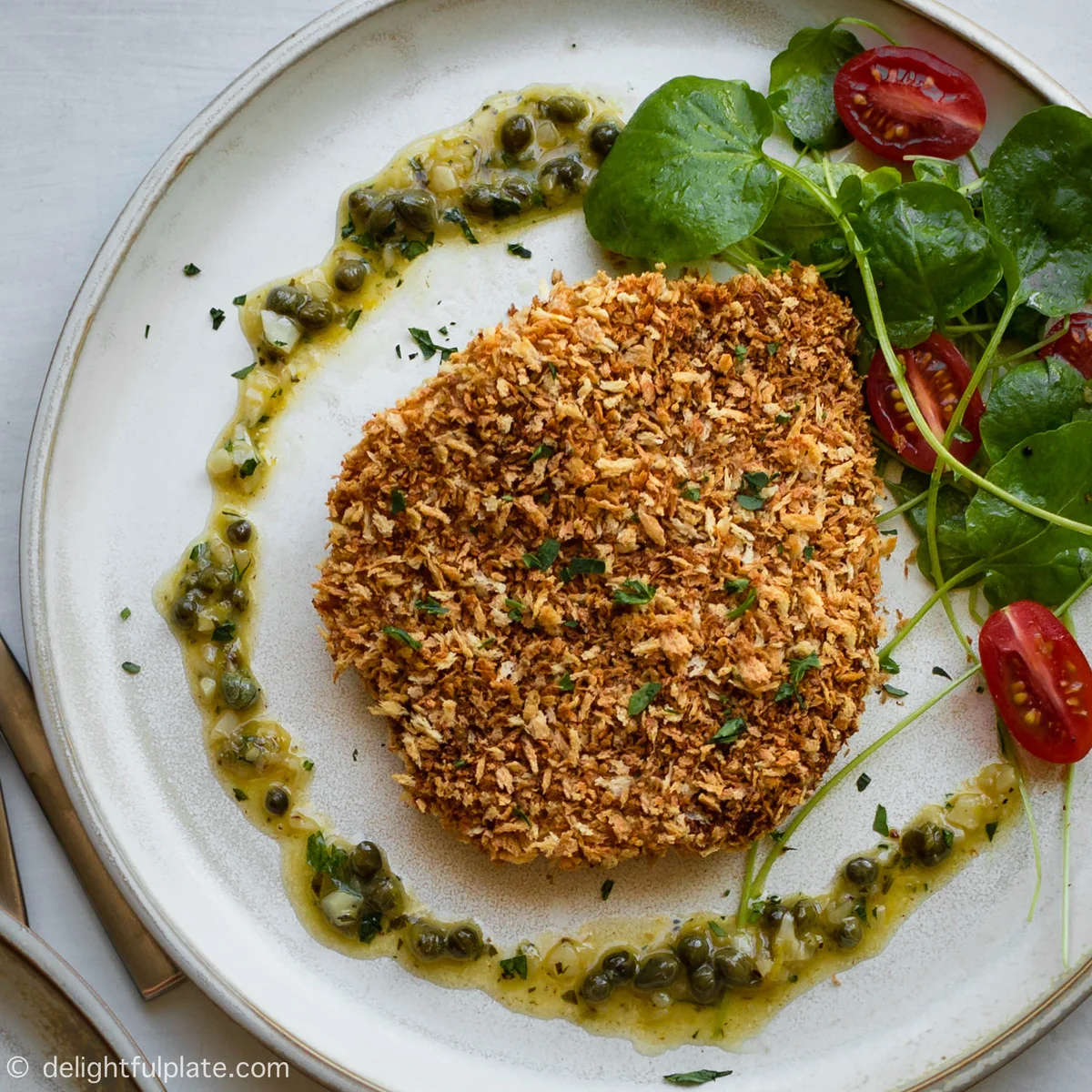
This oven-baked pork schnitzel gets its crisp coating from toasted panko rather than deep-frying. A quick garlic, caper and lemon butter sauce adds a bright, savoury finish.
Ingredients
- 454 g (1 lb)boneless pork chops
- 60 g (1/2 cup)flour
- 10 ml (2 teaspoons)Italian herbs
- 2eggs, beaten
- 75 g (1 1/2 cups)panko
- 15 ml (1 tablespoon)olive oil
- to tastesalt
- to tastepepper
- 57 g (4 tablespoons), dividedbutter
- 3–4garlic cloves, minced
- 30 ml (2 tablespoons)capers
- 60 ml (1/4 cup)white wine
- 30 ml (2 tablespoons)lemon juice
- zest of 1lemon
- 10 ml (2 teaspoons)chopped parsley
Instructions
- 1
Prepare the oven
Heat the oven to 200°C (400°F). Cover a baking sheet with foil and set a wire rack on top.
- 2
Toast the panko
Set a pan over medium heat, add the panko and olive oil, and stir until the crumbs are golden. Tip them onto a plate to cool.
- 3
Flatten and season
If the pork chops are thick, pound them to 6–8 mm (1/4–1/3 inch). Season both sides generously with salt and pepper.
- 4
Coat the pork
Combine the flour and Italian herbs. Coat each chop in the flour and shake off the excess, dip it in the beaten egg, then cover it with toasted panko, pressing gently so the crumbs stick.
- 5
Bake the schnitzel
Arrange the pork on the wire rack and bake until cooked through, about 15 minutes depending on thickness.
- 6
Make the sauce
When the pork is nearly ready, warm a pan over medium-low to medium heat. Melt 28 g (2 tablespoons) of the butter, add the garlic and stir for a few seconds until fragrant. Stir in the capers and cook for a few more seconds. Add the wine and simmer for about a minute to reduce. Stir in the lemon juice and remaining butter, then simmer for 30 seconds or until the sauce reaches your preferred consistency. Season with salt and pepper, mix in the lemon zest and parsley, and take the pan off the heat.
- 7
Serve immediately
Divide the schnitzel between serving plates and serve straight away with the warm sauce. Sprinkle with extra chopped parsley if you like.
What is pork schnitzel?
Schnitzel is a thin, breaded cutlet associated with Central European cooking, especially Austrian and German traditions. This version uses pork and bakes it rather than frying it in a deep layer of oil.
Toasted panko helps the coating turn crisp in the oven, while the caper, garlic and lemon butter brings richness and a sharp, briny contrast.
Nutrition and macros by portion
The nutrition label shows one serving as written: 950 calories, 55g protein, 66g carbs, 48g fat.
| Portion | Adjustment | kcal | Protein | Carbs | Fat |
|---|---|---|---|---|---|
| Lighter | Less butter sauce | 665 kcal | 39g | 46g | 34g |
| This serving | As written | 950 kcal | 55g | 66g | 48g |
| Hungry | Add a potato side | 1425 kcal | 83g | 99g | 72g |
The pork and eggs provide most of the protein, while the flour and panko contribute the main share of the carbohydrates. Butter, olive oil and the breading carry much of the fat; pair a portion with green vegetables or salad for a balanced plate.
Why toast the panko first?
Golden crumbs: Toasting the panko in olive oil before coating the pork gives it a head start on colour in the oven. Stir often and transfer it as soon as it is evenly golden so it does not keep browning in the hot pan.
Cool crumbs: Let the panko cool on a plate before using it. This also makes it easier to handle as you bread the chops.
How to get an even coating
Thin cutlets: Pound thicker chops to an even 6–8 mm thickness. This helps them cook at the same rate and makes the coating-to-meat balance more like classic schnitzel.
Three-stage coating: Shake off excess flour before dipping the pork in egg, then press the panko lightly onto the surface. A light, even layer clings better than a thick clump of coating.
Check the pork as it bakes
Rack setup: Baking the chops on a wire rack lets hot air circulate around them and helps keep the underside from sitting against the tray.
Doneness: The recipe gives about 15 minutes as a guide, but thickness affects the timing. Check that the pork is cooked through rather than relying on the clock alone.
Build the caper butter sauce
Gentle heat: Cook the garlic briefly in the butter, just until fragrant, before adding the capers. Let the wine simmer for about a minute so it reduces before the lemon juice and remaining butter go in.
Finish off the heat: Add the lemon zest and parsley at the end, then take the pan off the heat. Taste before adding salt, since capers can already bring plenty of savoury saltiness.
What to serve alongside
A simple green salad or steamed green beans bring freshness alongside the buttery sauce. For a more filling plate, add boiled potatoes, mash or a small serving of rice.
Serve the sauce warm at the table, or spoon it over the schnitzel just before eating so the panko keeps as much crunch as possible.
Recipe notes & tips
- Use a wire rack over the foil-lined tray to let air circulate around the coating.
- Toast the panko until golden, not dark brown, as it will cook further in the oven.
- Keep one hand for the flour and panko and the other for the egg to make breading less messy.
- Press the crumbs on gently rather than squeezing the cutlets.
- Make the sauce while the pork is nearly done so it can be served warm straight away.
- Taste the sauce before seasoning because capers can be salty.
Variations
- Add mustard: Stir a little Dijon mustard into the sauce for a sharper note.
- Use another herb: Replace the Italian herb blend with dried oregano or thyme.
- Make it alcohol-free: Use stock in place of the white wine and simmer it to reduce.
- Add chilli: Stir a pinch of chilli flakes into the garlic butter for gentle heat.
- Try chicken: Use thin chicken breast cutlets and check that they are cooked through before serving.
Common mistakes to avoid
- Uneven chops: Thick sections cook more slowly; pound the meat to an even thickness.
- Pale crumbs: Toast the panko in the pan before coating the pork to help it brown in the oven.
- Loose coating: Shake off excess flour and press the panko gently onto the egg-coated chops.
- Burnt garlic: Keep the heat moderate and cook the minced garlic only until fragrant.
- Over-reduced sauce: Watch it as it simmers and take it off the heat when it reaches the consistency you want.
- Soggy coating: Serve soon after baking and avoid covering the schnitzel while it waits.
How to store
Refrigerate leftover schnitzel and sauce separately in airtight containers for up to 3 days. Reheat the schnitzel in an oven until hot to help restore some crispness, and warm the sauce gently in a pan.
Frequently asked questions
Can I make this without a wire rack?
Yes. Place the pork on a foil-lined baking sheet, though the underside may be less crisp than it would be on a rack.
How thin should I pound the pork?
Aim for an even 6–8 mm (1/4–1/3 inch) thickness if the chops are thick. Even thickness helps the pork cook consistently.
How do I know when the schnitzel is done?
The recipe estimates about 15 minutes, but thickness affects the timing. Check that the pork is cooked through before serving.
Can I prepare the schnitzel ahead?
You can bread the chops shortly before baking, but the coating is best when baked and served straight away. Keep the toasted panko and coated pork separate until you are ready to cook.
Can I leave out the white wine?
Yes. Replace it with stock and simmer briefly to reduce. The sauce will have a slightly different flavour.
Can I use ordinary breadcrumbs instead of panko?
Yes, though the coating may have a finer texture. Toast the crumbs in the olive oil until golden before using them.
Cook it from the original
This recipe comes from delightfulplate.com. Their page has the author’s own photos, notes and tips — the best place to cook it from.
Open the recipe on delightfulplate.com