
Vietnamese Peanut Sauce
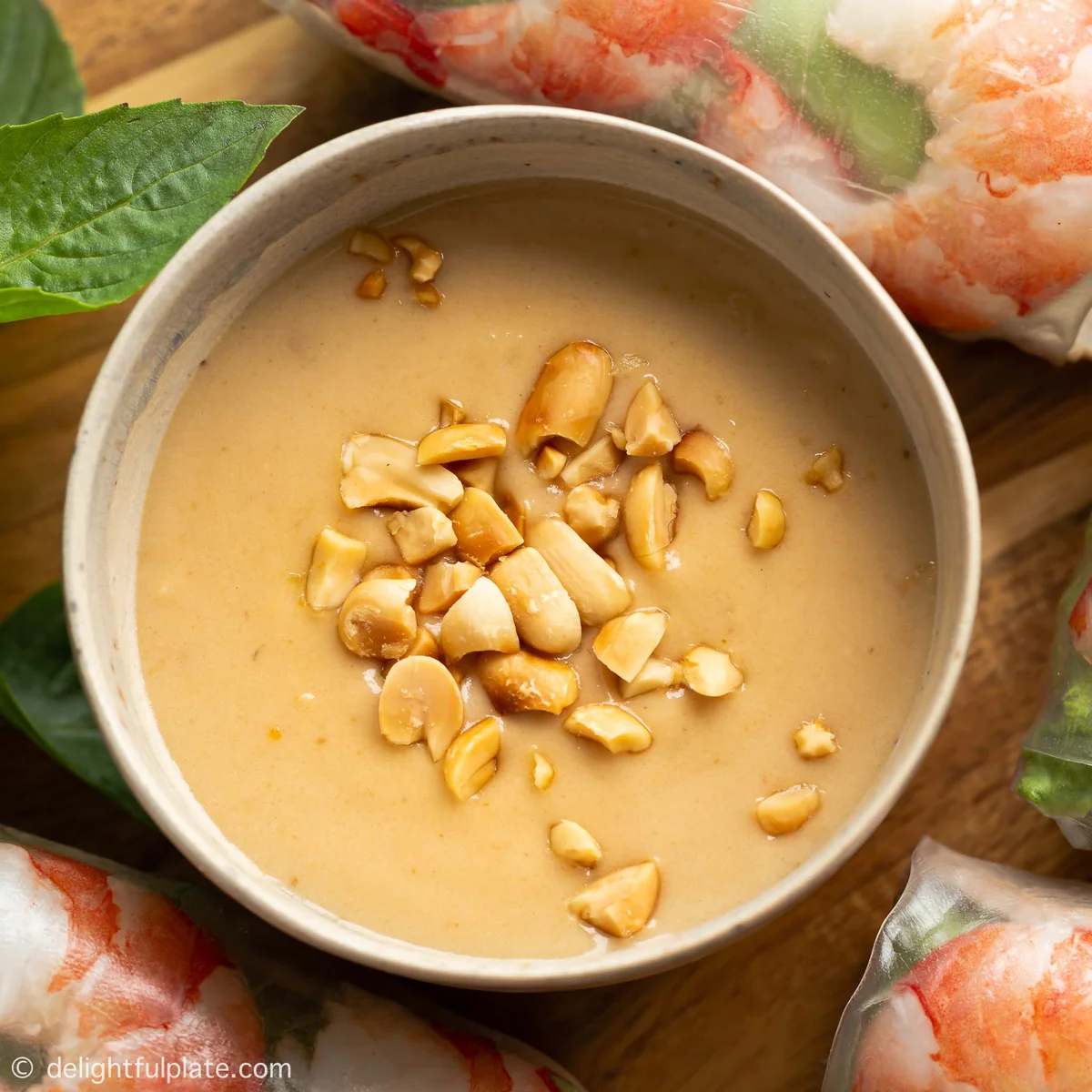
This creamy Vietnamese-style peanut sauce balances savoury hoisin and soy with the richness of peanut butter and coconut milk. Make it in minutes for dipping fresh spring rolls or serving alongside other dishes.
Ingredients
- Enough to coat the bottom of a small saucepanolive oil
- 1 teaspoon (about 3 g)minced garlic
- 2 tablespoons (30 ml)hoisin sauce
- 60 g (1/4 cup)peanut butter
- 120 ml (1/2 cup)coconut milk
- 60–80 ml (1/4–1/3 cup)water
- 1/4 teaspoon (about 1.5 g), or to tastesalt
- 1 1/4 teaspoons (about 6 ml)soy sauce
- To tasteroasted peanuts, for topping
Instructions
- 1
Warm the oil
Set a small saucepan over medium heat and add just enough olive oil to coat its bottom. Add the garlic and sauté for a few seconds, until fragrant.
- 2
Stir in sauces
Add the hoisin sauce and stir for about 10 seconds, until it looks thinner. Add the peanut butter and stir briefly to combine.
- 3
Add coconut milk
Stir in the coconut milk. When the sauce starts to simmer, add 60–80 ml (1/4–1/3 cup) water to reach your preferred consistency; you can use more coconut milk instead.
- 4
Season gently
Lower the heat as needed to keep the sauce at a very gentle simmer, avoiding a boil. Add the salt and soy sauce, taste and adjust to your liking, then transfer the sauce to a clean bowl to cool.
- 5
Cool and serve
Serve once the sauce is no longer hot, or refrigerate it and serve the next day after warming it in the microwave or on the stove.
What is Vietnamese peanut sauce?
Peanut sauce is a creamy dip often served with fresh rolls and other Vietnamese-inspired dishes. This version brings together peanut butter, coconut milk, hoisin and soy for a sweet-savoury flavour.
The recipe keeps the preparation simple: warm the garlic, loosen the sauces and adjust the texture with water. That makes it easy to tailor for dipping or drizzling.
Nutrition and macros by portion
The nutrition label shows one serving as written: 102 calories, 3g protein, 3g carbs, 9g fat.
| Portion | Adjustment | kcal | Protein | Carbs | Fat |
|---|---|---|---|---|---|
| Lighter | Use less peanut butter | 71 kcal | 2g | 2g | 6g |
| This serving | As written | 102 kcal | 3g | 3g | 9g |
| Hungry | Serve with extra rolls | 153 kcal | 5g | 5g | 14g |
Peanut butter and coconut milk provide most of the fat, while hoisin and the small amount of peanut butter contribute some carbohydrate and protein. Pair a serving with fresh rolls and vegetables for a more varied plate.
Choosing the ingredients
Peanut butter: A smooth variety makes the sauce easy to stir and gives it an even, creamy texture.
Hoisin and soy: Hoisin supplies sweetness and savoury depth, while soy sauce adds a salty, savoury note. Taste before adding extra salt, since both sauces contribute seasoning.
Keep the heat gentle
Garlic: A few seconds in the warm oil is enough to bring out its aroma. Keep it moving and avoid letting it brown.
Simmer: Once the coconut milk is in, keep the sauce at a very gentle simmer rather than letting it boil. This helps the mixture stay smooth.
Adjusting the consistency
Water: Add the 60–80 ml gradually, stirring as you go, so you can stop when the sauce suits your use. Use less for a thicker dip and more for a looser sauce.
Coconut milk: The recipe also allows extra coconut milk in place of water if you want to thin the sauce while keeping it creamy.
When it is ready
Texture: The sauce should be easy to stir and thick enough to cling to a spring roll, with no stubborn lumps of peanut butter.
Temperature: Let it cool until it is no longer hot before serving. It will also be ready to serve after chilling, once warmed through.
Serving ideas
Fresh rolls: Serve the sauce as a dip alongside fresh spring rolls, with roasted peanuts scattered over the top if desired.
At the table: It also works as a dipping sauce for other dishes. Keep it in a small bowl so each person can add as much as they like.
Recipe notes & tips
- Use a small saucepan so the oil can coat the base with only a little.
- Stir the garlic as soon as it goes into the pan so it does not catch.
- Add the water gradually to control the thickness.
- Taste before adding extra salt because the hoisin and soy sauce are already savoury.
- Scatter roasted peanuts over the sauce just before serving for extra crunch.
Variations
- More coconut: Thin the sauce with extra coconut milk instead of water.
- Thicker dip: Start with less water and add only enough to reach your preferred texture.
- More garlic: Add a little extra minced garlic, keeping a close eye on it as it sautés.
- Peanut topping: Finish with roasted peanuts for added crunch.
- Make ahead: Prepare the sauce the day before and warm it gently before serving.
Common mistakes to avoid
- Browning the garlic: It can turn bitter; sauté it only for a few seconds, until fragrant.
- Boiling the sauce: A vigorous boil can affect its smooth texture; reduce the heat to maintain a gentle simmer.
- Adding all the water at once: The sauce may become too thin; pour it in gradually and stir.
- Over-seasoning early: Hoisin and soy sauce both bring savoury flavour; taste before adjusting the salt.
- Serving it piping hot: Let the sauce cool until it is no longer hot before serving.
How to store
Refrigerate the cooled sauce in a covered container and use within 3–4 days. Reheat gently in the microwave or in a saucepan, stirring until warmed through; add a splash of water if it has thickened.
Frequently asked questions
Can I make this sauce ahead?
Yes. The recipe suggests refrigerating it and serving it the next day after warming. Store it covered and reheat gently.
How can I make the sauce thinner?
Stir in water a little at a time, up to the recipe's 60–80 ml range. Extra coconut milk can be used instead.
Can I use a different type of peanut butter?
Smooth peanut butter is easiest to combine into a creamy sauce. If yours is very thick, add the liquid gradually and stir well.
Do I have to add the roasted peanuts?
No, they are listed as a topping. Add them to taste or leave them off.
What should I serve with Vietnamese peanut sauce?
It is especially suited to fresh spring rolls and can also be served as a dip with other dishes.
Can I warm the sauce on the stove?
Yes. Warm it gently in a saucepan, stirring, and avoid bringing it to a boil.
Cook it from the original
This recipe comes from delightfulplate.com. Their page has the author’s own photos, notes and tips — the best place to cook it from.
Open the recipe on delightfulplate.com