
Authentic Vietnamese Beef Pho (Phở Bò)
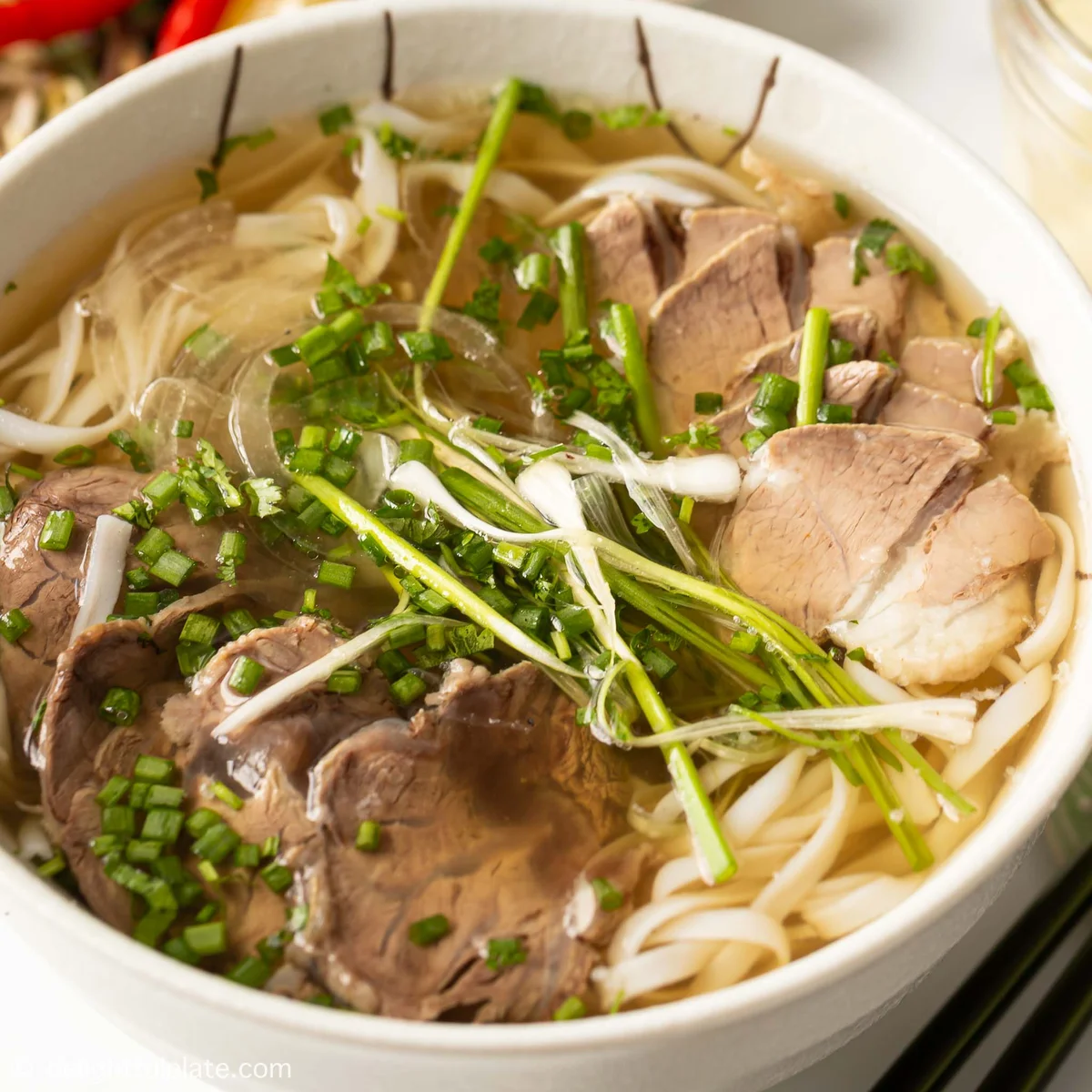
Phở Bò is a Vietnamese beef noodle soup built around a long-simmered, aromatic broth, tender beef and rice noodles. This version takes time, but its carefully prepared broth and fresh bowl toppings make it a comforting meal to share.
Ingredients
- 1.36 kg (3 lb)beef bones
- 567 g (1.25 lb)beef brisket
- 454 g (1 lb)beef shank
- 3.4 litres (14½ cups; about 3.75 quarts)water
- 1 tablespoon, plus more for seasoningsalt
- 1 large piece, or 2–3 cinnamon sticks (about 6–7 g / 0.2–0.25 oz)cassia bark
- 6star anise
- 6–7cloves
- 1 tablespooncoriander seeds
- 2 teaspoonsfennel seeds
- 1½–2, crushed openblack cardamom pods
- 2 medium (about 340 g / 12 oz), skin on and halvedyellow onions
- 2 large thumb-sized pieces (about 70 g / 2.5 oz), halved lengthways, plus 2 more slicesginger
- 4–5shallots
- 1 tablespoon, or to tastefish sauce
- 1 tablespoonrock sugar
- 680–907 g (1.5–2 lb)cooked rice noodles
- To taste; optionalthinly sliced steak, such as tenderloin or sirloin
- 1 medium, sliced very thinly into half-moonsyellow onion
- To tastewhite part of a spring onion, shredded
- To tastegreen part of a spring onion, thinly sliced
- To tastecoriander leaves, thinly sliced
- To tastefreshly cracked black pepper
Instructions
- 1
Blanch the bones
Parboil the beef bones in plenty of boiling water for 10 minutes. Transfer them to a bowl of cold water and clean them. Bring 3.75 quarts of water to a simmer in a stockpot, then add the bones, 1 tablespoon of salt and two slices of ginger about 2 inches long.
- 2
Simmer the broth
Bring the pot to a boil and skim off any foam, then lower the heat to a very gentle simmer. Cover with the lid slightly ajar and simmer for 6–8 hours.
- 3
Add the beef
While the bones simmer, tie the brisket and shank with kitchen twine. Parboil them in boiling water for a couple of minutes, rinse, then add them to the stockpot. Keep the broth at a gentle simmer, skim off foam and cover with the lid slightly ajar.
- 4
Cook the beef
Cook the brisket and shank until tender to your liking. The brisket may take 2.5–3 hours and the shank 1–1.5 hours. Remove each piece when ready and place it in iced water. Once cool, refrigerate it if the broth still needs time.
- 5
Char the aromatics
About 2.5 hours before the broth is finished, char the skin-on onions, ginger and shallots on a grill pan or under the oven grill. This may take 10–15 minutes; look for charred marks, softened onions and some bubbling juices. Peel away the skins and blackened parts.
- 6
Toast the spices
Toast the spices in a skillet over medium-low to medium heat for 2–3 minutes, until fragrant. Watch carefully so they do not burn, especially the cloves, then place them in a spice bag.
- 7
Infuse the broth
Skim excess fat from the broth, leaving some behind. Add the spice bag, charred onion, ginger and shallot, and simmer for about 2 hours before serving. Remove them before serving.
- 8
Season the broth
Just before serving, season the broth with additional salt, fish sauce and rock sugar to taste. Check whether too much water has evaporated and add a splash if needed. Allow about 360–480 ml (1½–2 cups) of broth per bowl, depending on its size.
- 9
Slice the beef
Slice the cooked brisket and shank thinly against the grain.
- 10
Fill the bowls
Divide the rice noodles between serving bowls. Top with the sliced cooked beef, optional raw beef, thinly sliced onion and spring onion, coriander leaves and freshly cracked black pepper.
- 11
Ladle and serve
Bring the broth back to a boil. Add the white parts of the spring onions and poach for several seconds, then immediately ladle the broth into the bowls. Serve straight away with accompaniments of your choice.
What is phở bò?
Phở bò is Vietnamese beef noodle soup, a much-loved dish served with rice noodles, beef and a fragrant broth. Its appeal comes from the contrast between the clear, savoury soup and the fresh herbs and crisp toppings added at the table.
This version builds flavour over several hours by simmering beef bones, then infusing the broth with charred aromatics and toasted spices. The cooked brisket and shank make the bowls hearty, while optional raw steak gives the hot broth another layer of texture.
Nutrition and macros by portion
The nutrition label shows one serving as written: 384 calories, 32g protein, 41g carbs, 10g fat.
| Portion | Adjustment | kcal | Protein | Carbs | Fat |
|---|---|---|---|---|---|
| Lighter | Fewer noodles, more herbs | 269 kcal | 22g | 29g | 7g |
| This serving | As written | 384 kcal | 32g | 41g | 10g |
| Hungry | Extra noodles and beef | 576 kcal | 48g | 62g | 15g |
The rice noodles supply most of the carbohydrates, while the beef contributes protein and the broth’s fat comes from the bones and meat. Pair a bowl with extra fresh herbs or vegetables for a more varied plate, or adjust the noodle portion to suit your appetite.
Building a clean, rich broth
Blanching the bones first: the brief boil and rinse remove residue before the bones go into the main pot. Skim the broth as it comes to a boil, then keep it at a gentle simmer with the lid askew.
Keeping the simmer gentle: a low, steady heat gives the broth time to develop while limiting evaporation. Leave some fat in the pot after skimming so the finished soup retains a little richness.
Why the aromatics are charred
Onion, ginger and shallot: charring their skins adds a roasted note to the broth. Peel away the blackened skin and any burnt areas before adding them to the pot.
Spices: toasting the cassia, star anise, cloves, coriander, fennel and black cardamom brings out their aroma. Keep the heat moderate and stir or watch them closely, since cloves can burn quickly.
Cooking and slicing the beef
Separate cooking times: the brisket may need 2.5–3 hours, while the shank may be ready in 1–1.5 hours. Check each piece for tenderness and remove it from the broth when it is cooked to your liking.
Thin slices: cut the cooled beef against the grain for tender bites. Chilling it makes it easier to slice neatly if the broth is still simmering.
Getting the noodles and toppings ready
Rice noodles: place the cooked noodles in the bowls before adding the hot broth. Have the sliced beef, onion, spring onion, coriander and pepper ready so the bowls can be assembled promptly.
Optional raw steak: add very thin slices to the bowl alongside the cooked beef. Pouring boiling broth over them is the method given here; serve the soup immediately.
Timing the final infusion
Add the charred aromatics and spice bag about 2 hours before serving, rather than leaving them in for the entire bone simmer. Remove them after this infusion so their flavour does not continue to dominate.
Season near the end with salt, fish sauce and rock sugar, tasting as you go. Check the broth level too, and add a splash of water if evaporation has reduced it more than you want.
Serving the bowls
Use about 360–480 ml of broth for each bowl, choosing the amount to suit its size. Briefly poach the shredded white spring onion in the boiling broth just before ladling.
Serve the soup straight away, while the noodles and toppings are hot. Fresh accompaniments at the table let each person finish their bowl to taste.
Recipe notes & tips
- Use a large pot so the bones can sit comfortably under the simmering water.
- Keep the broth at a gentle simmer and skim away foam as it appears.
- Remove each cut of beef as soon as it is tender rather than waiting for the other cut.
- Toast the spices only until fragrant, taking particular care not to scorch the cloves.
- Let cooked beef cool before slicing it thinly against the grain.
- Have the bowls and toppings ready before bringing the broth back to a boil.
Variations
- Raw steak: add very thin slices to the bowl for the optional rare-beef version.
- Cinnamon sticks: use 2–3 sticks in place of the large piece of cassia bark.
- Seasoning: adjust the final salt, fish sauce and rock sugar to suit your taste.
- Bigger bowls: use the upper end of the suggested broth amount for a larger serving.
- Fresh toppings: offer the sliced onion, spring onion, coriander and pepper at the table so diners can adjust their bowls.
Common mistakes to avoid
- Skipping the bone rinse: blanch and clean the bones first to remove residue before the long simmer.
- Boiling the broth hard: lower the heat after skimming so it simmers very gently.
- Overcooking the aromatics: add them only for the final 2 hours and remove them before serving.
- Burning the spices: toast over moderate heat for 2–3 minutes and watch the cloves closely.
- Slicing with the grain: cut the cooked beef against the grain for a more tender bite.
- Leaving assembly too late: prepare the noodles and toppings before bringing the broth back to a boil.
How to store
Refrigerate leftover broth and beef promptly in covered containers; keep noodles and fresh toppings separate where possible. Reheat the broth until boiling and warm the beef in it briefly, then serve with freshly prepared noodles and toppings.
Frequently asked questions
Can I make the broth ahead?
Yes. Prepare the broth and cooked beef ahead, then refrigerate them separately. Reheat the broth until boiling and assemble the bowls just before serving.
How long should the broth simmer?
The bones simmer for 6–8 hours. Add the charred aromatics and spice bag for about the final 2 hours.
When should I take the brisket and shank out?
Remove each cut when it is tender to your liking. The brisket may take 2.5–3 hours and the shank 1–1.5 hours.
Do I have to use raw beef?
No. The thinly sliced steak is optional; the bowls can be made with the cooked brisket and shank alone.
How much broth goes in each bowl?
Allow about 360–480 ml (1½–2 cups) per bowl, depending on its size.
What should I do if the broth reduces too much?
Check the level shortly before serving and add a splash of water if needed. Taste and readjust the seasoning afterwards.
Cook it from the original
This recipe comes from delightfulplate.com. Their page has the author’s own photos, notes and tips — the best place to cook it from.
Open the recipe on delightfulplate.com