
Broiled Jamaican Jerk Salmon
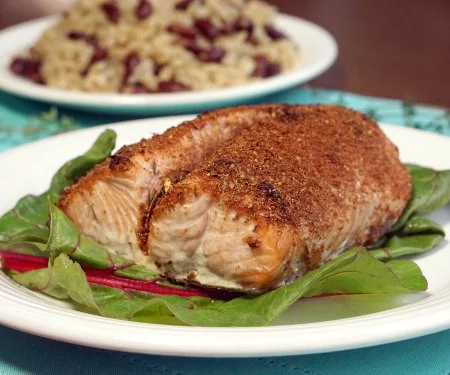
This quick Caribbean-inspired meal pairs salmon with the warm, punchy flavours of Jamaican jerk seasoning. A short spell under the broiler cooks it quickly, while the skin helps protect the fish from the intense heat.
Ingredients
- 454 g (1 lb)salmon fillet, skin on
- 15 ml (1 Tbsp)jerk seasoning
Instructions
- 1
Heat the broiler
Position an oven rack about 20–25 cm (8–10 inches) below the heating element. Preheat the broiler to medium, or simply switch it on if it has no heat settings.
- 2
Season the salmon
Grease a baking sheet and cover it with foil. Set the salmon on the foil skin-side down, then pat 15 ml (1 Tbsp) of jerk seasoning over the fish. Broil for 7–12 minutes, until cooked through.
- 3
Serve the fish
Serve with steamed vegetables and Caribbean red beans and rice.
What is Jamaican jerk salmon?
Jerk is a Jamaican style of seasoning associated with a bold blend of spices and heat. Here, jerk seasoning coats salmon, bringing Caribbean-inspired flavour to a quick broiled fish dish.
The method keeps the ingredient list short and the cooking time brief. The high heat gives the seasoned surface a little colour while the skin helps shield the fish underneath.
Nutrition and macros by portion
The nutrition label shows one serving as written: 127 calories, 21g protein, 1g carbs, 4g fat.
| Portion | Adjustment | kcal | Protein | Carbs | Fat |
|---|---|---|---|---|---|
| Lighter | More vegetables, less rice | 89 kcal | 15g | 1g | 3g |
| This serving | As written | 127 kcal | 21g | 1g | 4g |
| Hungry | Larger salmon portion | 191 kcal | 32g | 2g | 6g |
The salmon supplies most of the protein and fat, while the jerk seasoning contributes a small amount of carbohydrate. For a balanced plate, serve the fish with steamed vegetables and red beans and rice as suggested.
Choosing the salmon
Skin on: The recipe calls for a skin-on fillet, placed skin-side down on the baking sheet. This gives the fish a buffer from the hot tray and broiler.
Even thickness: A fillet with a reasonably even thickness is easier to cook consistently. If one end is much thinner, check that part earlier.
Getting the seasoning to stick
Pat it on: Press the jerk seasoning gently over the top of the salmon so it covers the surface. Avoid rubbing hard enough to break up the fillet.
Check the blend: Jerk seasonings vary in saltiness and heat, so use the listed tablespoon and taste the finished dish before adding any extra seasoning.
Broiling without overcooking
Rack position: Set the rack about 20–25 cm (8–10 inches) below the heating element as directed. Broilers can vary, so keep an eye on the fish as it cooks.
Doneness: The recipe gives a 7–12 minute range. Check the thickest part for cooked-through fish, and remove it once it reaches that point rather than leaving it under the heat.
Why foil and oil matter
Greased foil: Grease the lined baking sheet before adding the salmon. This helps reduce sticking and makes it easier to lift the fish away after cooking.
Skin-side down: Keep the skin against the foil and the seasoned flesh facing the broiler. This follows the recipe's setup and keeps the seasoning exposed to the heat.
What to serve alongside
Vegetables: Steamed vegetables add a fresh, simple accompaniment to the spiced salmon. Serve them hot alongside the fish.
Rice and beans: Caribbean red beans and rice make the meal more filling and complement the seasoning. The recipe suggests serving both sides with the salmon.
Recipe notes & tips
- Line the baking sheet with foil before placing the salmon on it.
- Grease the foil so the skin is less likely to stick.
- Pat the seasoning over the fish rather than leaving it in a loose pile.
- Start checking the salmon at the shorter end of the 7–12 minute cooking range.
- Keep the salmon skin-side down throughout broiling.
Variations
- Adjust the heat: Use a milder jerk seasoning if you prefer less spice.
- Add citrus: Serve with a wedge of lime for a bright contrast.
- Switch the side: Pair the salmon with steamed greens instead of rice and beans.
- Make extra portions: Scale up the salmon and seasoning proportionally, using more than one baking sheet if needed.
- Use another fish: Try the same seasoning and broiling method with a similarly sized fish fillet, checking it for doneness as it cooks.
Common mistakes to avoid
- Wrong rack position: Place the rack about 20–25 cm (8–10 inches) below the heating element as directed.
- Unlined tray: Cover the baking sheet with foil before adding the fish to make serving and clean-up easier.
- Dry foil: Grease the foil before laying the salmon on it to help prevent sticking.
- Seasoning unevenly: Pat the jerk seasoning over the surface so the salmon gets an even coating.
- Overcooking: Check the thickest part from 7 minutes onwards and remove the fish once cooked through.
How to store
Refrigerate leftover salmon in a covered container within 2 hours and use within 3 days. Reheat gently until hot throughout, taking care not to dry out the fish.
Frequently asked questions
How long does the salmon take to broil?
The recipe gives a range of 7–12 minutes. The exact time depends on the fillet's thickness and the broiler, so check it from 7 minutes onwards.
Where should I position the oven rack?
Set it about 20–25 cm (8–10 inches) below the heating element. If your broiler has no heat settings, preheat it as directed.
Should I remove the salmon skin?
No; this recipe uses skin-on salmon and places it skin-side down on the foil. You can leave the skin on when serving or separate it from the cooked fish.
Can I use store-bought jerk seasoning?
Yes. The ingredient list calls for jerk seasoning, so a prepared blend works; its salt and heat level may vary by brand.
What should I serve with Jamaican jerk salmon?
The suggested sides are steamed vegetables and Caribbean red beans and rice.
How can I tell when the salmon is cooked through?
Check the thickest part of the fillet; it should be cooked through rather than raw in the centre. Begin checking at 7 minutes because broilers and fillet thicknesses differ.
Cook it from the original
This recipe comes from curiouscuisiniere.com. Their page has the author’s own photos, notes and tips — the best place to cook it from.
Open the recipe on curiouscuisiniere.com