
Pasta e Fagioli
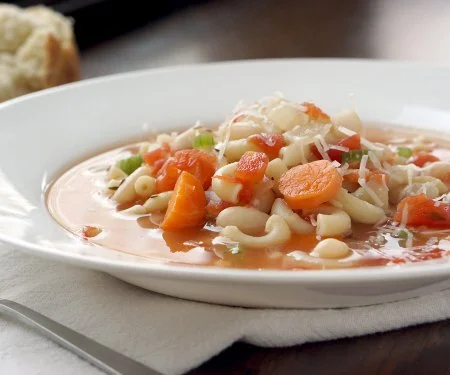
Pasta e fagioli is a comforting Italian soup of pasta, white beans and vegetables in a tomato-rich broth. It makes a hearty lunch or dinner, with simple ingredients and a one-pot method.
Ingredients
- 30 ml (2 Tbsp)olive oil
- 1onion, diced
- 2 cloves (or 2.5 ml / 1/2 tsp)garlic, minced (or garlic powder)
- 1carrot, sliced
- 1celery rib, diced
- 1.42 litres (6 cups)chicken or vegetable broth, preferably low sodium
- 475 ml (2 cups)crushed tomatoes (or petite diced tomatoes)
- 720 ml (3 cups)cooked white beans, or canned beans drained (or 225 g / 1/2 lb dry beans, cooked)
- 2bay leaves
- 5 ml (1 tsp)thyme
- 5 ml (1 tsp)rosemary
- 225 g (1/2 lb)dry pasta, such as elbows or ditali
- to tastesalt
- to tastepepper
- 15 ml (1 Tbsp), optionaltomato paste
- to tastefreshly grated Parmesan, to serve
Instructions
- 1
Soften the vegetables
Heat the olive oil in a 4-quart (3.8-litre) soup pot over medium-high heat. Add the onion and garlic and sauté for 2–3 minutes, until the onion begins to soften. Add the carrot and celery and sauté for a further 2–3 minutes.
- 2
Add the broth
Stir in the broth, tomatoes, cooked beans, bay leaves, thyme and rosemary. Bring the mixture to a simmer.
- 3
Cook the pasta
Add the dry pasta and simmer until just al dente, roughly 8 minutes. It will continue to soften as it sits in the hot soup.
- 4
Season the soup
Taste the soup and adjust the salt and pepper as needed.
- 5
Finish and serve
For a stronger tomato flavour, stir in the optional tomato paste. Remove the bay leaves and serve topped with grated Parmesan.
What is pasta e fagioli?
Pasta e fagioli means “pasta and beans” in Italian, and the dish is a familiar, homely soup rather than a single fixed recipe. Versions vary across Italy, but beans, pasta and a savoury broth are at its heart.
This version combines white beans with tomatoes, aromatic vegetables and herbs. The beans make the broth substantial, while the pasta turns it into a filling one-pot meal.
Nutrition and macros by portion
The nutrition label shows one serving as written: 375 calories, 16g protein, 60g carbs, 8g fat.
| Portion | Adjustment | kcal | Protein | Carbs | Fat |
|---|---|---|---|---|---|
| Lighter | Less pasta, more vegetables | 263 kcal | 11g | 42g | 6g |
| This serving | As written | 375 kcal | 16g | 60g | 8g |
| Hungry | Larger bowl with bread | 563 kcal | 24g | 90g | 12g |
The beans and pasta provide most of the carbohydrates, with the beans also contributing protein; the olive oil and Parmesan contribute much of the fat. Pair a bowl with a green salad or extra vegetables to add freshness and balance the meal.
Build flavour with the vegetables
Onion and garlic: sauté them first, just until the onion starts to soften. This short start gives the soup a savoury base without needing to brown the vegetables.
Carrot and celery: add these after the onion and cook for another 2–3 minutes. Cutting them into small, even pieces helps them cook through alongside the pasta.
Choose the beans and broth
White beans: cooked beans are ready to go straight into the pot; if using tinned beans, drain them first. Their soft, creamy texture suits the tomato broth and balances the pasta.
Broth: chicken or vegetable broth both work, and a low-sodium option leaves more room to season at the end. The soup’s final saltiness can vary with the broth and Parmesan.
Keep the pasta al dente
Timing: simmer the pasta for roughly 8 minutes, checking the packet guidance and tasting as it cooks. The target is just al dente, since the pasta keeps absorbing liquid after the heat is off.
Shape: elbows or ditali are traditional choices because their small pieces are easy to scoop with beans. Other small pasta shapes can be used if needed.
Adjust the tomato flavour
Crushed tomatoes: these make a fairly even, rich base; petite diced tomatoes leave more distinct pieces in the soup. Either option fits the method.
Tomato paste: this is optional, but a tablespoon stirred in at the end makes the tomato flavour more pronounced. Taste before adding it, especially if you prefer a lighter tomato note.
Serve it while hot
Remove the bay leaves before serving, then finish each bowl with freshly grated Parmesan. The cheese adds a savoury, salty finish, so taste the soup before adding extra salt.
For a balanced meal, serve the soup with a green salad or a portion of cooked greens. Crusty bread is useful for soaking up the broth if you want a more substantial meal.
Recipe notes & tips
- Use low-sodium broth so you can fine-tune the seasoning at the end.
- Cut the carrot and celery to a similar size so they cook at a similar rate.
- Start tasting the pasta before the 8-minute mark if its packet suggests a shorter cooking time.
- Add the Parmesan at the table so everyone can choose how much to use.
- Remove the bay leaves before ladling the soup into bowls.
Variations
- Use vegetable broth: choose it to keep the soup meat-free.
- Try another small pasta: ditali and elbows are traditional, but a similar small shape also works.
- Make it more tomato-forward: stir in the optional tomato paste before serving.
- Use canned beans: drain them before adding so the soup’s seasoning stays easier to control.
- Change the herbs: use the listed thyme and rosemary, or adjust their balance to suit your preference.
Common mistakes to avoid
- Overcooking the pasta: it continues softening in the hot soup, so stop when it is just al dente.
- Skipping the final taste: broth and Parmesan vary in saltiness, so season after simmering.
- Leaving the bay leaves in: remove both before serving.
- Adding undrained tinned beans: drain them first to avoid bringing extra canning liquid into the soup.
- Using a pot that is too small: choose a 4-quart (3.8-litre) soup pot to hold the ingredients comfortably.
How to store
Refrigerate leftovers in a covered container for up to 3 days. The pasta will absorb broth as it sits, so reheat gently on the hob and add a splash of water or broth if the soup has thickened.
Frequently asked questions
Can I use tinned white beans?
Yes. Drain the beans before adding them to the pot; the recipe calls for 3 cups of cooked beans.
Can I use a different pasta shape?
Yes. Elbows and ditali are traditional, but another small pasta shape can work. Check it as it cooks, since the timing may differ.
Can I make this with vegetable broth?
Yes. The recipe allows chicken or vegetable broth, so use whichever suits your meal.
When should I add the tomato paste?
It is optional and can be stirred in at the end if you want a stronger tomato flavour.
Why is the pasta softer in leftovers?
Pasta continues to absorb hot broth as the soup stands and chills. Reheat gently with a splash of broth or water to loosen it.
Do I need to soak and cook dry beans first?
The recipe uses cooked beans. If starting with dry beans, cook them before adding them to the soup.
Cook it from the original
This recipe comes from curiouscuisiniere.com. Their page has the author’s own photos, notes and tips — the best place to cook it from.
Open the recipe on curiouscuisiniere.com