
Thai Peanut Chicken
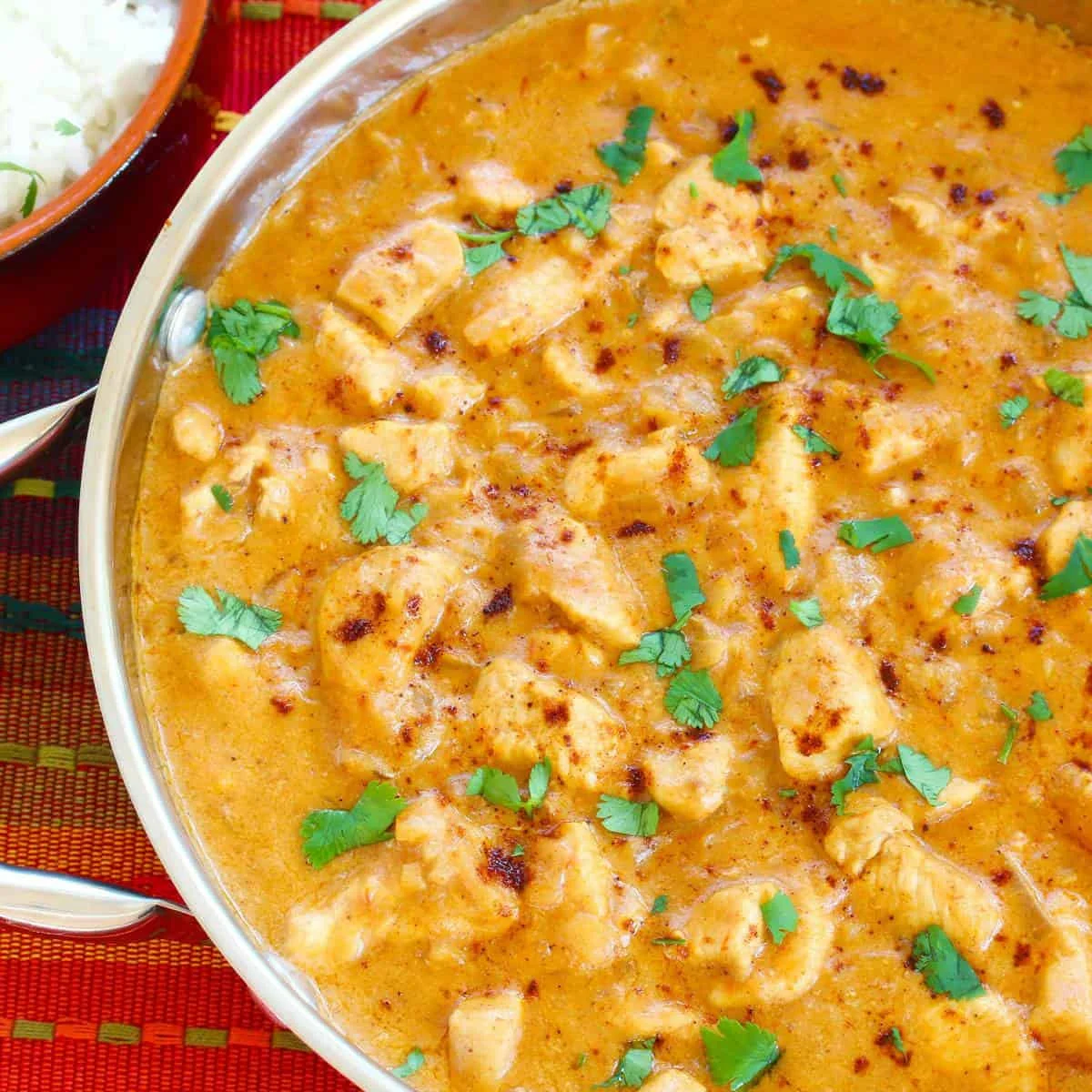
Thai peanut chicken is a creamy, savoury-sweet chicken curry with ginger, chilli and crunchy peanut butter. It makes a satisfying weeknight meal, served over steamed rice and finished with fresh coriander and roasted peanuts.
Ingredients
- 30 ml (2 tablespoons)cooking oil
- 1yellow onion, chopped
- 2 clovesgarlic, minced
- 2.5 cm (1 inch)piece of fresh ginger, minced
- 454 g (1 pound)chicken breast, cut into bite-sized pieces
- 30 ml (2 tablespoons)sweet chilli sauce
- 30 ml (2 tablespoons)tomato sauce or ketchup
- 45 ml (3 tablespoons)crunchy peanut butter
- 15 ml (1 tablespoon)chilli powder
- orhomemade chilli powder
- 5 ml (1 teaspoon), optionaldark brown sugar
- 400 g (14 ounces)unsweetened coconut milk
- 5 ml (1 teaspoon)salt, plus more to taste
- to tastefresh coriander, chopped, for garnish
- to tasteroasted peanuts, chopped, for garnish
Instructions
- 1
Soften the aromatics
Heat the oil in a frying pan over medium-high heat. Cook the onion for 5 minutes, until soft and translucent, then add the garlic and ginger and cook for a further 2 minutes.
- 2
Cook the chicken
Add the chicken pieces and cook for 3–4 minutes.
- 3
Mix in the flavourings
Stir in the sweet chilli sauce, tomato sauce or ketchup, chilli powder, peanut butter and sugar, if using. Add the coconut milk and salt, then bring the mixture to the boil.
- 4
Simmer the curry
Turn the heat down to medium-low, cover the pan and simmer for 20 minutes, stirring occasionally. If you would like a thicker sauce, mix 1 tablespoon of cornflour with 2 tablespoons of water, stir it in and simmer for another minute. Taste and add more salt if needed.
- 5
Garnish and serve
Serve over steamed rice, garnished with chopped coriander and roasted peanuts.
What is Thai peanut chicken?
This is a home-style chicken curry built around a creamy peanut and coconut sauce, with chilli, tomato, garlic and ginger for a balance of heat, sweetness and savoury flavour. Peanut-based sauces are found in several Southeast Asian cooking traditions; this recipe takes an easy, pantry-friendly approach rather than aiming to represent one specific regional preparation.
Crunchy peanut butter gives the sauce body and a little texture, while coconut milk makes it mellow enough to serve with rice. The result is a comforting main that can be made in one pan.
Nutrition and macros by portion
The nutrition label shows one serving as written: 455 calories, 34g protein, 15g carbs, 30g fat.
| Portion | Adjustment | kcal | Protein | Carbs | Fat |
|---|---|---|---|---|---|
| Lighter | More vegetables, less rice | 319 kcal | 24g | 11g | 21g |
| This serving | As written | 455 kcal | 34g | 15g | 30g |
| Hungry | Add extra rice | 683 kcal | 51g | 23g | 45g |
The chicken provides most of the protein, while the peanut butter and coconut milk contribute much of the fat; the sauce and any rice served alongside provide carbohydrates. For a more balanced plate, serve a moderate amount of rice with a generous side of vegetables such as steamed greens.
Building the flavour base
Onion: Cook it until soft and translucent before adding the other aromatics; this gives the sauce a sweeter, rounder base.
Ginger and garlic: Mince them finely so they distribute through the sauce. They need only a couple of minutes in the pan before the chicken goes in.
Choosing the peanut butter
Crunchy peanut butter is specified here, adding small pieces of peanut alongside its creamy richness. Stir it in thoroughly so it blends with the chilli and tomato sauces before the coconut milk goes into the pan.
If your peanut butter is salted, taste the finished sauce before adding extra salt; the other sauces may contribute saltiness too.
Getting the sauce texture right
Simmer: Keep the pan covered over medium-low heat for the stated 20 minutes, stirring occasionally to prevent the sauce catching on the bottom.
Thickening: If the sauce is thinner than you prefer, stir in the optional cornflour slurry and simmer for one more minute. Add the slurry gradually so you can stop once the sauce coats the chicken as you like.
Checking the chicken
Cut the chicken into evenly sized, bite-sized pieces so they cook at a similar rate. After the simmer, check that the pieces are cooked through; if they need more time, continue simmering and check again.
Avoid a vigorous boil once the coconut milk is added. A gentle simmer helps the sauce stay cohesive and gives the flavours time to combine.
Serving the curry
Rice: Spoon the chicken and sauce over steamed rice, which soaks up the creamy sauce and makes the dish a filling meal.
Garnishes: Add the chopped coriander and roasted peanuts just before serving. Their fresh, nutty contrast brightens the rich sauce.
Recipe notes & tips
- Cut the chicken into similar-sized pieces for more even cooking.
- Stir the peanut butter into the sauces before adding the coconut milk to help it blend smoothly.
- Keep the curry at a gentle simmer rather than a rolling boil.
- Taste before adding extra salt, especially if your sauces or peanut butter are salty.
- Add the coriander and peanuts just before serving so they keep their fresh flavour and crunch.
Variations
- Adjust the heat: Use less chilli powder for a milder curry or add more to taste.
- Use smooth peanut butter: Swap it for crunchy peanut butter if you prefer a more uniform sauce.
- Add vegetables: Stir in quick-cooking vegetables during the simmer, allowing enough time for them to become tender.
- Skip the sugar: Leave out the optional brown sugar for a less sweet sauce.
- Make it thicker: Stir in the optional cornflour slurry and simmer for one extra minute.
Common mistakes to avoid
- High heat after adding coconut milk: A hard boil can make the sauce less smooth; keep it at a gentle simmer.
- Uneven chicken pieces: They can finish cooking at different times; cut them into similar-sized bites.
- Adding slurry dry: It may form lumps; dissolve the cornflour in water first, then stir it into the sauce.
- Over-salting early: The sauces and peanut butter may already be salty; taste before adding more.
- Skipping the occasional stir: Sauce may catch on the pan; stir from time to time during the covered simmer.
How to store
Cool leftovers promptly and refrigerate in a sealed container for up to 3 days. Reheat gently in a pan or microwave until piping hot, stirring the sauce; add a splash of water if it has thickened too much. Store rice separately where possible.
Frequently asked questions
Can I use smooth peanut butter?
Yes. Smooth peanut butter works in the same amount, though the finished sauce will not have the small crunchy pieces.
How can I make the sauce thicker?
Mix 1 tablespoon of cornflour with 2 tablespoons of water, stir it into the sauce and simmer for one minute, as described in the method.
Can I leave out the brown sugar?
Yes. The sugar is optional, so you can omit it if you prefer a less sweet sauce.
What should I serve with Thai peanut chicken?
The recipe suggests steamed rice. Fresh coriander and chopped roasted peanuts make the specified garnish.
How do I know the chicken is cooked?
Check that the pieces are cooked through after the 20-minute simmer. If needed, simmer for longer and check again.
Cook it from the original
This recipe comes from daringgourmet.com. Their page has the author’s own photos, notes and tips — the best place to cook it from.
Open the recipe on daringgourmet.com