
Beer Battered Fish
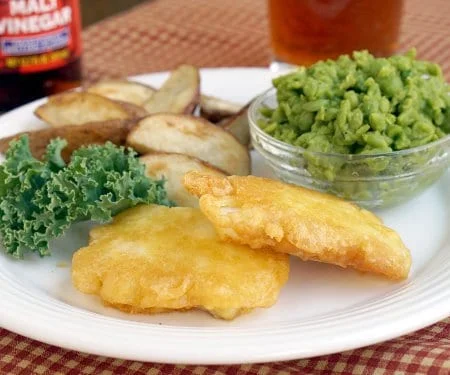
Beer-battered fish is a British-style comfort food with flaky fish beneath a crisp, golden coating. It cooks quickly in a skillet and is especially good served hot with malt vinegar and tartar sauce.
Ingredients
- 125 g (1 cup)unbleached plain flour
- 1½ tspbaking powder
- 1 tspsalt
- ½ tspground white pepper
- ¼ tspground turmeric (optional, for colour)
- 240 ml (1 cup)beer
- 907 g (2 lb)cod or haddock fillets, about 1.3 cm (½ inch) thick, patted dry and cut into 5–7.5 cm (2–3 inch) pieces
- for pan-fryingoil
- to tastemalt vinegar
- to tastetartare sauce
Instructions
- 1
Mix dry ingredients
Combine the flour, baking powder, salt, white pepper and optional turmeric.
- 2
Make the batter
Add enough beer to the dry ingredients to make a smooth batter.
- 3
Heat the oil
Pour oil to a depth of about 1.3 cm (½ inch) into a cast-iron skillet. Heat it to 190°C (375°F), or until a little batter dropped into the oil sizzles and turns golden in 2 minutes.
- 4
Coat the fish
Dip the fish pieces into the batter, coating them well.
- 5
Add to skillet
Carefully place the battered fish in the hot oil, leaving room between the pieces.
- 6
Fry until golden
Cook for 2–3 minutes per side, until the pieces are golden and firm.
- 7
Drain and repeat
Transfer the fried fish to a plate lined with kitchen paper. Continue cooking the remaining fish.
What is beer-battered fish?
Beer-battered fish is a familiar British fish-and-chips favourite: pieces of fish are coated in a seasoned batter and fried until crisp. This version uses cod or haddock, both mild white fish that pair well with the crunchy coating.
Beer loosens the batter and brings its own flavour, while baking powder helps keep the coating light. A little turmeric is optional and is included for colour.
Nutrition and macros by portion
The nutrition label shows one serving as written: 300 calories, 28g protein, 16g carbs, 11g fat.
| Portion | Adjustment | kcal | Protein | Carbs | Fat |
|---|---|---|---|---|---|
| Lighter | Smaller fish portion | 210 kcal | 20g | 11g | 8g |
| This serving | As written | 300 kcal | 28g | 16g | 11g |
| Hungry | Add chips and peas | 450 kcal | 42g | 24g | 17g |
The fish supplies most of the protein, while flour and beer contribute most of the carbohydrates. Fat comes mainly from the oil absorbed during frying; the amount varies with the fish and cooking conditions. Serve with peas or salad for a more balanced plate, and add tartare sauce to taste.
Choosing the fish
Cod or haddock: Either works well, so choose firm fillets that are roughly 1.3 cm thick. Cutting them into 5–7.5 cm pieces makes them easier to coat and fry.
Dry surface: Pat the fish dry before dipping it. Excess moisture can make the batter slide off and may cause the hot oil to spit.
Getting the batter right
Beer: Add it gradually until the batter is smooth, rather than pouring it all in at once. The recipe calls for enough beer to form the batter, so the exact amount can vary slightly.
Coating: Dip each piece just before frying and let excess batter fall away briefly. This helps form an even layer without a heavy skirt around the fish.
Frying safely and evenly
Oil depth: Use a cast-iron skillet with oil about 1.3 cm deep, as directed. Lower the fish carefully into the pan to avoid splashes.
Room to fry: Cook in batches if needed rather than crowding the skillet. Too many pieces at once make it harder to turn them and maintain an even fry.
When the fish is done
Timing: Fry each piece for 2–3 minutes per side. The stated time is a guide; follow the recipe’s visual cues as well.
Doneness: Look for a golden coating and fish that feels firm. Drain each batch on kitchen paper while you cook the remaining pieces.
What to serve alongside
Classic accompaniments: Serve the fish hot with malt vinegar and tartare sauce. Chips make it a traditional fish-and-chips-style meal.
A fresh side: Peas or a crisp green salad offer a contrasting side alongside the fried coating. Add vinegar at the table so the batter stays crisp for longer.
Recipe notes & tips
- Pat the fish thoroughly dry before coating it.
- Add the beer gradually so you can stop once the batter is smooth.
- Use the small-batter test to check that the oil is hot before frying.
- Fry the fish in batches if the skillet would otherwise be crowded.
- Drain cooked pieces on kitchen paper and serve them promptly.
Variations
- Use haddock: Swap the cod for haddock in the same quantity.
- Skip the turmeric: Leave it out for a paler batter.
- Choose a different beer: Use another beer you enjoy, keeping the batter smooth.
- Add a peppery note: Increase the white pepper slightly to taste.
- Serve with chips: Add chips and peas for a fish-and-chips-style meal.
Common mistakes to avoid
- Wet fish: The batter may slide off; pat the fillets dry before dipping.
- Crowded pan: The pieces are difficult to cook evenly; fry them in batches.
- Oil not hot enough: The coating can turn greasy; wait for the batter test to sizzle.
- Oil too hot: The coating may brown before the fish cooks; monitor the heat and use the golden, firm cues.
- Uneven coating: Bare patches can remain; turn each fish piece in the batter to coat it well.
How to store
For the best texture, eat the fish soon after frying. Refrigerate leftovers in a covered container for up to 2 days, then reheat in an oven until hot; the coating may not be as crisp as when freshly cooked.
Frequently asked questions
Can I use cod or haddock?
Yes. The recipe allows either cod or haddock; use fillets about 1.3 cm thick and cut them into pieces.
How do I know when the oil is ready?
Heat it to 190°C, or drop in a little batter: it should sizzle and turn golden in about 2 minutes.
How long should I fry each piece?
Cook for 2–3 minutes per side. The pieces should be golden and firm when done.
Can I leave out the turmeric?
Yes. It is optional and is included for colour, so leaving it out will not remove a required batter ingredient.
Why is my batter sliding off the fish?
Moisture on the fish can prevent the coating from adhering well. Pat the pieces dry before dipping them.
Can I make the fish ahead?
It is best served just after frying, when the coating is crisp. You can prepare the fish pieces ahead, but coat and fry them close to serving.
Cook it from the original
This recipe comes from curiouscuisiniere.com. Their page has the author’s own photos, notes and tips — the best place to cook it from.
Open the recipe on curiouscuisiniere.com