
Kasespatzle (Cheese Spatzle)
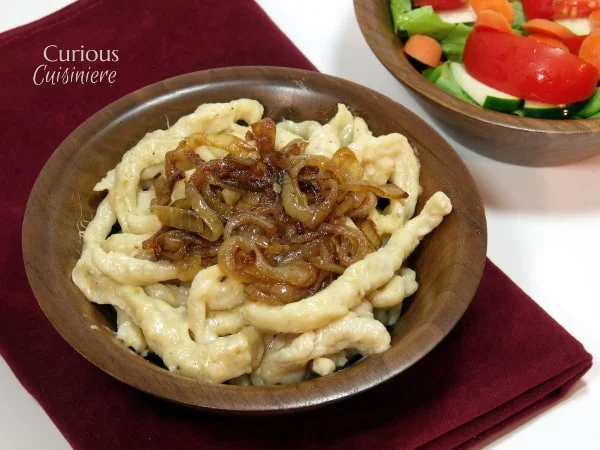
Käsespätzle is a German dish of soft egg noodles coated in melted Swiss cheese and topped with sweet, slowly browned onions. This homemade version uses a simple dough and a pan-finished sauce for a comforting meal.
Ingredients
- 188 g (1½ cups)unbleached plain flour
- 2.5 g (½ tsp)salt
- 0.5 g (¼ tsp)nutmeg
- 0.3 g (⅛ tsp)ground pepper
- 1egg
- 120 ml (½ cup)milk
- 14 g (1 tbsp)salted butter
- 1onion, sliced
- 85 g (3 oz; roughly 1 cup shredded)Swiss cheese, shredded
- 3.8 litres (4 quarts)water, for boiling
- 5 g (1 tsp)salt, for the boiling water
Instructions
- 1
Mix the dry ingredients
In a medium bowl, combine the flour, 2.5 g salt, nutmeg and ground pepper.
- 2
Make the dough
In a separate bowl, beat the egg with the milk. Stir this mixture into the flour mixture until combined; the dough should have a consistency similar to drop-biscuit dough.
- 3
Rest the dough
Cover the bowl and leave the dough to rest on the counter for 30 minutes to 1 hour.
- 4
Cook the onions
While the dough rests, melt the butter in a large non-stick frying pan. When it is hot, add the sliced onion, stir well and cover. Cook over medium-high heat, stirring every 3–5 minutes. Once the onion begins to darken, reduce the heat to just above medium and keep cooking, stirring every 2–4 minutes, until deep golden brown and sweet-smelling, about 15–20 minutes.
- 5
Set aside onions
Transfer the onions to a small bowl for serving, leaving the frying pan ready to use again.
- 6
Boil the water
Near the end of the resting time, bring 3.8 litres of water to a boil in a soup pot. Add 5 g salt once it is boiling.
- 7
Prepare the board
Lightly flour a flat board for shaping the Spätzle; a small wooden cutting board works well.
- 8
Spread the dough
Spread the dough in an even layer over the board and dust the top with flour.
- 9
Shape the Spätzle
Using a knife, spatula or similar flat tool, scrape small strands from the edge of the dough into the boiling salted water. The strands can look rustic, and shaping them may take a little practice.
- 10
Cook the Spätzle
When each strand floats to the surface, lift it out with a slotted spoon and place it in the empty onion pan. Continue until all the Spätzle is cooked and in the pan.
- 11
Warm the noodles
Heat the Spätzle in the frying pan over medium-high heat.
- 12
Melt in the cheese
Add 1 cup of shredded cheese and 60 ml (¼ cup) of the boiling liquid. Mix and heat until the cheese melts and coats the Spätzle.
- 13
Serve with onions
Serve the cheesy Spätzle topped with the reserved onions.
What is Käsespätzle?
Käsespätzle is a German comfort dish made from soft, irregular egg noodles and melted cheese, often finished with browned onions. Spätzle is especially associated with southern German cooking, including Swabia.
This version makes the noodles from a quick, spoonable dough and shapes them by scraping strands into boiling water. Swiss cheese melts into a coating, while the onions bring a sweet, savoury contrast.
Nutrition and macros by portion
The nutrition label shows one serving as written: 210 calories, 9g protein, 27g carbs, 7g fat.
| Portion | Adjustment | kcal | Protein | Carbs | Fat |
|---|---|---|---|---|---|
| Lighter | More vegetables on the side | 147 kcal | 6g | 19g | 5g |
| This serving | As written | 210 kcal | 9g | 27g | 7g |
| Hungry | Larger Spätzle portion | 315 kcal | 13g | 41g | 10g |
The Spätzle dough supplies most of the carbohydrates, while the cheese, egg and milk contribute protein and the butter, cheese and egg supply much of the fat. Pair a serving with a generous side of salad or vegetables for a more balanced plate.
A dough that rests
Flour, egg and milk make a thick dough rather than a firm pasta dough. It should be soft enough to scrape from the board, but not so loose that it pours in a stream.
Resting it for 30 minutes to 1 hour gives the flour time to absorb the liquid and makes the dough easier to handle.
Scraping the noodles
Floured board: spread the dough evenly and dust its surface so the tool can slide across it. Keep the board close to the pot to make the transfer manageable.
Small strands: scrape a little dough at a time into the boiling water. Their shapes need not match; rustic pieces are part of this method.
Getting the onions right
Steady cooking: begin over medium-high heat, stirring every 3–5 minutes, then lower the heat once the onions start to darken. Stir every 2–4 minutes as they finish.
Doneness cue: look for a deep golden-brown colour and a sweet aroma after about 15–20 minutes. Taking them out before finishing the noodles also keeps the pan available for the Spätzle.
When the Spätzle are cooked
The strands are ready when they float to the water's surface. Lift them out with a slotted spoon and let excess water drain briefly before adding them to the frying pan.
Use some of the boiling liquid with the cheese: it helps the melted cheese coat the noodles. Heat and stir just until the cheese has melted.
Cheese and serving
The recipe specifies shredded Swiss cheese for a creamy coating. Grating it finely helps it melt quickly as it warms with the Spätzle and a little cooking liquid.
Serve the dish straight from the pan with the caramelised onions on top. A crisp green salad or simply cooked vegetables make a fresh side alongside its rich, soft texture.
Recipe notes & tips
- Set out the slotted spoon and a bowl for the onions before you start shaping the dough.
- Keep the dough board lightly floured so the strands release more easily.
- Scrape small amounts of dough into the water to keep the strands manageable.
- Stir the onions at the stated intervals, especially after lowering the heat.
- Reserve the boiling liquid before draining away the pot.
- Add the cheese over the heat and stop once it has melted and coated the noodles.
Variations
- Sharper cheese: use a stronger-tasting Swiss cheese for a more pronounced savoury flavour.
- Extra onions: cook another sliced onion in a little more butter and pile it on top.
- Fresh herbs: scatter chopped chives or parsley over the finished dish.
- Peppery finish: add a little extra ground pepper at the table.
- Vegetable side: serve with steamed green vegetables for a lighter contrast.
Common mistakes to avoid
- Dough too loose: check that it resembles thick drop-biscuit dough before resting.
- Onions browning too fast: lower the heat when they begin to darken and stir more often.
- Large dough strands: scrape smaller amounts from the board into the boiling water.
- Noodles sticking together: lift them out as they float and transfer them promptly to the pan.
- Cheese clumping: add the boiling liquid with the cheese and stir as it melts.
- Overcooking the finished dish: take the pan off the heat once the cheese has melted and coated the Spätzle.
How to store
Refrigerate leftovers in a covered container for up to 3 days. Reheat gently in a frying pan with a small splash of water or milk, stirring until warmed through.
Frequently asked questions
How do I know when the Spätzle are cooked?
They are ready when they float to the surface of the boiling water. Lift them out with a slotted spoon.
Can I make the dough ahead?
The recipe calls for resting the covered dough on the counter for 30 minutes to 1 hour. For best texture, shape and cook it after that rest.
What if I do not have a Spätzle maker?
This method uses a flat board and a knife or spatula. Scrape small strands from the board directly into the boiling water.
Why is my cheese not coating the noodles?
Add the specified 60 ml of boiling liquid with the cheese and stir over medium-high heat until the cheese melts. Avoid leaving it to heat without stirring.
Can I use a different cheese?
Yes, another good-melting cheese can be used, though the flavour will differ from the Swiss cheese specified in the recipe.
Can I prepare the onions in advance?
Yes. Cook them until deep golden brown, cool and refrigerate them, then warm them before serving.
Cook it from the original
This recipe comes from curiouscuisiniere.com. Their page has the author’s own photos, notes and tips — the best place to cook it from.
Open the recipe on curiouscuisiniere.com