
Lavash (Armenian Flatbread)
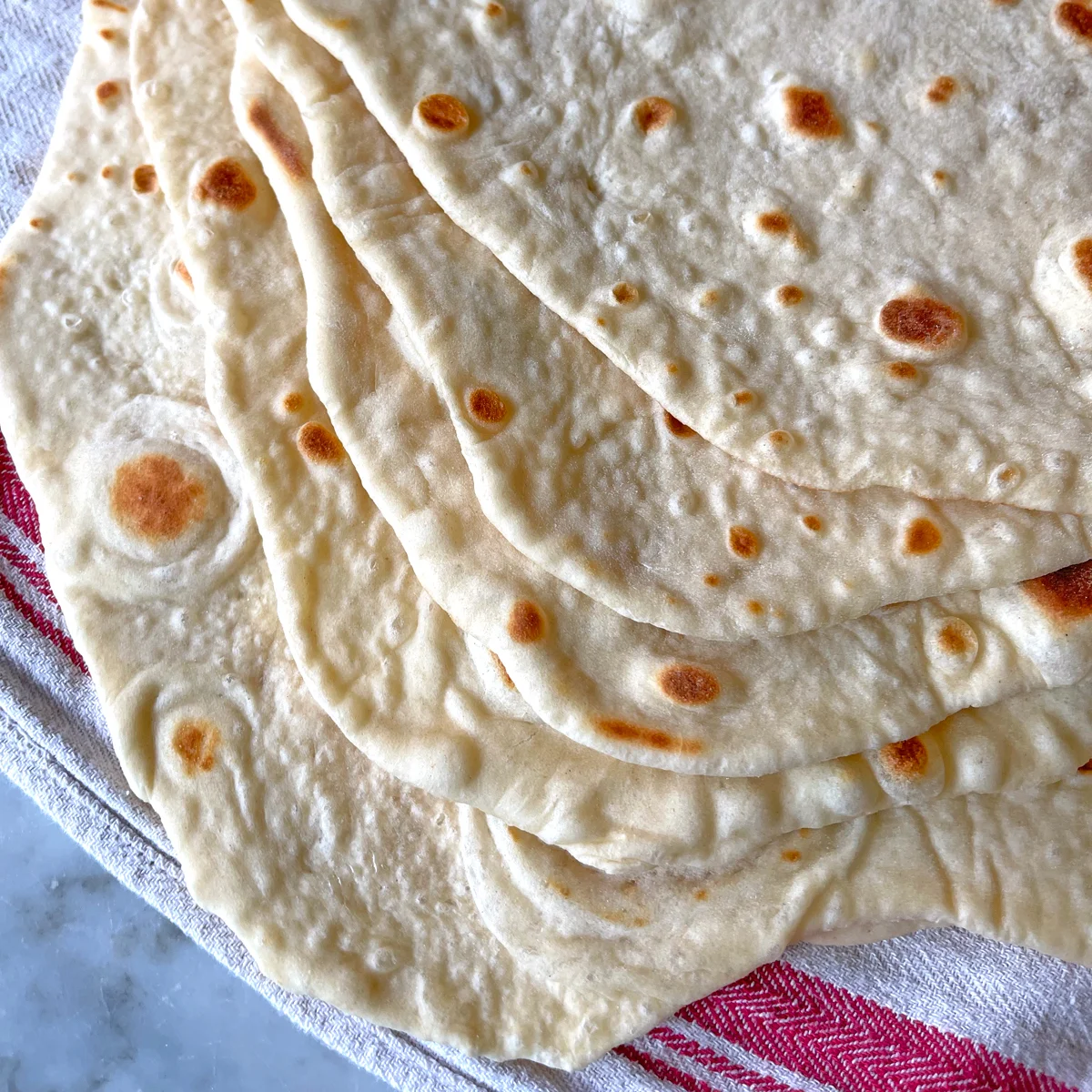
Lavash is a soft, thin Armenian flatbread, cooked quickly on a hot skillet or griddle. Make a batch for wraps and sandwiches, or use it as a base for toppings.
Ingredients
- 180 ml (¾ cup)lukewarm water
- 180 ml (¾ cup)lukewarm milk
- 7 g (2 teaspoons)active dry yeast
- 15 ml (1 tablespoon)olive oil
- 5 ml (1 teaspoon)honey
- 7.5 ml (1½ teaspoons)salt
- 420–480 g (3½–4 cups)plain flour
Instructions
- 1
Mix and rise
Stir the water, milk, yeast, oil and honey together. Leave for 5–10 minutes, until frothy. Meanwhile, put the flour and salt in a stand mixer fitted with a dough hook. Add the yeast mixture and knead on setting 2 until it forms a dough, then knead for 7 minutes. If it feels too wet, add flour as needed. Alternatively, knead by hand until the dough comes together, then knead on a floured surface for 10 minutes. Shape into a ball. Oil the bowl, return the dough to it, lightly oil the dough, cover with cling film and leave somewhere warm for up to an hour, until doubled in size.
- 2
Divide and rest
Punch down the dough and divide it into 12 equal pieces, or 6 pieces for larger wraps if you have an extra-large skillet or griddle. Place them on a lined baking tray, cover with a tea towel and leave to rest for 10–15 minutes.
- 3
Roll and cook
Heat a large non-stick skillet or griddle over a medium heat. On a floured surface, roll one dough ball as thinly as possible. Lightly oil the skillet or griddle, add the dough and cook for about 45–60 seconds, until it bubbles and has brown spots underneath. Flip and cook for another 30–40 seconds. Transfer to a large plate or baking tray and cover with a tea towel to retain moisture. Repeat with the remaining dough, stacking the lavash under the towel. Serve immediately for best results; the texture is best on the day it is made. To store, put the lavash in a zip-lock bag at room temperature for up to 2 days. To freeze, layer with baking parchment and keep in a freezer bag or container for up to 1 month. To serve, spray lightly with water and reheat slowly in the oven.
What is lavash?
Lavash is a thin, flexible flatbread associated with Armenian cuisine and also enjoyed across the Middle East and Mediterranean. Its soft texture makes it easy to fold around fillings or use as a base for toppings.
This version is cooked in a skillet or on a griddle rather than baked in a traditional oven. Milk, though not traditional, gives this dough a softer result.
Nutrition and macros by portion
The nutrition label shows one serving as written: 156 calories, 4g protein, 29g carbs, 2g fat.
| Portion | Adjustment | kcal | Protein | Carbs | Fat |
|---|---|---|---|---|---|
| Lighter | Use a smaller lavash | 109 kcal | 3g | 20g | 1g |
| This serving | As written | 156 kcal | 4g | 29g | 2g |
| Hungry | Make larger wraps | 234 kcal | 6g | 44g | 3g |
The flour supplies most of the carbohydrates, while the milk and flour contribute some protein. Olive oil accounts for much of the fat, with smaller amounts from the milk. Pair a lavash with a protein-rich filling and vegetables for a more balanced meal.
Choosing the dough ingredients
Yeast: the mixture is left until frothy before it is added to the flour, a useful visual cue that it is ready to go into the dough.
Milk and water: lukewarm liquids help bring the dough together without making it too hot for the yeast. The milk contributes to the softer texture of this recipe.
Flour: begin with the lower amount and add more only if the dough is too wet to handle. The exact amount can vary with the flour and how it is measured.
Kneading and rising
Kneading: the stand mixer does the work in 7 minutes, while hand-kneading takes about 10 minutes on a floured surface. Aim for a cohesive dough before leaving it to rise.
First rise: cover the oiled dough and let it rise in a warm place for up to an hour, checking for it to double in size. The dough’s appearance is a more useful cue than the clock alone.
Rolling thinly
Resting: after dividing the dough, leave the pieces covered for 10–15 minutes. This gives them a brief pause before rolling.
Rolling: work with one piece at a time and roll it as thinly as possible on a floured surface. Keeping the remaining pieces covered helps prevent them from drying out while you cook.
Cooking and texture
Heat: use a large skillet or griddle over medium heat and cook the bread in batches. A lightly oiled cooking surface helps the dough make contact with the pan.
Doneness: the first side is ready when bubbles form and brown spots appear underneath, usually after 45–60 seconds. The second side needs another 30–40 seconds; keep the cooked lavash covered with a tea towel so it retains moisture.
Serving and storing
Serving: use the lavash for wraps and sandwiches, or top it as a quick flatbread. It is best served immediately and has its best texture on the day it is made.
Storage: keep leftovers in a zip-lock bag at room temperature for up to 2 days, or freeze them for up to 1 month with baking parchment between the layers. Lightly spray with water and reheat slowly in the oven before serving.
Recipe notes & tips
- Check that the yeast mixture is frothy before combining it with the flour.
- Add extra flour gradually if the dough feels too wet.
- Keep the dough pieces covered while you roll and cook the rest.
- Roll each piece as thinly as you can for flexible flatbreads.
- Stack cooked lavash under a tea towel to help keep it soft.
Variations
- Instant yeast: add it directly to the flour with the liquids and continue with the method.
- Larger wraps: divide the dough into 6 pieces and use an extra-large skillet or griddle.
- Wrap filling: add your preferred sandwich or wrap fillings just before serving.
- Flatbread topping: add toppings to the cooked lavash for a quick flatbread.
- Freeze ahead: separate the lavash with baking parchment before freezing.
Common mistakes to avoid
- Adding too much flour: the dough can become stiff, so add it only as needed if the dough is too wet.
- Skipping the first rise: leave the covered dough in a warm place until it has doubled in size.
- Rolling too thickly: roll each piece as thinly as possible for the intended flatbread texture.
- Cooking over excessive heat: use medium heat and watch for bubbles and brown spots before flipping.
- Leaving cooked bread uncovered: stack the lavash under a tea towel to help it retain moisture.
How to store
Keep lavash in a zip-lock bag at room temperature for up to 2 days, or freeze it for up to 1 month with baking parchment between the layers. To serve, spray lightly with water and reheat slowly in the oven.
Frequently asked questions
Can I use instant yeast?
Yes. Add it directly to the flour with the liquids, then continue with the method.
Can I make the dough by hand?
Yes. Knead until the dough comes together, then continue kneading on a floured surface for 10 minutes.
How do I know when to flip the lavash?
Flip it when bubbles appear and brown spots have formed underneath, usually after about 45–60 seconds.
Can I make larger lavash?
Yes. Divide the dough into 6 pieces instead of 12, provided you have an extra-large skillet or griddle.
How should I reheat stored lavash?
Spray it lightly with water and reheat it slowly in the oven.
Can I freeze lavash?
Yes. Layer it with baking parchment and store it in a freezer bag or container for up to 1 month.
Cook it from the original
This recipe comes from daringgourmet.com. Their page has the author’s own photos, notes and tips — the best place to cook it from.
Open the recipe on daringgourmet.com