
Honey Glazed Ham
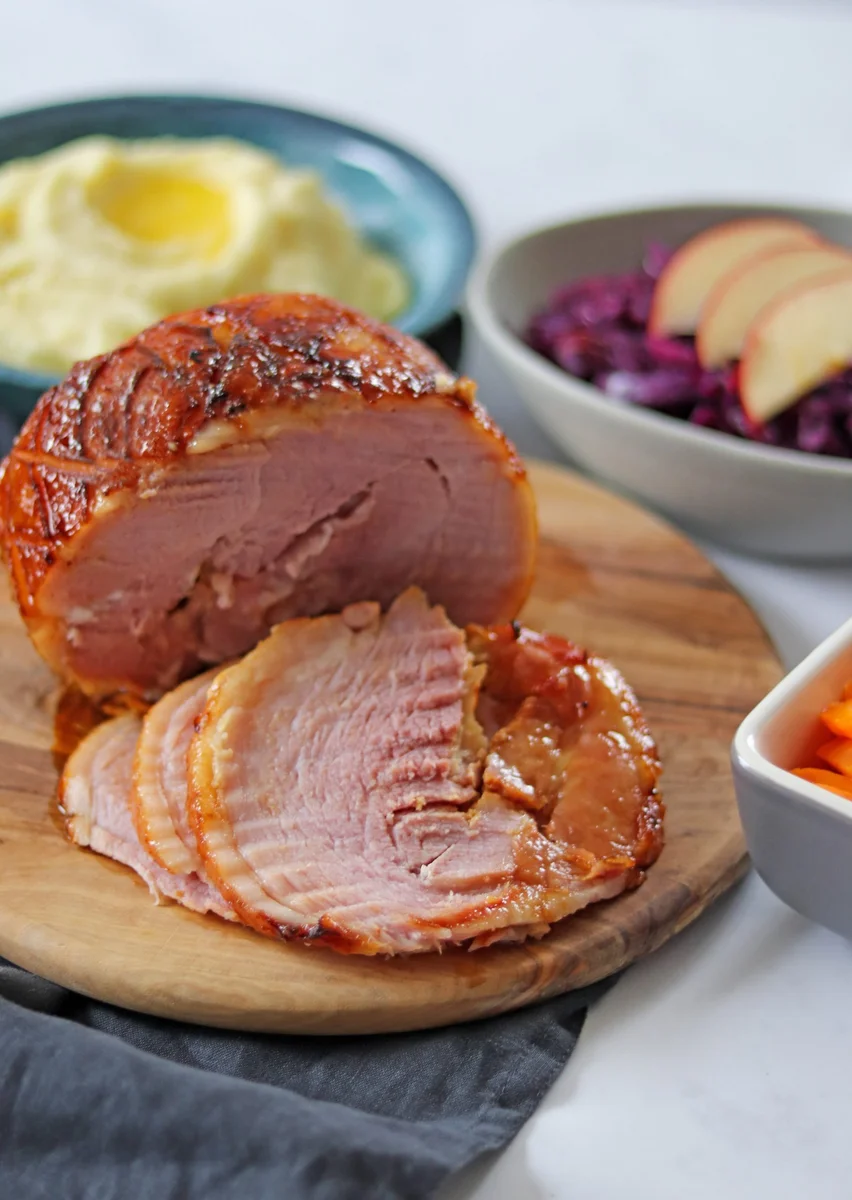
This British-style honey glazed ham has a tender smoked gammon centre and a sweet, crisp coating. It makes a centrepiece for a meal or a useful joint to carve for leftovers.
Ingredients
- 1.5 kgsmoked boneless ham joint
- 50 gdemerara sugar
- 70 gclear honey
Instructions
- 1
Cover the ham
Unwrap the ham joint, set it in a disposable foil tray and cover it with foil. Cook it for 30 minutes less than the time given on the packet, at the temperature specified there—usually around 180°C fan-assisted or 200°C without a fan.
- 2
Remove the foil
When 30 minutes remain on the ham's cooking time, take it out of the oven and discard the foil.
- 3
Score the fat
Cut away the rind and most of the fat, leaving a couple of millimetres. Score the remaining fat diagonally in one direction, then across it in the other direction.
- 4
Add the glaze
Mix the demerara sugar and honey in a bowl, then pour the mixture over the ham's fat. Return the joint to the oven uncovered for the final 30 minutes of cooking.
- 5
Rest and carve
Remove the ham from the oven and leave it to rest for a few minutes, loosely covered with foil, before carving.
What is honey glazed ham?
Ham is cured pork, and in Britain a smoked gammon joint is often cooked as a roast or served cold in slices. A honey glaze adds a sweet, glossy finish to the savoury meat.
This version keeps the ingredients simple: honey and demerara sugar coat the scored fat while the joint finishes cooking. The short rest helps the ham settle before carving.
Nutrition and macros by portion
The nutrition label shows one serving as written: 472 calories, 0g protein, 17g carbs, 0g fat.
| Portion | Adjustment | kcal | Protein | Carbs | Fat |
|---|---|---|---|---|---|
| Lighter | Smaller ham portion | 330 kcal | 0g | 12g | 0g |
| This serving | As written | 472 kcal | 0g | 17g | 0g |
| Hungry | Larger ham portion | 708 kcal | 0g | 26g | 0g |
The honey and demerara sugar provide most of the carbohydrates, while the ham supplies the protein and some of the fat. Add vegetables to the plate and choose a portion of potatoes to suit how substantial you want the meal to be.
Choosing the joint
Smoked gammon: Use a boneless joint as specified, and check its packet for the recommended cooking time and temperature. Joint sizes and instructions can vary, so use the packet timing as your guide.
Preparing the glaze
Honey and sugar: Stir them together before pouring the mixture over the ham. This makes it easier to distribute the sweet coating across the exposed fat.
Scoring: Leave only a couple of millimetres of fat, then make diagonal cuts in both directions. Keep the cuts in the fat rather than slicing deeply into the meat.
Getting the finish right
Uncovered final cook: Removing the foil for the last 30 minutes exposes the glaze to the oven's heat. Keep to the stated timing and use the joint's packet instructions for the overall cooking time.
Resting: Let the ham stand loosely covered for a few minutes before carving. Slice across the joint into portions once it has rested.
Timing the two stages
First stage: Cook the covered joint until 30 minutes before the packet's stated cooking time is complete. The recipe gives about 180°C in a fan-assisted oven or 200°C in a conventional oven as typical temperatures.
Glazing stage: Remove the rind and most of the fat when those final 30 minutes begin, then return the joint uncovered with the glaze in place.
What to serve with it
Serve slices with roast potatoes and vegetables for a substantial meal, or pair them with a crisp salad for a lighter plate. The sweet glaze also works alongside sharp or tangy accompaniments.
Recipe notes & tips
- Check the packet for the cooking time and temperature before starting.
- Set the foil tray on a sturdy baking sheet if it feels difficult to handle.
- Leave a thin layer of fat so there is a surface for the glaze.
- Score the fat carefully without cutting deeply into the meat.
- Loosely cover the ham while it rests so it is not tightly wrapped.
Variations
- Mustard edge: Stir a little mustard into the honey and sugar for a sharper glaze.
- Citrus note: Add finely grated orange zest to the glaze for a fragrant variation.
- Clove finish: Press a few cloves into the scored fat before glazing for a warming aroma.
- Peppery glaze: Add freshly ground black pepper to balance the sweetness.
- Serve cold: Chill the cooked joint and carve it thinly for sandwiches or a cold platter.
Common mistakes to avoid
- Ignoring the packet timing: Cooking instructions differ between joints, so use the label to calculate when the final 30 minutes begin.
- Removing too much fat: Leave a couple of millimetres as directed so the glaze has a surface to coat.
- Scoring into the meat: Keep the cuts within the fat to avoid slicing deeply into the joint.
- Glazing under foil: Remove the foil for the final 30 minutes so the glaze is exposed to the oven.
- Carving straight away: Rest the ham loosely covered for a few minutes before slicing.
How to store
Refrigerate leftover ham in a covered container once cool, and use within 3–4 days. Reheat slices until piping hot, or serve them cold; avoid repeatedly reheating the joint.
Frequently asked questions
Should I follow the cooking time on the packet?
Yes. The recipe says to cook the joint for 30 minutes less than the packet's stated time before starting the uncovered glazing stage.
What oven temperature should I use?
Use the temperature specified on the ham's packet. The recipe gives around 180°C for a fan-assisted oven or 200°C for a conventional oven as a usual guide.
Do I remove all the fat before glazing?
No. Cut off the rind and most of the fat, leaving a couple of millimetres to score and cover with the glaze.
Can I prepare the glaze ahead?
You can mix the honey and demerara sugar shortly before the ham's final 30 minutes. Pour it over the scored fat when you are ready to return the joint to the oven.
How long should the ham rest?
The recipe calls for a few minutes, loosely covered with foil, before carving.
Can I serve the ham cold?
Yes. Cool and refrigerate leftovers promptly, then carve them cold for sandwiches or a platter.
Cook it from the original
This recipe comes from curlyscooking.co.uk. Their page has the author’s own photos, notes and tips — the best place to cook it from.
Open the recipe on curlyscooking.co.uk