
Coconut Butterscotch Cookies
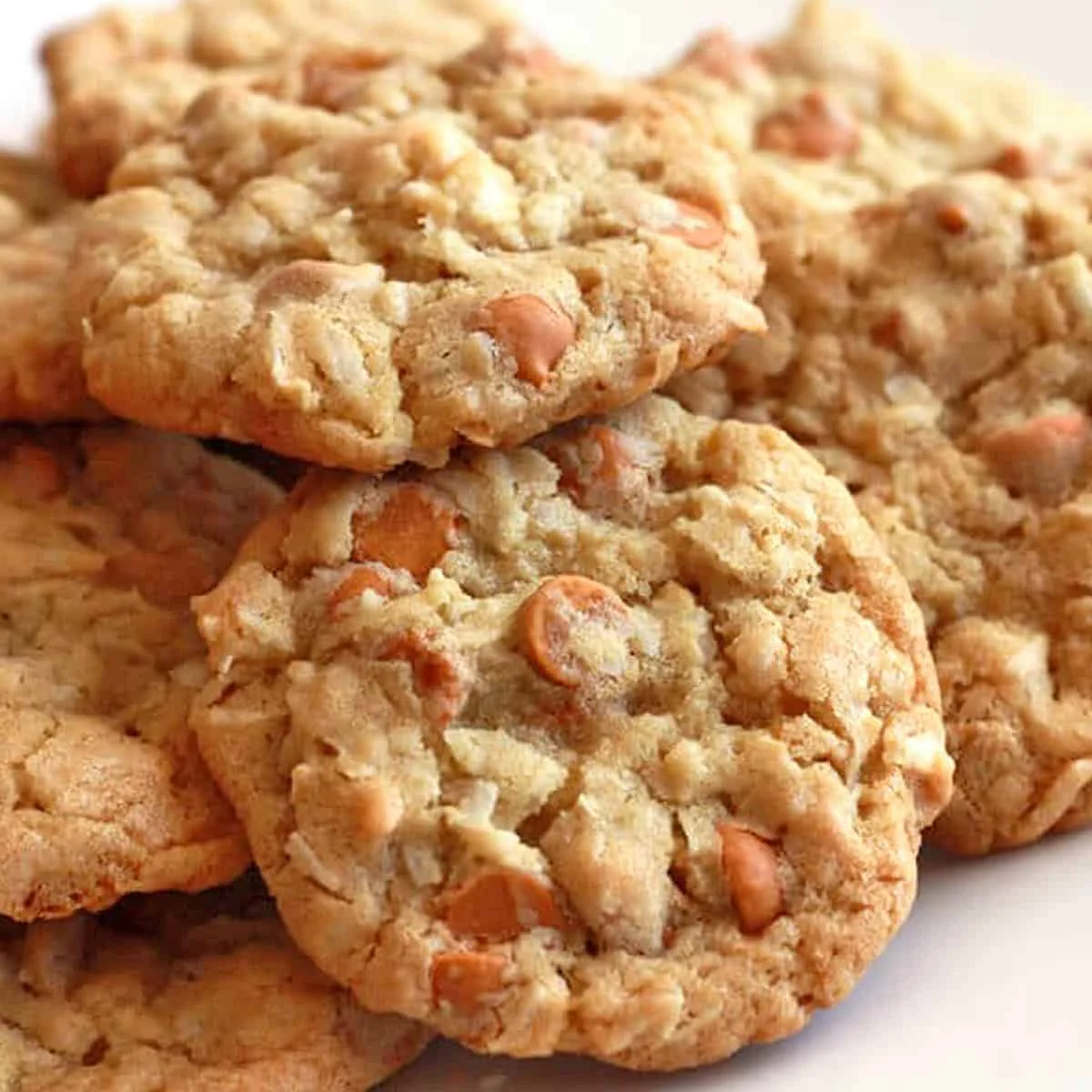
These soft-centred coconut butterscotch cookies have crisp, golden edges and plenty of sweet chips in every bite. They come together quickly, making them a handy bake for sharing or keeping in the biscuit tin.
Ingredients
- 188 g (1 1/2 cups)plain flour
- 2.5 ml (1/2 teaspoon)baking powder
- 2.5 ml (1/2 teaspoon)bicarbonate of soda
- 2.5 ml (1/2 teaspoon)salt
- 113 g (1/2 cup)unsalted butter, softened
- 100 g (1/2 cup)white sugar
- 110 g (1/2 cup), firmly packedsoft brown sugar
- 1 largeegg
- 5 ml (1 teaspoon)vanilla extract
- 120 g (1 1/2 cups)sweetened dried coconut flakes
- 255 g (1 1/2 cups)butterscotch chips
Instructions
- 1
Preheat the oven
Heat the oven to 163°C (325°F).
- 2
Mix the dough
Sift the flour, baking powder, bicarbonate of soda and salt into a small bowl. In a large bowl, beat the softened butter with an electric mixer on high speed until pale and fluffy. Add both sugars and keep beating until the mixture no longer feels gritty when rubbed between your finger and thumb. Beat in the egg and vanilla on low speed until combined. Add the flour mixture and stir with a wooden spoon just until blended; do not overmix. Fold in the coconut flakes and butterscotch chips until evenly distributed.
- 3
Bake the cookies
Drop rounded tablespoonfuls of dough onto a lined or non-stick baking sheet, leaving about 5 cm (2 inches) between them. Bake for about 15 minutes, until golden around the edges. Leave the cookies on the baking sheet briefly, then transfer them to a wire rack to cool completely. Repeat with the remaining dough.
What are coconut butterscotch cookies?
These are American-style drop cookies, made by spooning soft dough onto a baking sheet rather than rolling or shaping it. Coconut flakes add a chewy texture, while butterscotch chips bring concentrated sweetness and a buttery flavour.
This version relies on creamed butter and sugar for a light, tender base, with a short bake that leaves the centres softer than the edges.
Nutrition and macros by portion
The nutrition label shows one serving as written: 108 calories, 1g protein, 18g carbs, 4g fat.
| Portion | Adjustment | kcal | Protein | Carbs | Fat |
|---|---|---|---|---|---|
| Lighter | Use fewer butterscotch chips | 76 kcal | 1g | 13g | 3g |
| This serving | As written | 108 kcal | 1g | 18g | 4g |
| Hungry | Serve a larger portion | 162 kcal | 2g | 27g | 6g |
The flour and sugars provide most of the carbohydrates, while butter and butterscotch chips contribute much of the fat. The egg adds a little protein, though each cookie has only a small amount. Pair one or two with plain yoghurt or fruit for a more rounded snack.
Why the coconut and chips matter
Coconut flakes: sweetened dried flakes add chew and a little texture to the dough. Fold them in gently so they are spread through the cookies rather than clumped together.
Butterscotch chips: their sweetness is a strong part of the flavour, so the dough is not just a plain cookie base with extra mix-ins. Stir them in at the end to keep them intact.
Cream the butter and sugar well
Softened butter should give slightly when pressed but should not be oily or melted. Beating it until pale and fluffy helps create an even dough.
The recipe also gives a useful check for the sugars: rub a little mixture between your finger and thumb. Continue beating until it no longer feels gritty before adding the egg.
Stop mixing once combined
Once the flour goes in, use a wooden spoon and stir only until no dry patches remain. Overworking the dough can make the baked cookies less tender.
Fold in the coconut and chips just enough to distribute them. The dough should hold together without being worked into a smooth, elastic mass.
Watch the edges for doneness
The stated bake time is about 15 minutes at 163°C (325°F), but the visual cue is more useful than the clock: look for golden-brown edges. The centres may still appear soft when the tray comes out.
Let the cookies rest briefly on the baking sheet before moving them. This gives them a chance to firm up enough to transfer without breaking.
Space the dough and bake in batches
Leave about 5 cm (2 inches) between rounded tablespoonfuls so the cookies have room to spread. If the tray is crowded, bake fewer at a time.
Repeat with the remaining dough after the first batch. Cooling the baked cookies on a wire rack helps prevent the bottoms from staying damp against the warm tray.
What to serve with them
Serve the cookies with tea, coffee or a glass of milk. Their sweet butterscotch flavour also pairs well with unsweetened drinks.
For a simple dessert, offer one alongside fresh fruit or a scoop of plain yoghurt. Those additions provide a less-sweet contrast to the cookies.
Recipe notes & tips
- Soften the butter before mixing so it creams smoothly with the sugars.
- Use a measuring spoon for evenly sized rounded tablespoonfuls.
- Keep the cookies about 5 cm apart to allow for spreading.
- Check for golden edges rather than waiting for the centres to look firm.
- Let each batch cool briefly on the baking sheet before moving it.
Variations
- Toasted coconut: lightly toast the flakes and cool them before adding for a deeper coconut flavour.
- Dark chocolate: replace some of the butterscotch chips with dark chocolate chips for a less-sweet contrast.
- Chopped nuts: fold in a small handful of chopped pecans or walnuts for extra crunch.
- Citrus note: add a little finely grated orange zest to the butter and sugar mixture.
- Smaller cookies: use smaller spoonfuls and start checking them earlier, as they will bake more quickly.
Common mistakes to avoid
- Butter too warm: melted or oily butter will not cream properly; use softened butter that still holds its shape.
- Overbeating after adding flour: this can make the cookies less tender; stop as soon as the dry ingredients are incorporated.
- Crowded baking sheet: cookies may spread into one another; leave about 5 cm between portions.
- Overbaking: the centres can become dry; take the tray out when the edges are golden.
- Moving them too soon: warm cookies are fragile; let them rest briefly on the tray before transferring.
How to store
Once completely cool, keep the cookies in an airtight container at room temperature for up to 4 days. Rewarm briefly in a low oven if you would like them slightly warm again.
Frequently asked questions
Can I make the dough ahead?
Yes. Cover the dough and refrigerate it until you are ready to bake. If it becomes firm, let it sit briefly at room temperature so it is easier to scoop.
How do I know when the cookies are done?
Look for golden-brown edges after about 15 minutes. The centres can still look soft when the cookies come out of the oven.
Can I use unsweetened coconut?
The recipe specifies sweetened dried coconut flakes. Unsweetened flakes will make the cookies less sweet and may give them a slightly different texture.
Why did my cookies spread too much?
Butter that is too warm can contribute to excessive spreading. Make sure it is softened but not melted, and avoid placing dough on a hot baking sheet.
Can I freeze the baked cookies?
Yes. Freeze the cooled cookies in a sealed container, with baking paper between layers if needed. Defrost them at room temperature before serving.
Cook it from the original
This recipe comes from daringgourmet.com. Their page has the author’s own photos, notes and tips — the best place to cook it from.
Open the recipe on daringgourmet.com