
Gomen (Ethiopian Collard Greens)
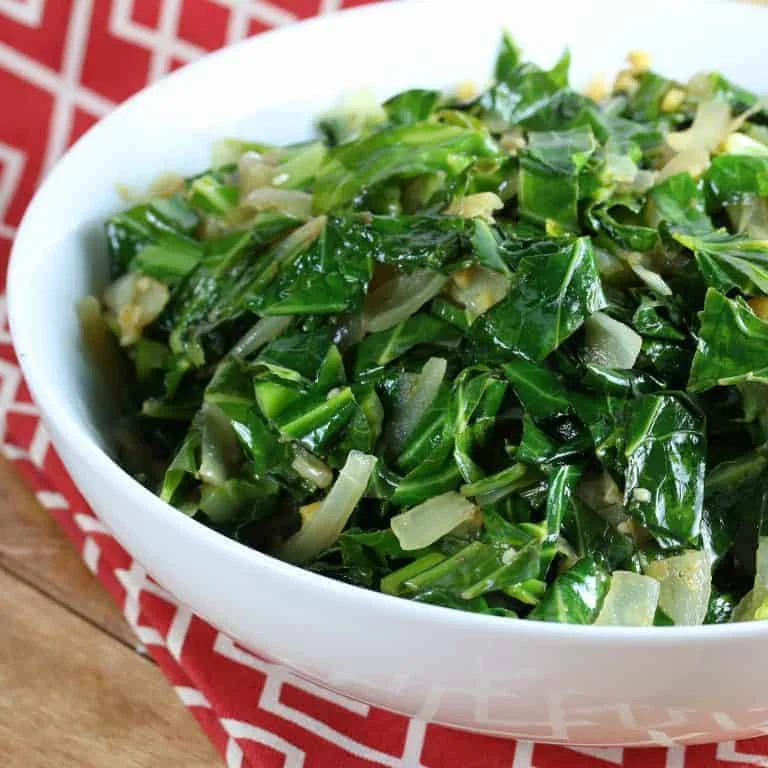
Gomen is an Ethiopian-style side of collard greens cooked with onion, garlic, ginger and warm spices in niter kibbeh. It comes together quickly and makes a savoury, gently spiced accompaniment to a larger meal.
Ingredients
- 3 tablespoons (45 ml), plus 1 tablespoon (15 ml) laterniter kibbeh
- 1 largeyellow onion, halved and thinly sliced
- 2 clovesgarlic, minced
- 1½ teaspoonsfresh ginger, finely minced
- 1 teaspoonground cumin
- 1 teaspoonground coriander
- ½ teaspoonsalt
- 1 bunch (about 340 g)collard greens, washed, thick stems removed and roughly chopped (or kale)
Instructions
- 1
Heat the niter kibbeh
Warm the niter kibbeh in a pan over medium-high heat.
- 2
Soften the onion
Add the sliced onion and cook for 5–7 minutes, until soft and translucent.
- 3
Cook the aromatics
Stir in the garlic, ginger, cumin and coriander, then cook for another 2–3 minutes.
- 4
Wilt the greens
Add the collard greens and the additional tablespoon of niter kibbeh. Cook for 5–7 minutes, until bright green and wilted but still slightly crisp.
- 5
Adjust the seasoning
Taste and add more spices and/or niter kibbeh as desired.
What is gomen?
Gomen is an Ethiopian greens dish, often made with collards, onion and seasonings. This version builds flavour with niter kibbeh, a spiced clarified butter used in Ethiopian cooking.
The greens cook just long enough to soften while keeping a little bite, making this a quick side that pairs well with a range of Ethiopian-inspired dishes.
Nutrition and macros by portion
The nutrition label shows one serving as written: 115 calories, 0g protein, 3g carbs, 11g fat.
| Portion | Adjustment | kcal | Protein | Carbs | Fat |
|---|---|---|---|---|---|
| Lighter | Use less niter kibbeh | 81 kcal | 0g | 2g | 8g |
| This serving | As written | 115 kcal | 0g | 3g | 11g |
| Hungry | Serve with a grain | 173 kcal | 0g | 5g | 17g |
The recipe's stated per-serving nutrition is 115 kcal, with 11 g fat and 3 g carbohydrate; its listed protein is 0 g. Niter kibbeh is the main fat source, while the collards and onion contribute most of the vegetables and carbohydrate. Balance the plate with a protein-rich accompaniment and a plain grain or other filling side.
The flavour base
Niter kibbeh: its buttery richness carries the cumin, coriander and aromatics through the greens. The recipe uses some at the beginning and reserves a spoonful for cooking the collards.
Aromatics: thinly sliced onion softens first, followed by garlic and fresh ginger. This order gives the onion time to become tender without leaving the garlic and ginger in the pan for the entire cooking time.
Preparing the greens
Trim the stems: remove the thick stems before chopping, as they take longer to soften than the leaves.
Wash and chop: rinse the collards well and roughly chop them so they are manageable in the pan. Kale can be used instead, as the recipe suggests.
Keeping a little bite
Watch the colour: the collards should turn bright green and wilt during their 5–7 minutes in the pan. Stop cooking while they still have a slightly crisp texture.
Avoid cooking them far beyond that point, which can make the leaves overly soft. If your pan is small, add the greens in batches so they can be stirred and heated evenly.
Timing and seasoning
The onion needs 5–7 minutes, the garlic, ginger and spices another 2–3 minutes, and the greens 5–7 minutes. Have the greens washed, stems removed and chopped before you start, so they are ready to add.
Final adjustment: taste the dish at the end and add more spices or niter kibbeh to suit your preference. The method does not specify extra amounts, so add them gradually.
Serving gomen
Serve the greens warm alongside other dishes, or as part of a larger Ethiopian-inspired spread. Their savoury, spiced flavour works well with mild grains or beans.
For a more substantial plate, pair them with a protein-rich dish and a plain grain; the greens can then bring flavour and a contrasting texture to the meal.
Recipe notes & tips
- Remove the thick collard stems before chopping the leaves.
- Slice the onion thinly so it softens evenly in the pan.
- Measure out the extra tablespoon of niter kibbeh before you begin.
- Keep the heat at medium-high as the recipe directs, and stir the aromatics so they cook evenly.
- Taste at the end before adding extra spices or niter kibbeh.
Variations
- Use kale: swap it for the collards as suggested in the ingredient list.
- Adjust the spice: add extra cumin or coriander to taste at the end.
- Change the heat: add a little chilli if you would like a spicier version.
- Serve with grains: pair the greens with rice or another plain grain for a more filling plate.
Common mistakes to avoid
- Leaving thick stems in: they soften more slowly; remove them before chopping the leaves.
- Adding the garlic too early: it can cook longer than intended; add it with the ginger and spices after the onion softens.
- Overcooking the greens: they may lose their slight bite; stop when wilted and bright green.
- Seasoning without tasting: the final balance can vary; taste before adding extra spices or niter kibbeh.
- Crowding a small pan: the greens can be harder to stir evenly; add them in batches if needed.
How to store
Refrigerate leftovers in a covered container and eat within 3 days. Reheat gently in a pan until hot, stirring so the greens warm evenly.
Frequently asked questions
Can I use kale instead of collard greens?
Yes. Kale is listed as an alternative; remove any tough stems and roughly chop it before cooking.
What is niter kibbeh?
It is spiced clarified butter used in Ethiopian cooking. It gives this dish its buttery base and carries the flavour of the spices.
How do I know when the collards are done?
They should be bright green and wilted, with a little crispness remaining. The recipe gives a cooking time of 5–7 minutes.
Can I prepare the greens ahead?
You can wash, stem and chop them ahead, then refrigerate them until you are ready to cook. Cook them shortly before serving for the best texture.
What can I serve with gomen?
Serve it as a side with a grain, beans or a protein-rich main. It also fits well into a spread of Ethiopian-inspired dishes.
Cook it from the original
This recipe comes from daringgourmet.com. Their page has the author’s own photos, notes and tips — the best place to cook it from.
Open the recipe on daringgourmet.com