
Ravioli Lasagne
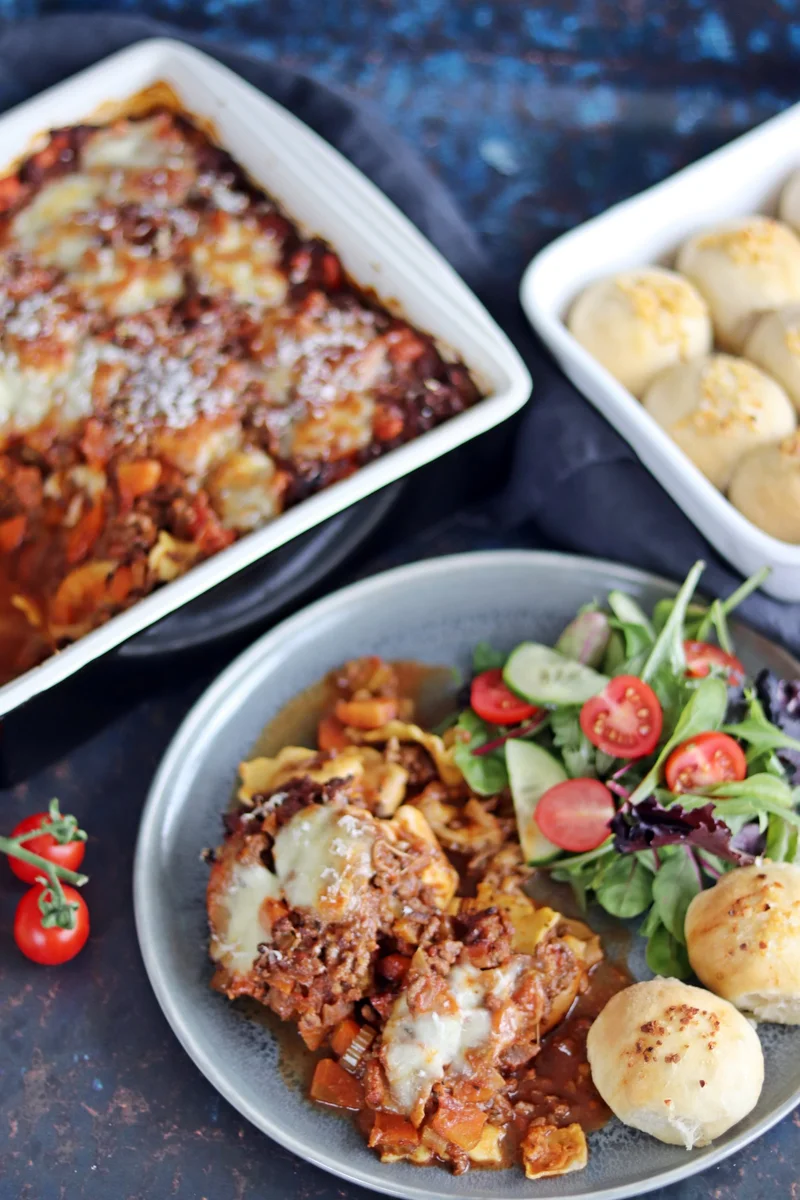
Ravioli lasagne layers filled pasta with a savoury beef, tomato and vegetable sauce, then bakes it under melted mozzarella and Parmesan. It brings familiar lasagne flavours to the table without needing to assemble separate sheets of pasta and sauce.
Ingredients
- 500 glean beef mince (5% fat)
- 1onion, diced
- 3 clovesgarlic, minced
- 300 gcarrots, diced
- 2 stickscelery, diced
- 2 tbsptomato purée
- 1 tbspWorcestershire sauce
- 1/2 tspmustard powder
- 1/2 tspdried thyme
- 1/2 tspdried oregano
- 1/2 tsprosemary, chopped
- 1/2 tsppepper
- 1 1/2 tspsalt
- 1bay leaf
- 1 tinplum tomatoes
- 2Oxo beef stock cubes
- 700 mlwater
- 1/2 tspolive oil
- 400 gravioli
- 420 glow-fat mozzarella
- 40 gParmesan
- to tasteParmesan rind (optional)
Instructions
- 1
Soften the aromatics
Set a pan over a medium heat and add the oil. Once hot, add the onion and garlic and cook for a couple of minutes, until the onion begins to soften and turn translucent without browning.
- 2
Brown the mince
Add the mince and break it up with a wooden spoon. Stir until all the meat is browned.
- 3
Season the mixture
Stir in the celery and carrot, then add the tomato purée. Mix in the herbs, Worcestershire sauce, mustard powder, salt and pepper.
- 4
Add the tomatoes
Tip in the tinned tomatoes. Fill the empty tin with water from a recently boiled kettle, taking care because the tin will be hot, then pour it into the pan and stir.
- 5
Simmer the sauce
Crumble in the Oxo cubes and add the Parmesan rind, if using. Simmer for at least 20 minutes, stirring occasionally. You can keep it on a low heat for a few hours; add more water if it starts to look dry.
- 6
Check the consistency
Let the liquid reduce until it coats the meat without leaving the mixture too wet. Too much liquid can make the baked lasagne watery.
- 7
Heat the oven
Preheat the oven to 180°C fan or 200°C conventional while you assemble the lasagne.
- 8
Remove whole pieces
Take out the bay leaf and the Parmesan rind, if you used it.
- 9
Layer the ravioli
In a large ovenproof dish, roughly 23 × 23 × 5 cm, arrange half of the ravioli across the base.
- 10
Add the meat sauce
Cover the ravioli with half of the meat mixture.
- 11
Finish the layers
Sprinkle half of the mozzarella and Parmesan over the meat and pasta. Repeat the layers with the remaining ravioli, meat mixture and cheeses.
- 12
Bake until melted
Bake for 20 minutes, until the cheese has melted.
What is ravioli lasagne?
Lasagne is an Italian baked pasta dish, usually made with layers of pasta, sauce and cheese. This version uses ravioli in place of flat pasta sheets, so the pasta brings its own filling to every layer.
Beef, tomatoes, vegetables and herbs make a hearty sauce, while mozzarella and Parmesan melt over the top. Using ready-made ravioli makes the layering straightforward while keeping the feel of a baked pasta supper.
Nutrition and macros by portion
The nutrition label shows one serving as written: 898 calories, 72g protein, 57g carbs, 38g fat.
| Portion | Adjustment | kcal | Protein | Carbs | Fat |
|---|---|---|---|---|---|
| Lighter | Use less mozzarella | 629 kcal | 50g | 40g | 27g |
| This serving | As written | 898 kcal | 72g | 57g | 38g |
| Hungry | Serve a larger portion | 1347 kcal | 108g | 86g | 57g |
The ravioli and carrots provide most of the carbohydrates, while the mince and cheeses contribute much of the protein. Fat comes mainly from the beef and mozzarella, with a smaller amount from the olive oil and Parmesan. Pair a portion with green vegetables or salad to add freshness to the plate.
Build flavour in the sauce
Aromatics: Cook the onion and garlic gently until the onion softens and turns translucent. Keep the heat moderate so they soften rather than brown.
Vegetables and seasoning: Carrot and celery add substance to the mince, while tomato purée, herbs, mustard powder and Worcestershire sauce deepen the savoury flavour. Stir the purée into the vegetables before adding the liquid.
Get the sauce consistency right
Simmering: Give the sauce at least 20 minutes on the hob so it can reduce and the flavours can mingle. Stir now and then, and add a little more water if the pan begins to look dry during a longer simmer.
Doneness cue: The finished meat mixture should coat the meat rather than pool around it. This matters because the lasagne will bake with the ravioli and cheese, and an overly loose sauce can leave the dish watery.
Layer the ravioli evenly
First layer: Spread half the ravioli over the base of the ovenproof dish, then cover it with half the meat mixture. Aim to distribute both across the dish so each portion gets a balanced mix.
Top layer: Add half the cheeses, then repeat with the remaining ingredients. A roughly 23 × 23 × 5 cm dish is specified for the layers.
Use the cheeses thoughtfully
Mozzarella: Dividing it between the layers helps the cheese melt through the dish as well as over the top. Low-fat mozzarella is the variety used here.
Parmesan: Its savoury flavour complements the beef sauce, and a Parmesan rind can be simmered in the sauce for extra depth. Remove the rind before assembling the dish.
Allow for the cooking stages
Hob time: The sauce needs a minimum of 20 minutes to simmer, with occasional stirring. It can cook longer on low heat, but keep an eye on how much liquid remains.
Oven time: Bake the assembled layers for 20 minutes at 180°C fan or 200°C conventional. The recipe's total time is 60 minutes, so prepare the vegetables and other ingredients while the sauce cooks.
Serve it as a complete meal
The beef, ravioli and melted cheese make this a substantial main course. Serve it with a crisp green salad or simply cooked green vegetables for freshness alongside the rich, savoury layers.
Let portions settle briefly after baking so the layers are easier to serve neatly. Take care when serving, as the dish will be hot throughout.
Recipe notes & tips
- Dice the carrot, celery and onion evenly so they cook at a similar pace.
- Break the mince into small pieces as it browns to help it mix evenly into the sauce.
- Simmer the sauce until it coats the meat before assembling the dish.
- Remove the bay leaf and Parmesan rind before layering.
- Spread the ravioli and meat mixture evenly so the layers cover the dish.
- Check that the oven is at the specified temperature before baking.
Variations
- Use another ravioli filling: Choose a variety you enjoy while keeping the layering method the same.
- Add extra vegetables: Stir diced vegetables into the sauce and simmer until they are tender.
- Make it herbier: Adjust the dried herbs to suit your taste.
- Skip the rind: Leave out the optional Parmesan rind and make the sauce as directed.
- Serve with greens: Add a salad or green vegetables on the side for a fresh contrast.
Common mistakes to avoid
- Browning the onion: Keep the heat at medium and cook only until it softens and turns translucent.
- Leaving large mince clumps: Break the mince apart with a wooden spoon as it browns.
- Using a watery sauce: Simmer until it coats the meat before building the layers.
- Letting the sauce dry out: Stir occasionally during a longer simmer and add more water if needed.
- Forgetting the bay leaf: Remove it, along with any Parmesan rind, before assembling.
- Baking for too long: Use the 20-minute bake as the guide and look for melted cheese.
How to store
Cool leftovers promptly, cover and refrigerate for up to 3 days. Reheat portions until piping hot throughout, in the oven or microwave; avoid reheating the same portion more than once.
Frequently asked questions
Can I make the sauce ahead?
Yes. Cook the sauce in advance, cool it and refrigerate it, then assemble the layers when you are ready to bake. Remove the bay leaf and Parmesan rind before using it.
Does the ravioli need to be cooked first?
The method layers the ravioli directly into the dish and does not call for cooking it beforehand. Follow the ravioli packet guidance if it specifies otherwise.
Can I simmer the sauce for longer?
Yes, the method allows it to simmer on low for a few hours. Stir occasionally and add more water if it begins to look dry.
How do I stop the lasagne being watery?
Reduce the sauce until it coats the meat without excess liquid before layering. This helps prevent the finished dish from becoming too wet.
What temperature should the oven be?
Use 180°C for a fan oven or 200°C for a conventional oven, then bake the assembled dish for 20 minutes.
Cook it from the original
This recipe comes from curlyscooking.co.uk. Their page has the author’s own photos, notes and tips — the best place to cook it from.
Open the recipe on curlyscooking.co.uk