
Roasted New Potatoes
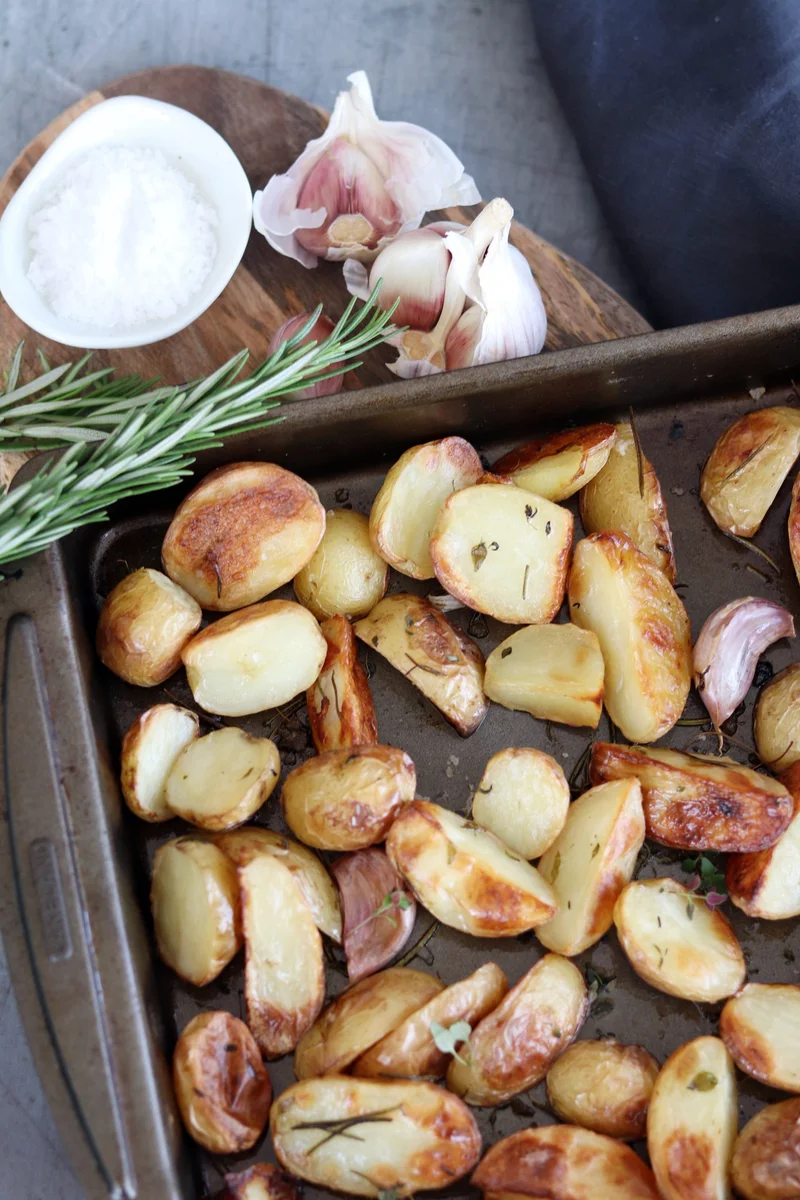
These British-style roasted new potatoes have crisp skins, fluffy centres and a savoury finish from rosemary, thyme and garlic. They make a straightforward side for a roast or a weeknight meal.
Ingredients
- 500 gnew potatoes
- 1 tbspolive oil
- 1 1/2 tspsea salt
- 2 sprigsfresh rosemary
- 4 sprigsfresh thyme
- 3 clovesgarlic
Instructions
- 1
Preheat and wash
Heat the oven to 180°C fan-assisted or 200°C without a fan. Wash the potatoes thoroughly and remove any black spots or eyes.
- 2
Size the potatoes
Cut any large potatoes in half so the pieces are roughly the same size.
- 3
Coat with oil
Put the potatoes in a roasting tin, drizzle over the olive oil and toss until coated.
- 4
Add herbs and salt
Sprinkle the potatoes with the salt, then add the rosemary and thyme sprigs and garlic cloves.
- 5
Roast until tender
Roast for 45–50 minutes, turning the potatoes halfway through. Remove the herb stalks before serving.
What are roasted new potatoes?
Roasted new potatoes are a simple British-style side: small, young potatoes cooked in the oven until tender inside and browned on the outside. They are a familiar choice alongside roast dinners and other hearty meals.
This version keeps the potatoes whole where possible and uses rosemary, thyme and garlic for a fragrant finish. The short ingredient list lets the flavour of the potatoes remain central.
Nutrition and macros by portion
The nutrition label shows one serving as written: 132 calories, 3g protein, 23g carbs, 4g fat.
| Portion | Adjustment | kcal | Protein | Carbs | Fat |
|---|---|---|---|---|---|
| Lighter | Use less olive oil | 92 kcal | 2g | 16g | 3g |
| This serving | As written | 132 kcal | 3g | 23g | 4g |
| Hungry | Serve a larger portion | 198 kcal | 5g | 35g | 6g |
The potatoes provide most of the carbohydrates, while the olive oil contributes most of the fat; the potatoes also supply a small amount of protein. Balance a portion with vegetables and a protein-rich main such as beans, eggs, fish or meat.
Choosing and preparing the potatoes
New potatoes: Their small size and thin skins suit roasting, and there is no need to peel them. Wash them well and remove any black spots or eyes as directed.
Even pieces: Halve only the larger potatoes so the pieces are roughly alike. Similar-sized pieces are more likely to finish roasting at the same time.
Getting an even coating
Olive oil: Toss the potatoes in the roasting tin until they are coated. This helps the seasoning cling and encourages the surfaces to brown as they roast.
Room to roast: Spread the potatoes out in the tin rather than piling them up. If they are crowded, they are more likely to soften without developing much colour.
Using the herbs and garlic
Herb sprigs: Add the rosemary and thyme whole, as the recipe specifies. Their aroma infuses the potatoes during the long roast, and the stalks can be removed before serving.
Garlic cloves: Add the cloves to the tin alongside the potatoes. Keep them in place while roasting, then remove them with the herbs if you do not want to serve them.
Roasting and checking for doneness
Oven setting: Use 180°C for a fan-assisted oven or 200°C for a conventional oven. Roast for 45–50 minutes, turning the potatoes halfway through.
Doneness: The potatoes should be tender when pierced and browned on the outside. If larger pieces need more time, continue roasting until tender.
What to serve alongside
Roast dinner: Serve these potatoes with roasted meat or a vegetarian main, plus vegetables and gravy or a sauce of your choice. Their rosemary and thyme seasoning works well with a range of savoury dishes.
Lighter plate: Pair them with a crisp salad or steamed greens and a protein-rich main. Serve them straight from the oven for the best contrast between the skin and centre.
Recipe notes & tips
- Wash the potatoes thoroughly while leaving their skins on.
- Halve only the larger potatoes to keep the pieces a similar size.
- Toss well so the olive oil coats the potatoes before seasoning.
- Turn the potatoes halfway through the roasting time for more even browning.
- Remove the rosemary and thyme stalks before serving.
Variations
- Add black pepper: Season the potatoes with freshly ground pepper along with the salt.
- Use sage: Swap the rosemary or thyme for fresh sage sprigs.
- Add lemon: Serve with a little lemon zest for a bright finish.
- Use garlic cloves peeled: Peel the cloves before adding them if you want them to be easier to eat.
- Finish with parsley: Scatter chopped fresh parsley over the potatoes just before serving.
Common mistakes to avoid
- Uneven pieces: Large potatoes take longer than small ones; halve the bigger potatoes so they are roughly the same size.
- Skipping the oil toss: Dry patches may roast unevenly; toss until the potatoes are coated.
- Crowding the tin: Potatoes packed tightly may not brown well; spread them out in the roasting tin.
- Forgetting to turn: One side may colour more than the other; turn the potatoes halfway through.
- Serving with herb stalks: Woody stems are unpleasant to eat; remove them before serving.
How to store
Cool leftovers and store them in a covered container in the fridge for up to 3 days. Reheat in an oven until hot, turning once if needed; the skin may be less crisp after storage.
Frequently asked questions
Do I need to peel new potatoes?
No. Wash them thoroughly and remove any black spots or eyes, then roast them with their skins on.
Can I use a conventional oven?
Yes. Use 200°C without a fan; for a fan-assisted oven, use 180°C.
How long do the potatoes roast for?
Roast them for 45–50 minutes, turning them halfway through. They should be browned outside and tender when pierced.
Should I cut all the potatoes in half?
Only cut the larger ones, so the pieces are roughly the same size. Smaller potatoes can be left whole.
Can I prepare them ahead?
They are best served freshly roasted. You can wash and size the potatoes ahead, then coat and season them just before roasting.
Can I eat the roasted garlic?
Yes, if you like. The recipe says to remove the herb stalks before serving; you can also set aside the garlic cloves if you prefer not to eat them.
Cook it from the original
This recipe comes from curlyscooking.co.uk. Their page has the author’s own photos, notes and tips — the best place to cook it from.
Open the recipe on curlyscooking.co.uk