
Rosemary & Salt Fougasse
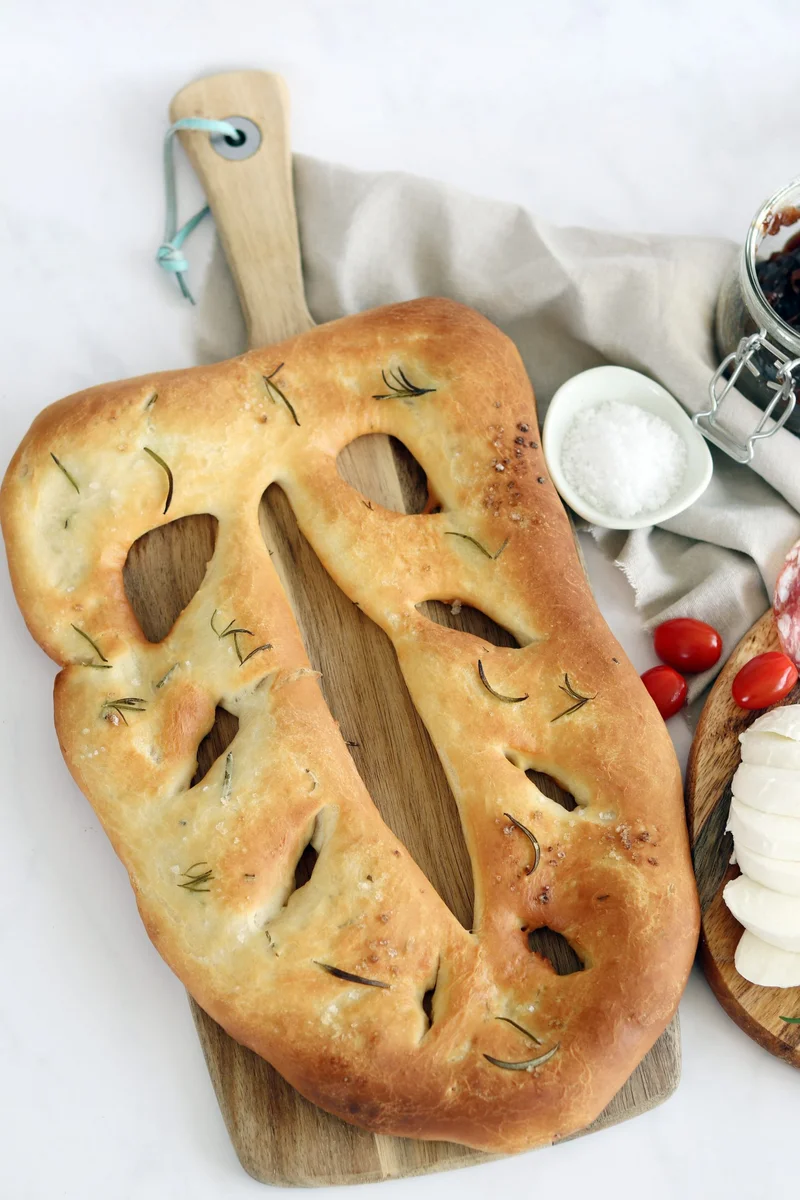
Rosemary and salt fougasse is a French, leaf-shaped bread with a crisp, golden crust and fragrant rosemary. Make it when you want a striking centrepiece that is easy to tear and share.
Ingredients
- 500 gstrong white bread flour
- 7 g (one sachet)yeast
- 1 tspsea salt
- 1 tspcaster sugar
- 320 mllukewarm water
- 40 mlolive oil
- 2 tbspchopped rosemary leaves
- 1 tbspolive oil
- 1 tbsprosemary leaves
- 1 tspsea salt
Instructions
- 1
Mix the dry ingredients
Put the flour, yeast, salt, sugar and chopped rosemary in a mixer bowl or on a clean work surface.
- 2
Make the dough
For hand mixing, make a well in the centre of the dry ingredients, add the water and oil, and mix until a soft dough forms.
- 3
Knead until springy
With a mixer, fit the dough hook and knead for 10 minutes. By hand, knead for a little longer if needed; the dough should spring back when pressed.
- 4
Prove the dough
Transfer the dough to a bowl, cover with a clean tea towel and leave for 1½–2 hours, until doubled in size.
- 5
Prepare the oven
When the dough has doubled, turn it out onto an oiled surface. Preheat the oven to 200°C fan-assisted or 220°C without a fan.
- 6
Shape the fougasse
Divide the dough into two equal balls. Roll each into a long rectangle about 25 cm long, ideally with one end wider than the other.
- 7
Cut the leaf pattern
Place the shaped dough on an oiled baking sheet. Make one vertical cut through each piece, then add cuts on either side to create a leaf-like pattern; gently open the cuts with your fingers.
- 8
Add the toppings
Brush the dough lightly with olive oil and scatter the salt over it. Dip the rosemary leaves in oil to help stop them burning.
- 9
Prove and bake
Cover and leave to prove for a further 15–30 minutes. Bake for 15–20 minutes, until golden brown.
What is fougasse?
Fougasse is a French flatbread, often shaped with cuts that suggest a leaf or ear of wheat. It is commonly associated with the south of France, where breads like this are served to tear and share.
This version gets its flavour from rosemary in the dough and on top, with sea salt and olive oil adding a savoury finish. The open cuts help give it its distinctive shape and expose more crust as it bakes.
Nutrition and macros by portion
The nutrition label shows one serving as written: 281 calories, 1g protein, 1g carbs, 7g fat.
| Portion | Adjustment | kcal | Protein | Carbs | Fat |
|---|---|---|---|---|---|
| Lighter | Use less topping oil | 197 kcal | 1g | 1g | 5g |
| This serving | As written | 281 kcal | 1g | 1g | 7g |
| Hungry | Serve a larger piece | 422 kcal | 2g | 2g | 11g |
The flour supplies most of the carbohydrates, while the olive oil contributes most of the fat. The recipe lists little protein per serving, so pair a piece with a protein-rich option such as beans, eggs or cheese and add vegetables for a more balanced plate.
The dough ingredients
Strong flour: its higher protein content helps the dough develop structure and hold the leaf-like shape.
Yeast and sugar: the yeast raises the dough, while the small amount of sugar is mixed into the dough with the other dry ingredients.
Rosemary: chopped leaves flavour the dough itself, while whole leaves provide a fragrant topping.
Kneading and proving
Kneading: work the dough until it feels elastic and springs back when pressed. The recipe allows 10 minutes in a mixer and notes that hand kneading may take a little longer.
First prove: cover the bowl with a clean tea towel and wait until the dough has doubled, which takes 1½–2 hours according to the method. Use the dough’s size, rather than the clock alone, as your cue.
Shaping the leaf
Rectangles: divide the dough evenly and roll each portion to about 25 cm long. A wider end is suggested, but the key is to keep both pieces similar in size so they bake at much the same rate.
Slashes: make a long cut down the centre and smaller cuts to either side, then open them gently with your fingers. If the openings close up, ease them apart again before the second prove.
Getting a crisp, golden crust
Oil and salt: brush the shaped dough lightly with oil, then scatter over the salt. Dipping the rosemary leaves in oil helps protect them from burning in the oven.
Doneness: bake at 200°C fan-assisted or 220°C without a fan for 15–20 minutes, until the bread is golden brown. The timing can vary with your oven, so use the colour as the main visual cue.
Serving and timing
The stated total time is 45 minutes, but the method also calls for a 1½–2-hour first prove and a further 15–30 minutes of proving. Allow for those rises when planning when to serve the bread.
Serve the fougasse warm or at room temperature, torn into pieces alongside soup, a salad or a selection of dips. Its rosemary and salt topping also makes it a good addition to a sharing table.
Recipe notes & tips
- Use lukewarm rather than hot water so the dough can be mixed comfortably with the yeast.
- If kneading by hand, keep working until the dough springs back when pressed.
- Oil the work surface and baking sheet as directed to make handling and baking easier.
- Open the cuts gently before the second prove so the leaf pattern remains visible.
- Coat the rosemary leaves in oil before scattering them over the dough to help prevent burning.
- Begin checking the bread at 15 minutes and bake until golden brown.
Variations
- Add black pepper: mix a little into the salt topping for a sharper savoury finish.
- Try thyme: replace some or all of the rosemary with thyme leaves.
- Use flaky salt: scatter it over the top in place of the listed sea salt for a more pronounced salty finish.
- Add olives: press sliced olives into the dough before the final prove.
- Serve with a dip: offer olive oil or a bean dip alongside the bread.
Common mistakes to avoid
- Using hot water: it can interfere with the yeast; use lukewarm water as the recipe specifies.
- Stopping kneading too soon: the dough may not have enough structure; continue until it springs back when pressed.
- Rushing the first prove: shaping before the dough doubles can leave it under-risen; wait for the stated size cue.
- Making shallow cuts: they may close up during proving; cut through the dough and open the slashes gently.
- Leaving rosemary dry: it can burn on the crust; dip the leaves in oil before topping the bread.
- Baking by time alone: ovens vary; check for a golden-brown finish within the 15–20-minute baking window.
How to store
Once cool, keep the fougasse in an airtight container at room temperature and eat within 1–2 days for the best texture. Warm it briefly in a moderate oven to refresh the crust; avoid storing it while still warm.
Frequently asked questions
Can I knead the dough by hand?
Yes. Mix the ingredients on a clean surface, making a well for the water and oil, then knead until the dough springs back when pressed. Hand kneading may take longer than the 10 minutes specified for a mixer.
How long does the dough need to prove?
The first prove takes 1½–2 hours, until the dough has doubled in size. After shaping, cover it and prove for another 15–30 minutes.
Can I use dried rosemary?
The recipe calls for rosemary leaves, with chopped rosemary in the dough and leaves on top. Fresh leaves give the intended appearance and aroma; dried rosemary will have a different texture.
Why does fougasse have cuts in it?
The cuts create the characteristic leaf-like shape and open spaces in the bread. Open them slightly with your fingers after cutting.
How do I know when it is baked?
Bake for 15–20 minutes at 200°C fan-assisted or 220°C without a fan, until the bread is golden brown. Start checking at the shorter end of the time range.
Can I make the dough ahead?
This method gives proving times at room temperature but does not specify an overnight rise. For best results following the recipe, make and bake it on the day you plan to serve it.
Cook it from the original
This recipe comes from curlyscooking.co.uk. Their page has the author’s own photos, notes and tips — the best place to cook it from.
Open the recipe on curlyscooking.co.uk