
Käsespätzle (German Cheese Spaetzle)
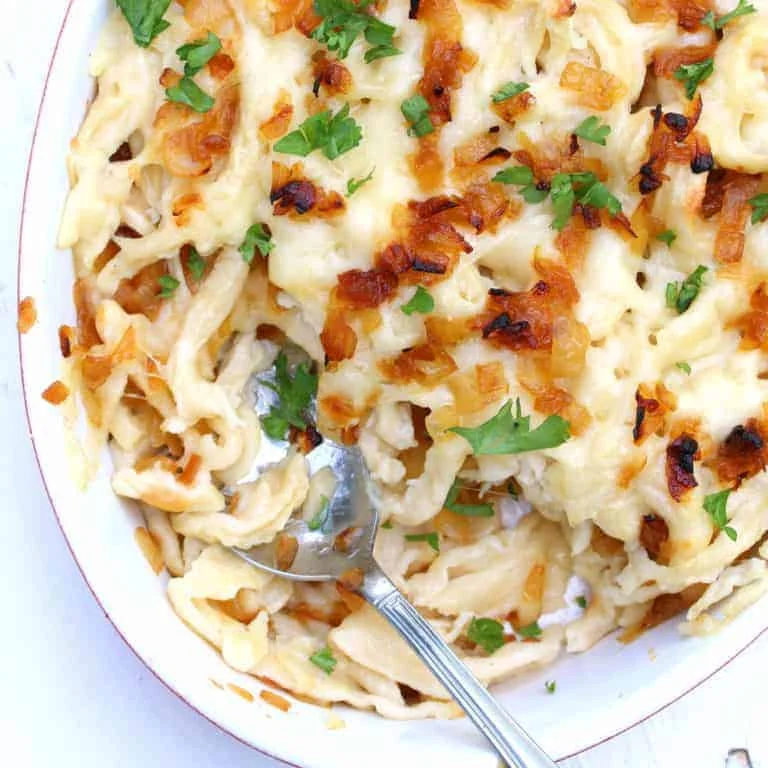
Käsespätzle is a Swabian comfort dish of soft German egg noodles layered with melted cheese and caramelised onions. It is hearty, simple to assemble, and especially satisfying when served straight from the oven.
Ingredients
- 1 batchhomemade German Spätzle
- 85 g (6 tablespoons)butter
- 2–3 largeonions, chopped
- ½ teaspoonsalt
- ½ teaspoonsugar
- 340 g (12 ounces)shredded Emmentaler or Jarlsberg; Gruyère can also be added
- to tastesalt
Instructions
- 1
Prepare the oven
Heat the oven to 200°C (400°F). Butter a 23 × 33 cm casserole dish, or use one slightly smaller.
- 2
Caramelise onions
Melt the butter in a medium heavy stockpot or Dutch oven. Add the onions and cook, stirring occasionally, for 20–30 minutes until deeply caramelised. Halfway through, sprinkle in a little of the salt and the sugar to help the onions caramelise; cook until nicely browned.
- 3
Layer the ingredients
Spread one-third of the Spätzle in the bottom of the dish, followed by one-third of the cheese and one-third of the caramelised onions. Repeat the layers, sprinkling each with some salt, and finish with cheese and onions on top.
- 4
Bake and serve
Bake for 10 minutes or longer, until the cheese has melted and the edges are just beginning to crisp. Serve immediately.
What is Käsespätzle?
Käsespätzle is a German dish of Spätzle—small, soft egg noodles—layered with cheese and onions. It is particularly associated with Swabia in southern Germany, where Spätzle is a familiar regional staple.
This version bakes the noodles with generous layers of cheese and slow-cooked onions. The oven melts the cheese through the dish while giving the edges a little crispness.
Nutrition and macros by portion
The nutrition label shows one serving as written: 421 calories, 15g protein, 67g carbs, 27g fat.
| Portion | Adjustment | kcal | Protein | Carbs | Fat |
|---|---|---|---|---|---|
| Lighter | More salad, smaller portion | 295 kcal | 11g | 47g | 19g |
| This serving | As written | 421 kcal | 15g | 67g | 27g |
| Hungry | Larger portion | 632 kcal | 23g | 101g | 41g |
The Spätzle supplies most of the carbohydrates, while the butter and cheese contribute much of the fat; the cheese also provides most of the protein. Balance a portion with a crisp salad or vegetables on the side.
The ingredients that matter
Spätzle: Use one batch of homemade German Spätzle as called for in the recipe. Its soft, irregular shape holds the melted cheese between layers.
Cheese: Emmentaler or Jarlsberg gives a mild, Swiss-style flavour. The recipe also suggests adding some Gruyère for a stronger note.
Onions: Two or three large onions work; the recipe favours using at least three for plenty of caramelised topping.
Take time with the onions
Even cooking: Cook the chopped onions in the butter over medium heat, stirring occasionally, for 20–30 minutes. The aim is deep browning rather than merely softening.
Seasoning: Add a little salt and sugar halfway through, as directed. Keep an eye on the pan towards the end so the onions brown without catching.
Build distinct layers
Layering: Divide the Spätzle, cheese and onions into thirds so each component is spread through the casserole. Finish with cheese and onions on top.
Salt: Sprinkle some salt over each layer, as the method instructs. Use a light hand if your cheese is already salty.
Look for melted cheese
Timing: Start checking after 10 minutes in the 200°C oven. The dish is ready when the cheese has melted and the edges are just beginning to crisp.
Serving: Bring it to the table straight away for soft, cheesy layers and browned edges. The recipe notes that leftovers are good too.
What to serve alongside
A crisp green salad or lightly dressed seasonal vegetables provide a fresh contrast to the rich cheese and butter. Keep accompaniments simple so the Spätzle remains the focus.
Serve portions while hot, making sure each includes some of the browned onion topping.
Recipe notes & tips
- Use a heavy pot or Dutch oven for cooking the onions.
- Allow the onions the full 20–30 minutes to become deeply caramelised.
- Divide the ingredients into thirds before assembling to make the layers easier to portion.
- Add salt sparingly between layers, especially if using a salty cheese.
- Check the edges after 10 minutes and bake longer only until they begin to crisp.
Variations
- Add Gruyère: Mix some with the Emmentaler or Jarlsberg for a more pronounced cheese flavour.
- Choose Jarlsberg: Use it in place of Emmentaler for a mild, Swiss-style result.
- Use three onions: Go for the higher amount for a more generous onion topping.
- Serve with salad: Pair each portion with crisp leaves for a fresh contrast.
Common mistakes to avoid
- Rushing the onions: They will be soft rather than deeply caramelised; give them 20–30 minutes.
- Letting the onions catch: Stir occasionally and keep an eye on them as they brown.
- Uneven layering: Divide each component into thirds before assembling the casserole.
- Over-salting: Cheese can be salty, so use only a little between the layers.
- Baking by the clock alone: Check for melted cheese and just-crisping edges, baking beyond 10 minutes if needed.
How to store
Refrigerate leftovers in a covered container and eat within 3–4 days. Reheat in an oven until hot throughout; the edges may crisp again. The recipe also describes this dish as making good leftovers.
Frequently asked questions
Can I use Jarlsberg instead of Emmentaler?
Yes. The recipe lists either cheese; Jarlsberg is described as a mild, Swiss-style option.
Can I add Gruyère?
Yes. The recipe suggests adding some Gruyère for extra flavour.
How do I know when the onions are ready?
After 20–30 minutes, they should be deeply caramelised and nicely brown.
How long should I bake Käsespätzle?
Bake for at least 10 minutes, then check that the cheese has melted and the edges are just beginning to crisp.
Can I make this ahead?
The recipe does not give make-ahead instructions, but it notes that the dish makes good leftovers. Refrigerate cooked leftovers promptly and reheat them until hot throughout.
What should I serve with Käsespätzle?
A crisp green salad or simple seasonal vegetables make a fresh accompaniment to the rich baked noodles.
Cook it from the original
This recipe comes from daringgourmet.com. Their page has the author’s own photos, notes and tips — the best place to cook it from.
Open the recipe on daringgourmet.com