
Teriyaki Salmon
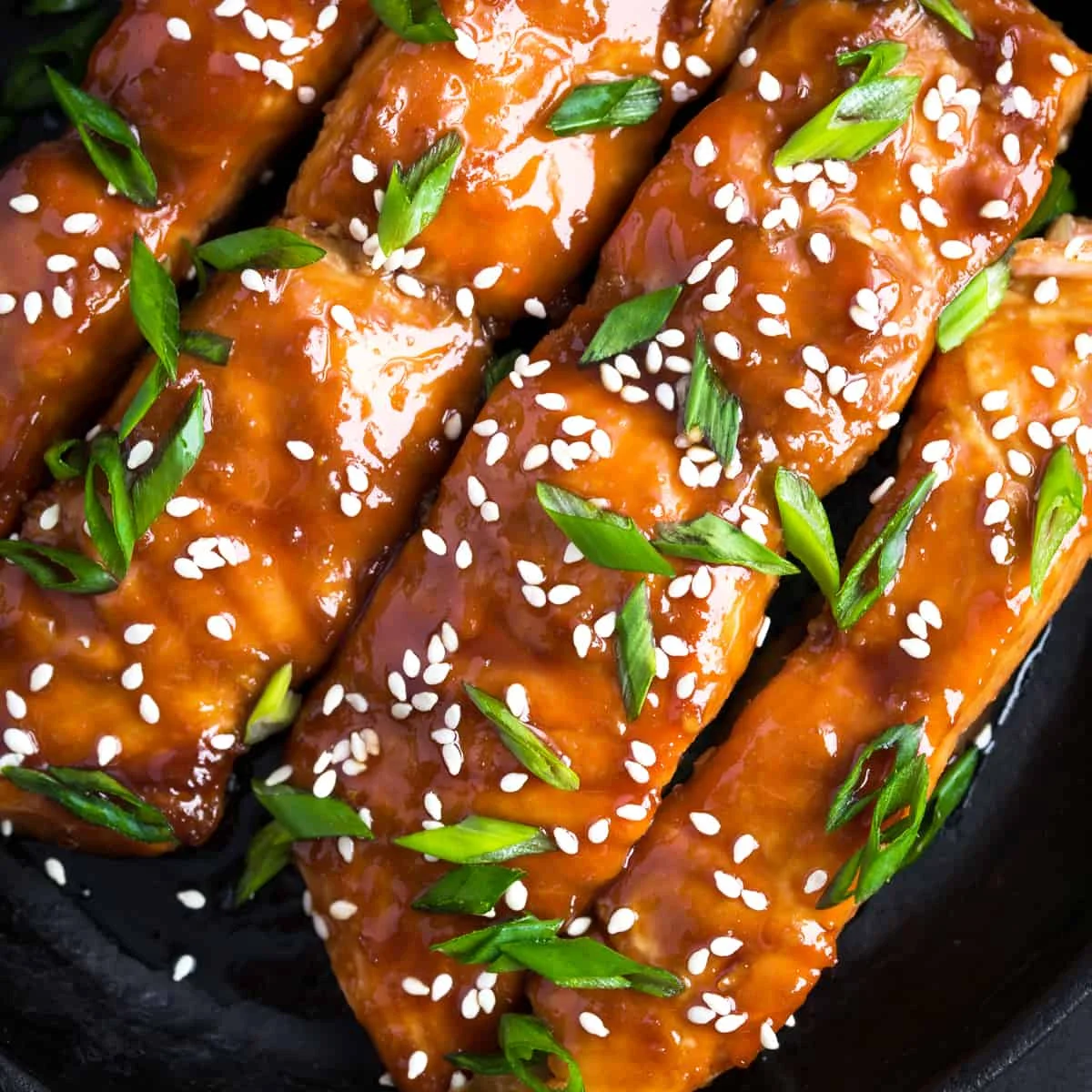
This Japanese-inspired teriyaki salmon pairs tender, flaky fillets with a glossy sauce of tamari, mirin, honey and brown sugar. Marinate the fish while the oven heats, then bake it and simmer the reserved marinade into a sauce for serving.
Ingredients
- 680 gsalmon, cut into four 5 cm fillets
- 120 mltamari
- 30 mlmirin
- 3 tablespoonsdark brown sugar
- 30 mlhoney
- 2 clovesgarlic, finely minced
- 1½ teaspoonsfresh ginger root, finely minced
- 1 teaspoontoasted sesame oil
- 1 teaspoonrice wine vinegar
- 2 teaspoonscornflour
- 45 mlwater
Instructions
- 1
Mix and marinate
Stir together the marinade ingredients apart from the cornflour and water until the sugar dissolves. Put the salmon fillets in a large zip-lock bag, pour in the marinade and leave for 30 minutes. While the salmon marinates, heat the oven to 204°C.
- 2
Bake and simmer
Drain the marinade into a small saucepan and set it aside. Place the salmon on a lined baking tray and bake for 11–14 minutes, until a thermometer inserted into the thickest part reads 57°C or the fish flakes easily with a fork. While it bakes, bring the reserved marinade to the boil, then lower the heat and simmer for 2–3 minutes. Stir the cornflour dissolved in water into the pan and simmer for another minute, until thickened. Take the sauce off the heat and brush some over the salmon towards the end of its cooking time.
- 3
Serve with sauce
Serve straight away with steamed jasmine or basmati rice and a vegetable of your choice. Put the remaining teriyaki sauce on the side for drizzling.
What is teriyaki salmon?
Teriyaki refers to a Japanese cooking style in which food is glazed with a shiny, savoury-sweet sauce. This version uses salmon fillets, first marinated and then baked, with the marinade simmered separately to make a thicker sauce.
Salmon’s rich flavour works well with tamari, mirin, ginger and garlic. Brushing the sauce over the fish near the end gives it a glossy finish without replacing the simple oven-baking method.
Nutrition and macros by portion
The nutrition label shows one serving as written: 338 calories, 37g protein, 22g carbs, 12g fat.
| Portion | Adjustment | kcal | Protein | Carbs | Fat |
|---|---|---|---|---|---|
| Lighter | Less sauce, more vegetables | 237 kcal | 26g | 15g | 8g |
| This serving | As written | 338 kcal | 37g | 22g | 12g |
| Hungry | Larger salmon portion | 507 kcal | 56g | 33g | 18g |
Salmon supplies most of the protein and fat, while the brown sugar and honey contribute carbohydrates; the rice served alongside will add more. Pair a fillet with rice and a generous serving of vegetables for a balanced plate.
The marinade ingredients
Tamari: it brings a deep, savoury base to the sauce. Low-sodium soy sauce can be used instead, though its flavour will differ.
Mirin and sweeteners: mirin, brown sugar and honey create the sweet-savoury balance. Sherry is the suggested substitute for mirin.
Aromatics: finely minced garlic and ginger spread their flavour through the marinade, while toasted sesame oil and rice wine vinegar round it out.
Marinate before baking
Thirty minutes gives the marinade time to coat the fillets. Keep the salmon in the bag during this step, then drain the liquid into a saucepan rather than discarding it.
The marinade is used again for the sauce, so keep it separate from the cornflour mixture until it has simmered. The method calls for bringing it to the boil before thickening.
Check the salmon
Bake at 204°C for 11–14 minutes, checking the thickest part of a fillet with an instant-read thermometer. The recipe gives 57°C as its temperature cue; the fish can also be checked for flakes that separate easily with a fork.
Fillet thickness affects how quickly salmon cooks, so use the stated time as a guide and check for doneness before serving.
Thicken the teriyaki sauce
Cornflour dissolved in water forms a smooth slurry that is stirred into the simmering marinade. Give it another minute on the heat to thicken, then remove the pan from the hob.
Brush some sauce over the salmon towards the end of baking. Keep the rest aside to serve at the table.
Build a simple plate
Steamed jasmine or basmati rice is suggested alongside the salmon and gives the sauce something to soak into. Add a vegetable of your choice for a simple meal.
Serve the extra sauce separately so each person can drizzle on as much as they like.
Recipe notes & tips
- Cut the salmon into evenly sized fillets so they cook at a similar pace.
- Dissolve the sugar fully into the marinade before adding the salmon.
- Line the baking tray to make clean-up easier.
- Check the thickest part of the fish with an instant-read thermometer.
- Dissolve the cornflour in water before stirring it into the hot marinade.
- Keep some thickened sauce aside for serving.
Variations
- Use soy sauce: swap in low-sodium soy sauce for tamari if preferred.
- Replace the mirin: use sherry as the recipe’s suggested alternative.
- Choose another rice: serve with jasmine or basmati rice.
- Change the vegetable: pair the salmon with a vegetable of your choice.
- Add extra ginger: increase the finely minced ginger for a more pronounced ginger flavour.
Common mistakes to avoid
- Skipping the marinade: leave the fillets in it for the full 30 minutes.
- Discarding the liquid: drain the marinade into a saucepan to make the sauce.
- Using unmixed cornflour: dissolve it in water first to form a slurry.
- Overcooking the fish: begin checking at 11 minutes and use the recipe’s doneness cues.
- Adding the slurry too early: simmer the marinade for 2–3 minutes before stirring it in.
How to store
Refrigerate leftover salmon and sauce in separate airtight containers and use within 2 days. Reheat gently until hot, taking care not to cook the salmon for longer than necessary.
Frequently asked questions
Can I use soy sauce instead of tamari?
Yes. The recipe suggests low-sodium soy sauce as a substitute, though it notes that tamari has a richer flavour.
Can I substitute for mirin?
Yes, use sherry as the suggested alternative.
How long should I marinate the salmon?
Marinate the fillets for 30 minutes before baking.
How do I know when the salmon is done?
The recipe gives a thermometer reading of 57°C in the thickest part, or fish that flakes easily with a fork, as cues.
Can I make the sauce ahead?
The method makes the sauce while the salmon bakes. If you prepare it ahead, refrigerate it and reheat it gently before serving.
What should I serve with teriyaki salmon?
Serve it with steamed jasmine or basmati rice and a vegetable of your choice, with extra sauce on the side.
Cook it from the original
This recipe comes from daringgourmet.com. Their page has the author’s own photos, notes and tips — the best place to cook it from.
Open the recipe on daringgourmet.com