
Herb Roasted Turkey Breast with Root Vegetables
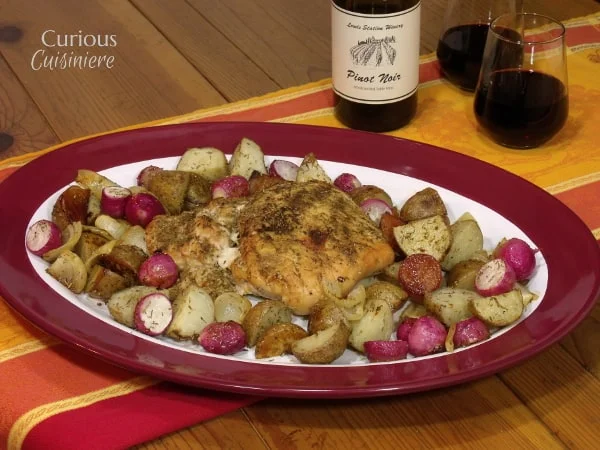
Herb-roasted turkey breast with tender, golden root vegetables is a practical centrepiece for a smaller Thanksgiving dinner. A fragrant herb rub seasons the meat while the vegetables roast alongside it for the final part of cooking.
Ingredients
- 1.36 kg (3 lb), thawed if frozenboneless turkey breast
- ½ tspmustard powder
- ½ tsprosemary
- ½ tspthyme
- ½ tspsage
- ¼ tspsalt
- ⅛ tspground white pepper
- 680 g (1½ lb), cut into 2.5 cm (1-inch) chunkspotatoes
- 680 g (1½ lb), cut into 2.5 cm (1-inch) chunksother vegetables, such as carrots, beetroot, radishes, sweet potatoes or Brussels sprouts
- 1, choppedonion
- 15 ml (1 tbsp), meltedsalted butter
- 1½ tspthyme
- 1½ tsprosemary
- ¾ tspgarlic powder
- ¾ tspsalt
Instructions
- 1
Heat the oven
Preheat the oven to 175°C (350°F).
- 2
Prepare the turkey
Set the turkey breast on a high-sided baking tray lined with aluminium foil; you can use a roasting tin instead.
- 3
Season under skin
Mix the mustard powder, ½ teaspoon rosemary, ½ teaspoon thyme, sage, ¼ teaspoon salt and white pepper in a small bowl. Spread the mixture as evenly as possible beneath the turkey skin, directly over the meat.
- 4
Cover and roast
Lay a piece of foil loosely over the turkey to slow browning, then put it in the oven and roast for 1 hour.
- 5
Season vegetables
Toss the chopped potatoes, other vegetables and onion in a large bowl with the melted butter, 1½ teaspoons thyme, 1½ teaspoons rosemary, garlic powder and ¾ teaspoon salt until evenly coated.
- 6
Raise the heat
Increase the oven temperature to 200°C (400°F).
- 7
Uncover the turkey
Take the turkey out of the oven and remove the foil on top. If drippings have collected in the pan, carefully transfer them to a heatproof container using a baster or small ladle; save them for gravy.
- 8
Add the vegetables
Arrange the vegetables around the turkey breast and return the pan to the oven.
- 9
Roast until done
Roast for a further 20–30 minutes, until the vegetables are tender and golden brown. The turkey is ready when a thermometer inserted into the thickest part of the breast reads 74°C (165°F).
- 10
Rest and carve
Remove the pan from the oven and leave the turkey to rest for 5–10 minutes before carving.
What is herb-roasted turkey breast?
Roast turkey is strongly associated with Thanksgiving and other celebratory meals, but a breast joint suits a smaller gathering. This version pairs the bird with potatoes and a choice of root vegetables, all cooked in the same pan.
Under-skin seasoning puts the herbs directly against the meat, while adding the vegetables later gives them time to brown without extending the turkey’s initial roast.
Nutrition and macros by portion
The nutrition label shows one serving as written: 378 calories, 59g protein, 32g carbs, 3g fat.
| Portion | Adjustment | kcal | Protein | Carbs | Fat |
|---|---|---|---|---|---|
| Lighter | More greens, less potato | 265 kcal | 42g | 23g | 2g |
| This serving | As written | 378 kcal | 59g | 32g | 3g |
| Hungry | Larger turkey portion | 567 kcal | 89g | 48g | 5g |
Turkey breast supplies most of the protein, while the potatoes and other vegetables contribute most of the carbohydrates. The salted butter contributes the listed fat, and the seasoning contributes sodium. For a balanced plate, serve a portion of turkey with the vegetables and add extra non-starchy greens if you have them.
Choosing the vegetables
Root vegetables: Carrots, beetroot, radishes and sweet potatoes work well in the suggested 2.5 cm chunks. Brussels sprouts are also an option, though they are not root vegetables.
Even pieces: Cut the vegetables to a similar size so they cook at a similar pace. The recipe allows a mixture, so use the listed 680 g in total.
Getting the herb seasoning in place
Under the skin: Gently spread the first herb mixture over the breast meat as evenly as you can. This keeps the seasoning close to the turkey rather than only on the outside of the skin.
Vegetable coating: Toss the second set of herbs, garlic powder and salt with the vegetables and melted butter until the pieces are coated. Mix thoroughly before arranging them in the roasting pan.
Managing the two oven temperatures
First roast: The turkey begins at 175°C (350°F), loosely covered with foil, for 1 hour. The foil helps prevent the surface from browning too quickly.
Second roast: The oven then rises to 200°C (400°F) as the vegetables go into the pan. They roast for another 20–30 minutes, while the turkey’s doneness is checked with a thermometer.
Checking texture and doneness
Turkey: Insert a thermometer into the thickest part of the breast and look for 74°C (165°F). Check the meat itself rather than relying only on the cooking time.
Vegetables: They should be tender and golden brown. If the turkey reaches its stated temperature before the vegetables are ready, the method does not specify a separate adjustment, so keep an eye on both as they roast.
Resting and serving
Resting: Leave the turkey for 5–10 minutes after taking the pan from the oven, then carve it. This pause also gives you time to bring the vegetables to the table.
Serving ideas: Serve slices with the roasted vegetables and, if desired, use the reserved pan drippings to make gravy. A simple green salad or steamed greens can add a fresh contrast.
Recipe notes & tips
- Thaw frozen turkey breast before cooking, as directed in the ingredient list.
- Use a roasting tin or a high-sided baking tray to contain the turkey and vegetables.
- Spread the seasoning as evenly as possible beneath the skin for consistent flavour.
- Drain the pan drippings carefully into a heatproof container and save them for gravy.
- Check the thickest part of the breast with a thermometer rather than judging by colour alone.
- Cut the vegetables into similarly sized 2.5 cm chunks to help them cook evenly.
Variations
- Choose root vegetables: Use carrots, beetroot, radishes or sweet potatoes within the stated 680 g amount.
- Add Brussels sprouts: Include them in the vegetable mix, cut to a size similar to the other pieces.
- Change the herb mix: Use the listed rosemary, thyme and sage combination as written, or adjust their proportions to suit your preference.
- Make gravy: Use the reserved turkey drippings as the recipe suggests.
- Use a roasting tin: Swap the foil-lined high-sided baking tray for a roasting tin.
Common mistakes to avoid
- Skipping the thaw: Roast only after thawing the turkey breast if it was frozen.
- Uneven seasoning: Spread the herb mixture beneath the skin over the meat as evenly as possible.
- Crowded vegetable pieces: Arrange the vegetables around the bird and cut them to similar 2.5 cm sizes.
- Leaving the foil on: Remove the top foil before adding the vegetables and returning the pan to the hotter oven.
- Guessing doneness: Check the thickest part of the turkey with a thermometer; it should read 74°C (165°F).
- Carving immediately: Rest the turkey for 5–10 minutes before carving.
How to store
Refrigerate leftover turkey and vegetables in a covered container within 2 hours of cooking and use within 3–4 days. Reheat until piping hot throughout; keep the turkey covered while reheating to help prevent it from drying out.
Frequently asked questions
Can I use frozen turkey breast?
Yes, but thaw it before cooking, as noted in the ingredients. The recipe does not give instructions for roasting it from frozen.
How do I know when the turkey is cooked?
Insert a thermometer into the thickest part of the breast. It is done when the reading reaches 74°C (165°F).
Can I use different vegetables?
Yes. The recipe suggests carrots, beetroot, radishes, sweet potatoes and Brussels sprouts as options. Keep the total amount at 680 g and cut them into roughly 2.5 cm chunks.
Why does the oven temperature change?
The turkey starts at 175°C (350°F), then the oven is raised to 200°C (400°F) when the vegetables are added for the final 20–30 minutes.
Can I save the turkey drippings?
Yes. Carefully drain any drippings into a heatproof container and save them to make gravy.
How long should the turkey rest?
Rest it for 5–10 minutes after removing the pan from the oven, then carve.
Cook it from the original
This recipe comes from curiouscuisiniere.com. Their page has the author’s own photos, notes and tips — the best place to cook it from.
Open the recipe on curiouscuisiniere.com