
Grilled Raclette Cheese Sandwich
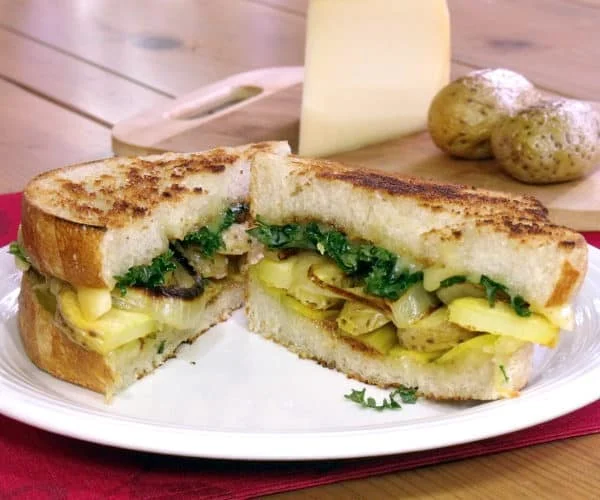
This grilled sandwich brings melted Swiss Raclette together with roasted new potatoes, sweet onion, dill pickles and kale. It is a hearty way to turn the flavours of a raclette dinner into a crisp, warm sandwich.
Ingredients
- 227 g (½ lb)small new potatoes, sliced 1.3 cm (½ inch) thick
- ½ mediumsweet onion, sliced 1.3 cm (½ inch) thick
- 15 ml (1 tbsp)salted butter, melted
- 2.5 ml (½ tsp)salt
- 4 thick slicesFrench bread
- 15 ml (1 tbsp)salted butter, softened
- 170 g (6 oz)Raclette cheese
- 2dill pickles, thinly sliced
- 2kale leaves, stiff veins trimmed away
Instructions
- 1
Heat the oven
Preheat the oven to 220°C (425°F).
- 2
Roast the vegetables
Toss the potato and onion slices with the melted butter and salt. Spread them on an aluminium foil-lined baking sheet and roast for 20–25 minutes, stirring once, until golden and tender. Remove the tray from the oven and set it aside.
- 3
Toast the first side
Heat a cast-iron frying pan or griddle over a medium-high heat. Butter both sides of the bread slices and put them in the hot pan. Turn the heat down to medium and toast the first side for 3–5 minutes, until golden.
- 4
Add the cheese
Lower the heat to medium-low and turn the bread slices over. Divide the Raclette cheese evenly among all four slices.
- 5
Layer the vegetables
Arrange the roasted potatoes and onions over two of the bread slices.
- 6
Assemble the sandwiches
Once the cheese has melted and the bread is toasted and golden on its second side, after about 3–5 minutes, put the pickle slices and a kale leaf over the onions. Top each with one of the remaining cheese-covered bread slices.
- 7
Serve warm
Take the sandwiches out of the pan and serve them warm.
What is a Raclette sandwich?
Raclette is a Swiss cheese dish associated with melting cheese and serving it with accompaniments such as potatoes and pickles. This sandwich borrows those familiar flavours and pairs them with crisped French bread.
Roasting the potatoes and onion before layering them into the sandwich gives them time to become tender, while the cheese melts directly onto the bread.
Nutrition and macros by portion
The nutrition label shows one serving as written: 750 calories, 0g protein, 0g carbs, 0g fat.
| Portion | Adjustment | kcal | Protein | Carbs | Fat |
|---|---|---|---|---|---|
| Lighter | Use less butter | 525 kcal | 0g | 0g | 0g |
| This serving | As written | 750 kcal | 0g | 0g | 0g |
| Hungry | Add an extra sandwich | 1125 kcal | 0g | 0g | 0g |
The potatoes and bread provide most of the carbohydrates, while the butter and Raclette contribute much of the fat; the cheese also supplies the sandwich’s main protein. Serve it with a crisp salad or extra vegetables to balance the rich, filling sandwich.
The potatoes and onion
Even slices: Cut the potatoes and onion to the stated thickness so they roast at a similar pace. Stir them once during roasting to help them colour evenly.
Golden and tender: Check the potatoes with a fork near the end of the roasting time. They should be easy to pierce and have browned edges.
Choosing Raclette cheese
Raclette: Its melting quality makes it a natural fit for this sandwich. Divide it over all four bread slices so each half has a layer of cheese.
Bread: Thick slices give the toppings support and can be toasted on both sides in the pan. Buttering both sides helps them turn golden as they cook.
Getting the pan heat right
First side: Start at medium-high heat, then reduce to medium for the first 3–5 minutes of toasting. This gives the bread time to brown without skipping the stated cooking sequence.
Second side: Turn the heat down to medium-low after flipping. Keep an eye on the bread as the cheese melts, since the sandwich needs to be golden without scorching.
Layering the fillings
Potatoes and onion: Put these on only two slices, as they form the base of the two sandwiches. Keep the layers reasonably even so the sandwiches are easier to top.
Pickles and kale: Add these once the cheese has melted and the bread is toasted. The pickles bring a sharp contrast to the rich cheese, while the kale adds a fresh, leafy layer.
Serving the sandwiches
Serve the sandwiches warm, while the Raclette is still melted. Their potato, cheese and bread filling makes them substantial enough to serve as the main part of a meal.
A crisp salad or extra vegetables alongside can add a lighter contrast without changing the sandwich itself.
Recipe notes & tips
- Slice the potatoes and onion to an even thickness so they roast at a similar rate.
- Stir the vegetables once during roasting, as directed, to encourage even browning.
- Use a wide frying pan or griddle so the bread can toast without being crowded.
- Reduce the heat after each side of the bread has been started, following the method’s temperature changes.
- Have the pickles and kale ready before the cheese finishes melting so you can assemble the sandwiches promptly.
Variations
- Add mustard: Spread a thin layer on the bread for a sharp note.
- Use another pickle: Swap the dill pickles for another thinly sliced pickle you enjoy.
- Change the greens: Use another tender leafy green in place of the kale.
- Try a different bread: Choose thick slices of another crusty loaf that can hold the filling.
- Add herbs: Scatter chopped fresh herbs over the potato and onion before assembling.
Common mistakes to avoid
- Uneven vegetable slices: Cut the potatoes and onion to a consistent thickness so they cook evenly.
- Skipping the stir: Turn the vegetables once during roasting to help them brown on more than one side.
- Heat too high: Lower the pan heat as specified so the bread does not brown too quickly before the cheese melts.
- Overfilling the bread: Keep the potato and onion layers even so the top slice sits securely.
- Adding toppings too early: Wait until the cheese is melted and the bread is golden before adding the pickles and kale.
How to store
Store leftover sandwiches in an airtight container in the fridge and eat within 2 days. Reheat in a frying pan over a low heat until warmed through and the cheese has melted again.
Frequently asked questions
Can I prepare the potatoes and onion ahead?
Yes. Roast them ahead and refrigerate once cooled, then warm them before assembling the sandwiches.
How do I know when the vegetables are done?
They should be golden and tender, with the potatoes easy to pierce with a fork. The recipe allows 20–25 minutes, with one stir during roasting.
Can I make this without a cast-iron pan?
Yes. The method also suggests using a griddle. Choose a pan or griddle that gives the bread enough room to toast.
Can I use a different cheese?
Raclette is the cheese specified for its role in this version. If substituting, choose a cheese that melts well, though the flavour will differ.
Can the sandwiches be made in advance?
They are best assembled and served warm so the bread stays toasted and the cheese remains melted. You can roast the vegetables ahead, then assemble and cook the sandwiches just before serving.
Cook it from the original
This recipe comes from curiouscuisiniere.com. Their page has the author’s own photos, notes and tips — the best place to cook it from.
Open the recipe on curiouscuisiniere.com